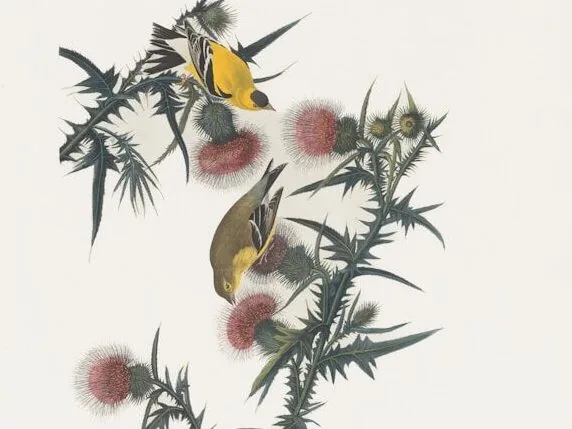
If you were to stand in a sun-drenched meadow in North America, you might hear a rhythmic, four-syllable call that sounds exactly like a snack-food craving: “po-ta-to-chip.” This is the auditory calling card of the American Goldfinch. While the sound is cheerful, the bird’s scientific name, Spinus tristis, suggests a darker mood, as tristis translates from Latin to “sad” or “sorrowful.” This naming choice by Carl Linnaeus stems from the bird’s historical association with the crown of thorns, a connection forged by its obsessive preference for thistles.
The Leaf Counter and the Language Keeper
The “sad” moniker feels like a misstep when you look at the vibrant lemon-yellow plumage of a breeding male. The Anishinaabe (Ojibwe) people offer a more observant title: Aginjibagwesi, or “the one who counts the leaves”. This name captures the bird’s meticulous movement through the canopy as it gleans seeds with focused precision. In Ojibwe cosmology, the goldfinch is further elevated as the “spirit keeper” of their language, a bird that carries the depth of cultural knowledge in its constant twittering.
In modern digital circles, the bird has traded ancient mysticism for internet fame. Birdwatchers often share “Marilyn Monroe moments,” capturing photos where a goldfinch’s flared feathers perfectly mimic the iconic white dress scene from The Seven Year Itch. During winter, if the temperature drops, they transform into “borbs”—perfectly spherical orbs of puffed-out feathers used to trap heat.
A Nutritional Wall Against Parasites
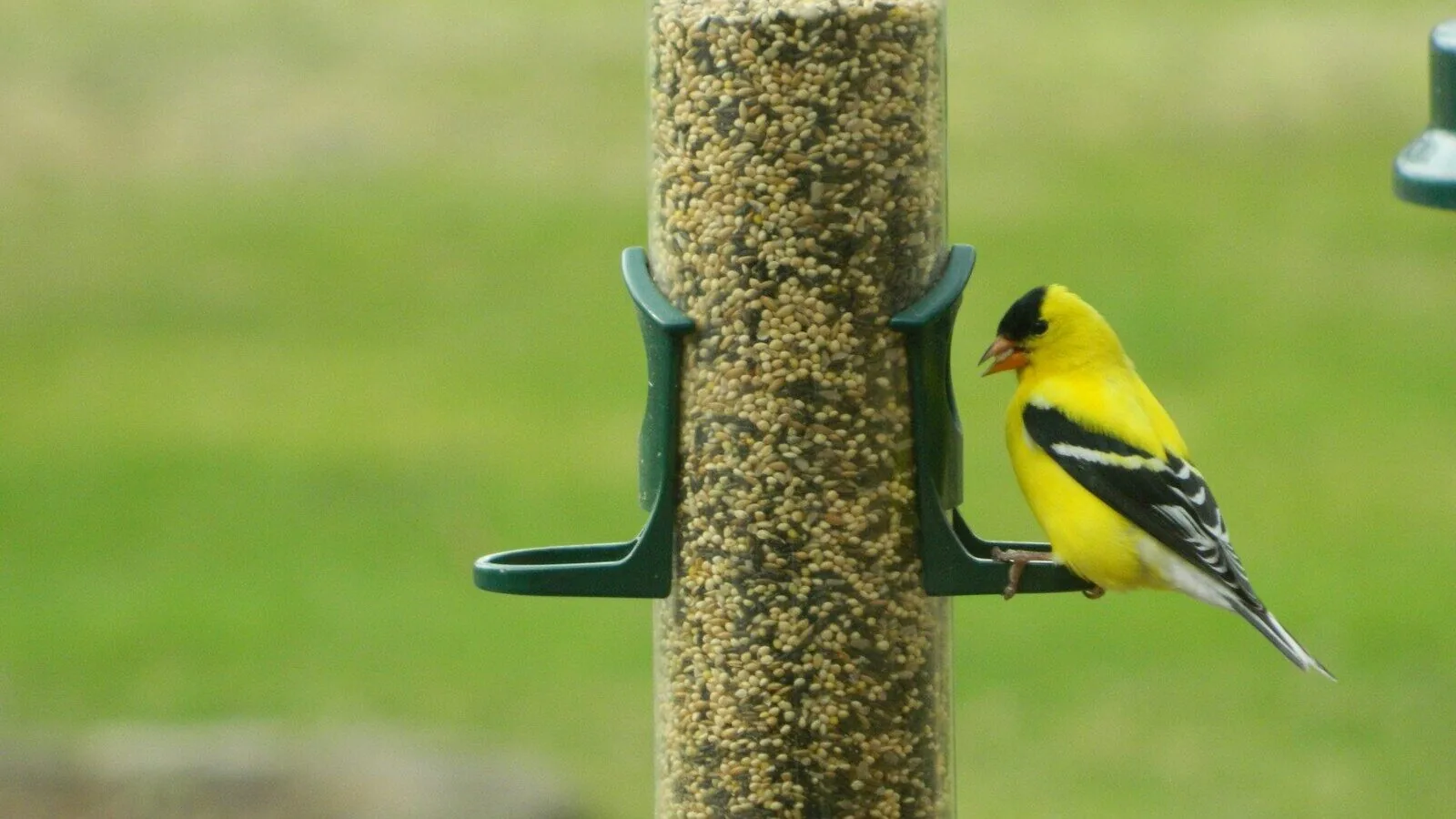
The American Goldfinch is an extreme specialist, occupying a niche as one of the strictest vegetarians in the avian world. While most “seed-eating” birds actually feed their chicks high-protein insects, goldfinches feed their young a regurgitated mash of seeds. This dietary commitment creates a fascinating biological defense against the Brown-headed Cowbird, a brood parasite that sneaks its eggs into the nests of other birds.
Should a cowbird egg hatch in a goldfinch nest, the parasitic chick is essentially doomed by the menu. Because cowbirds are evolutionarily wired to require animal protein, they cannot survive on the goldfinch’s all-seed diet and typically starve within three days. This “nutritional wall” makes the goldfinch a dead-end host for parasites. This dietary lifestyle also dictates their schedule; they are among the latest nesters in North America, waiting until mid-to-late summer when thistle and milkweed have finally gone to seed.
Sources:
- Cornell Lab of Ornithology: American Goldfinch Overview
- National Audubon Society: American Goldfinch Field Guide
- Backyard Ecology: American Goldfinch
- The Ojibwe People’s Dictionary: Aginjibagwesi
- ResearchGate: Late laying by a Brown-headed cowbird in an American goldfinch nest