
The Pirate of the Duck Pond
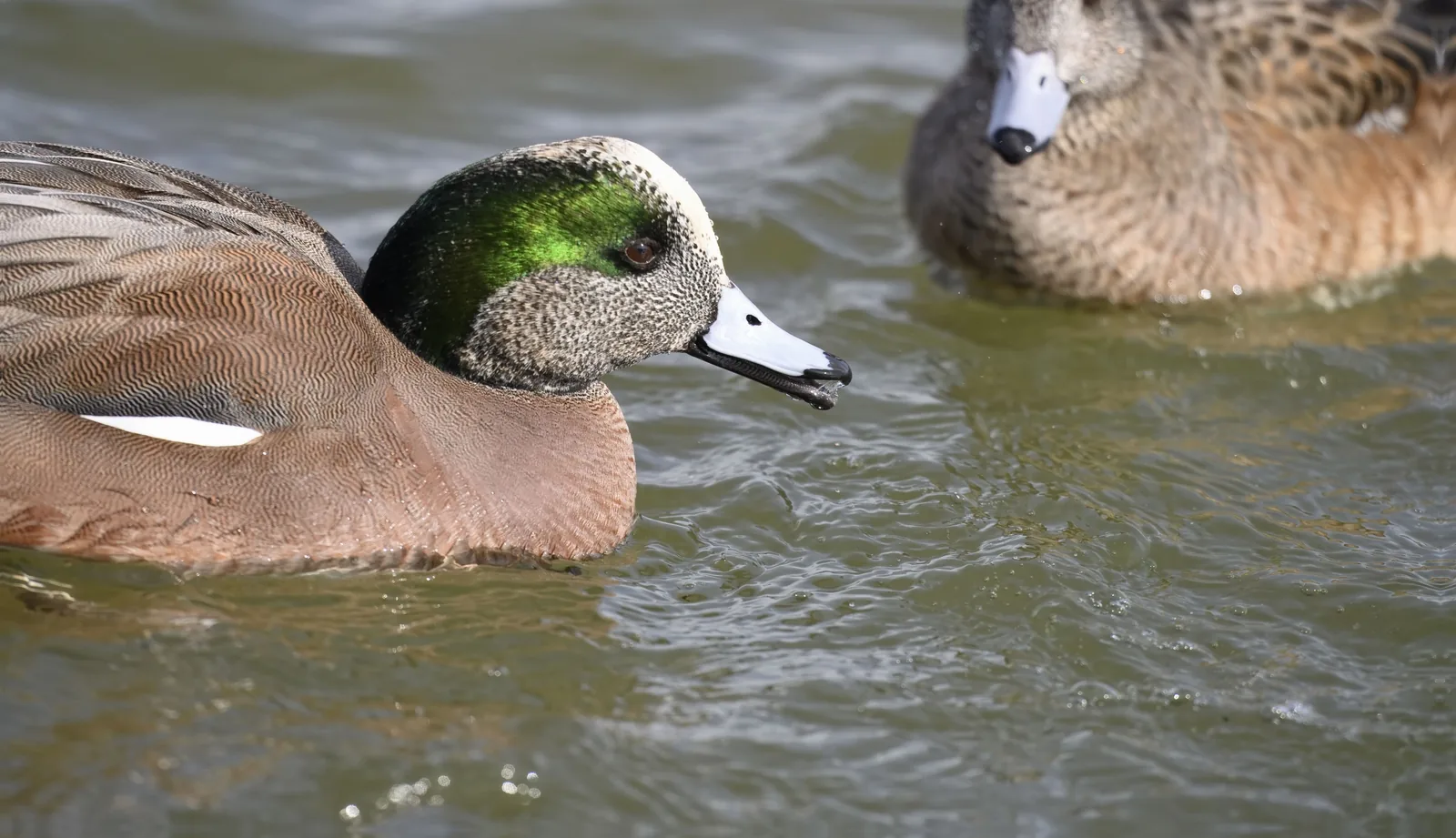
The male American Wigeon has a bright white stripe down the top of his head and a sweep of glossy green behind each eye. The white stripe earned the species an old nickname, baldpate. If you wake up near ponds and marshes in North America between fall and spring, a breezy, three-note whistle drifting across the water may be a flock of male wigeons.
The Robber Duck
Wigeons often feed alongside American Coots and diving ducks. When a diver comes back up with a mouthful of underwater plants, a wigeon may grab pieces of it before the other bird can swallow. The habit has earned wigeons the names “poacher” and “robber” duck.
It makes sense for a bird with this diet. American Wigeons eat a higher proportion of plants than any other dabbling duck. They nibble leaves from the water’s surface, tip up to reach plants just below, and steal what they cannot reach themselves.
A Bill Built for Grazing
Their short bill looks almost like a goose’s. Because it is short, it puts more force at the tip, which helps wigeons pluck grass and seeds the way a goose does. Flocks waddle across fields and even lawns, grazing on grass and leftover grain.
Nests Far From Water
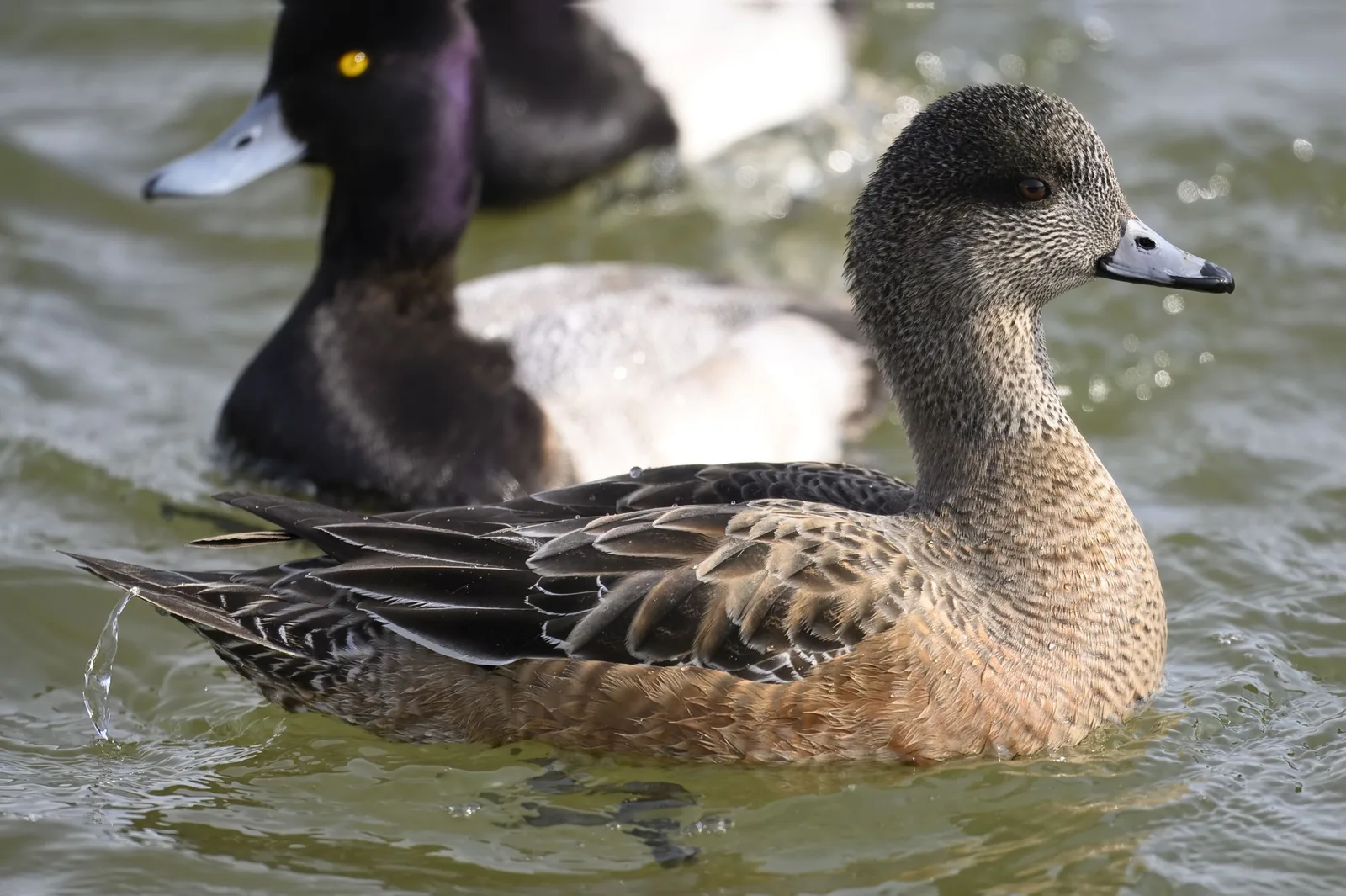
For a duck, the female nests in a surprising place. She chooses dry ground, often 40 to 1,000 feet from the water, and tucks a down-lined hollow into tall grass or low shrubs. The male stays with her only until she is partway through incubating the eggs, then leaves.
Successful males then fly north to large lakes, where they spend about 35 days unable to fly while they grow a fresh set of wing feathers. The ducklings can leave the nest soon after hatching.
A Common Duck in Decline
American Wigeons are still common, but their numbers fell by about 56% between 1966 and 2019. Drought in the prairie wetlands of the northern Great Plains can push them to nest farther north, and the loss of wetlands on both their breeding and wintering grounds adds to the pressure.
So the next time you see coots diving on a pond, watch the ducks nearby. One of them may be waiting to take a share of the catch.
Sources:
- Cornell Lab of Ornithology: American Wigeon overview, All About Birds
- Cornell Lab of Ornithology: American Wigeon life history, All About Birds
- Wikipedia: American wigeon