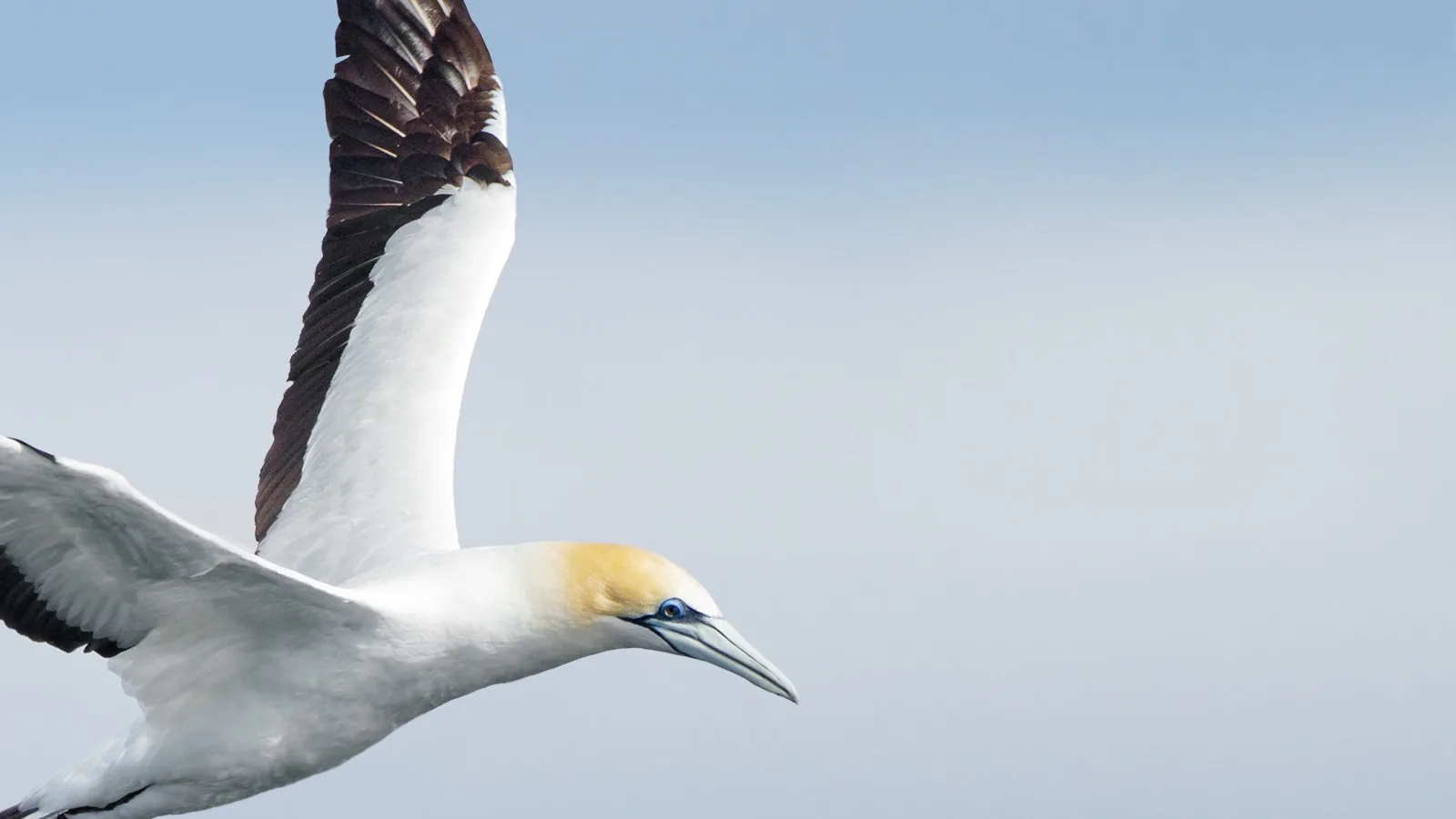

The Sea's Golden Javelin
Picture a bird tucking its wings into a white arrow and hitting the sea at a hundred kilometres an hour, head first, on purpose. If you wake along the coasts of New Zealand or southern Australia, that is the Australasian gannet (its scientific name is Morus serrator), out past the breakers all morning. It looks reckless. It is one of the most precise hunters on the water.
The Hundred-Kilometre Drop
Hitting water that fast should stun a bird, but the gannet shrugs it off. Air sacs cushion its skull like the airbags in a car. The plunge alone can drive it about ten metres down, and then it beats its wings to chase fish deeper still.
Then comes the part nobody sees. A 2012 study led by Gabriel Machovsky-Capuska, a seabird ecologist, filmed wild gannets hunting underwater and tested what happens to their eyes the instant the head goes under. Water wrecks the focus of an eye built for air, but the gannet’s eye refocuses on the spot to cancel the blur, and the footage shows the birds actively chasing individual fish by sight. It does not spear blindly. It aims the whole way down.
The Bird Who Married a Block of Concrete
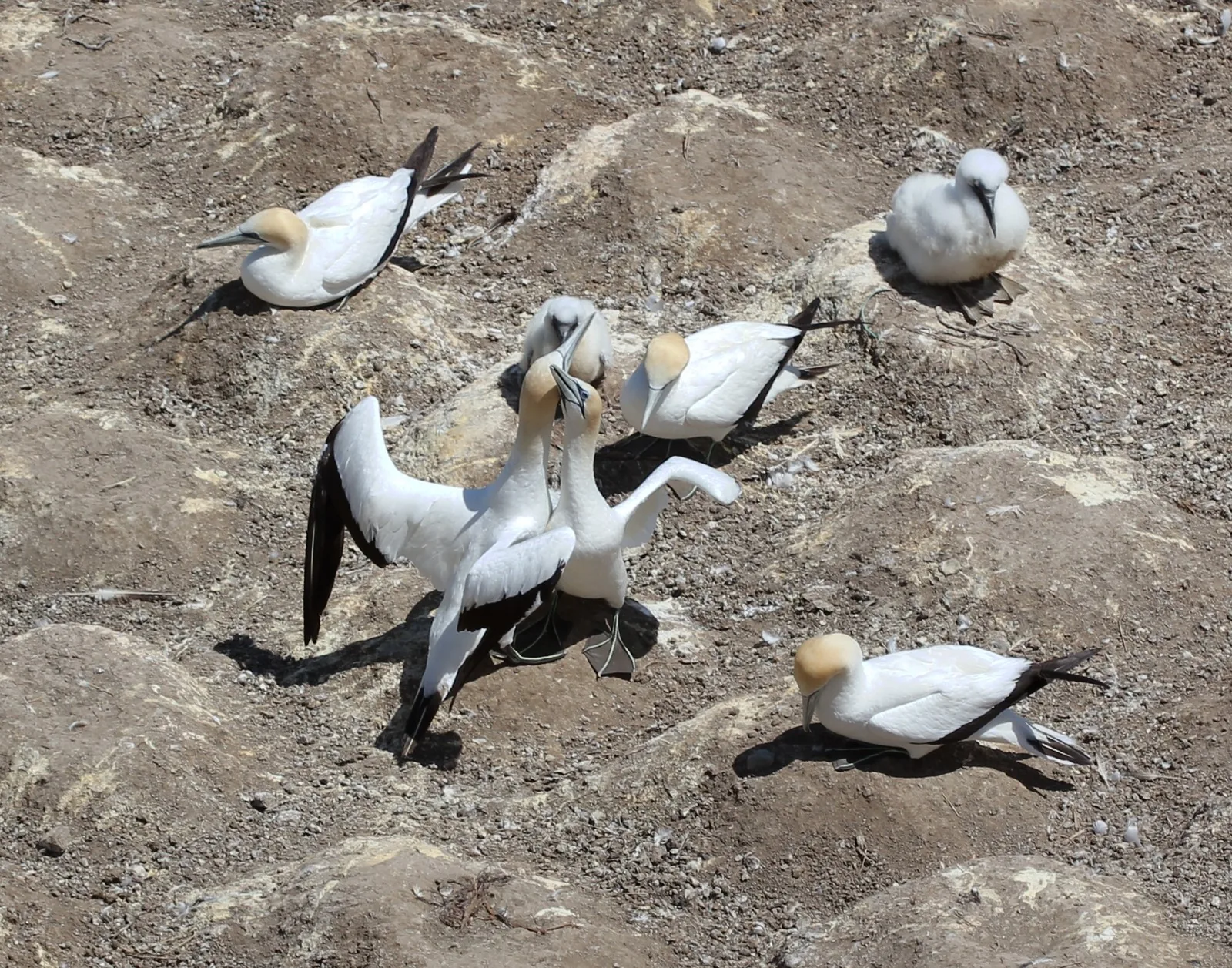
Gannets pair for life, and they treat the reunion as an event. After weeks apart at sea, a returning bird greets its mate with a frantic clattering of bills and necks, loud enough to carry across the colony while the neighbours pointedly ignore it.
Which brings us to Nigel. Starting in 1998, conservationists tried to seed a new colony on Mana Island, off the New Zealand coast, using eighty concrete decoy gannets and recorded calls played from solar-powered speakers. For seventeen years, nothing came. Then, around 2015, a single gannet turned up. He picked a concrete bird and built her a seaweed nest at the cliff edge, grooming her stone feathers for the rest of his life. Volunteers named him “no mates” Nigel. When three living gannets finally arrived in January 2018, he kept to his own side of the colony, and not long after he was found dead beside his concrete mate. “He died right at the beginning of something great,” said ranger Chris Bell.
Tākapu and the Tattooist’s Bone
To Māori the bird is tākapu, a name shared across Polynesia for gannets and boobies. The serrator in its scientific name is Latin for “sawyer”, after the fine saw-teeth along that dagger bill. The genus name is ruder: Morus comes from a Greek word for “fool”, aimed at how tamely the birds sat while people walked up and took them.
And take them people did. Māori harvested young tākapu for food. The white feathers adorned canoes and marked rank, and the bones became the chisels that applied moko, the facial tattoos marking a person’s lineage.
So the tākapu is a “fool” that aims a hundred-kilometre dive with its eyes open, and so faithful it once courted a slab of concrete for years. Precision and devotion in one bird. If you live where it fishes, quite a thing to wake up to.
Sources:
- Wikipedia: Australasian gannet
- Wikipedia: Nigel (gannet)
- Proceedings of the Royal Society B (2012): Visual accommodation and active pursuit of prey underwater in a plunge-diving bird: the Australasian gannet
- Predator Free NZ: Tākapu are high-dive champions
- New Zealand Birds Online: Australasian gannet | Tākapu
- Te Aka Māori Dictionary: tākapu