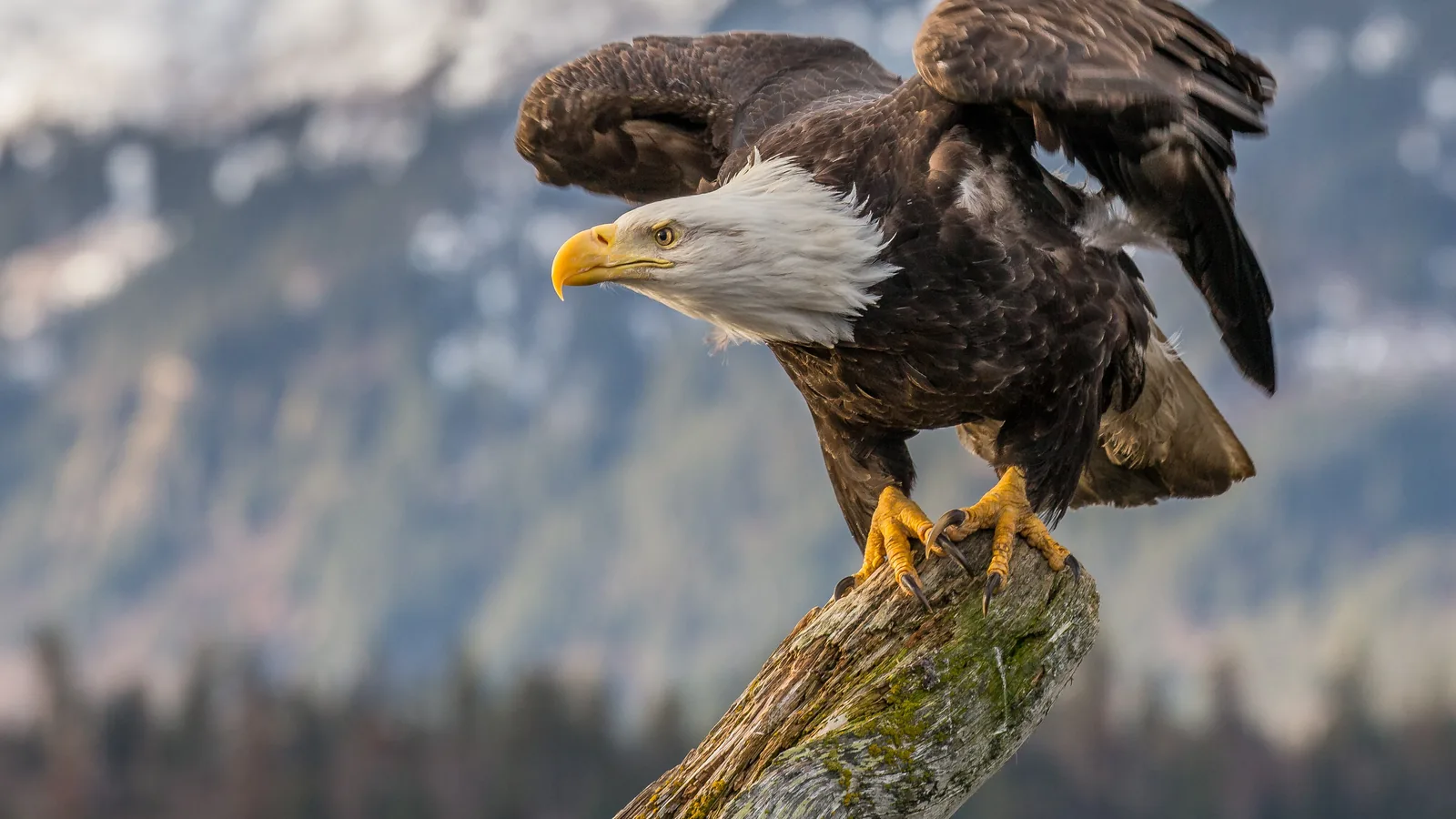
.jpg)
The Voice Hollywood Replaced
You already know what a Bald Eagle sounds like. Wide shot, snowy peak, then that long falling scream. Here is the problem. That is not the eagle. The scream belongs to a Red-tailed Hawk, and it has stood in for the national bird so long that most Americans have never heard the real thing.
The Voice That Belongs To Someone Else
The substitution is not a conspiracy, just an editing habit that hardened into a convention. Writing for Audubon, Nicholas Lund put it plainly: “Bald Eagles have sort of a dopey chuckle for a call, and Red-tails have that heart-stopping scream. People making movies want to show the eagle and have an impressive call, so they just put the two together and hope no one notices.”
Nobody noticed. For decades.
What a Bald Eagle actually produces is a thin stuttering chatter, closer to a gull working itself up than to anything you would put behind a flag. It is a strange thing to sit with. A bird can be chosen as the emblem of a country and still have its voice quietly replaced by a better one.
A Bird of Bad Moral Character
Benjamin Franklin heard the eagle clearly enough, and he was not impressed. In a letter to his daughter Sarah in January 1784, he wrote that the bird “does not get his living honestly,” and described exactly how: “You may have seen him perched on some dead tree, where, too lazy to fish for himself, he watches the labour of the fishing hawk; and when that diligent bird has at length taken a fish, and is bearing it to his nest for the support of his mate and young ones, the bald eagle pursues him, and takes it from him.”
He was right about the behaviour. Bald Eagles are habitual thieves, and Ospreys are their favourite victims.
Franklin is usually remembered for wanting a turkey instead. That is not quite what happened. The letter was a grumble about the Society of the Cincinnati and its eagle badge rather than a proposal to Congress. The accusation about the fish, though, was straight observation.
Bald Means White, Not Bare
The name has nothing to do with hair. “Bald” here is the older sense preserved in “piebald,” meaning marked with white, the same idea as the blaze on a horse’s face. A bald eagle is a white-headed eagle. The scientific name says it twice over: Haliaeetus leucocephalus is sea eagle, white head.
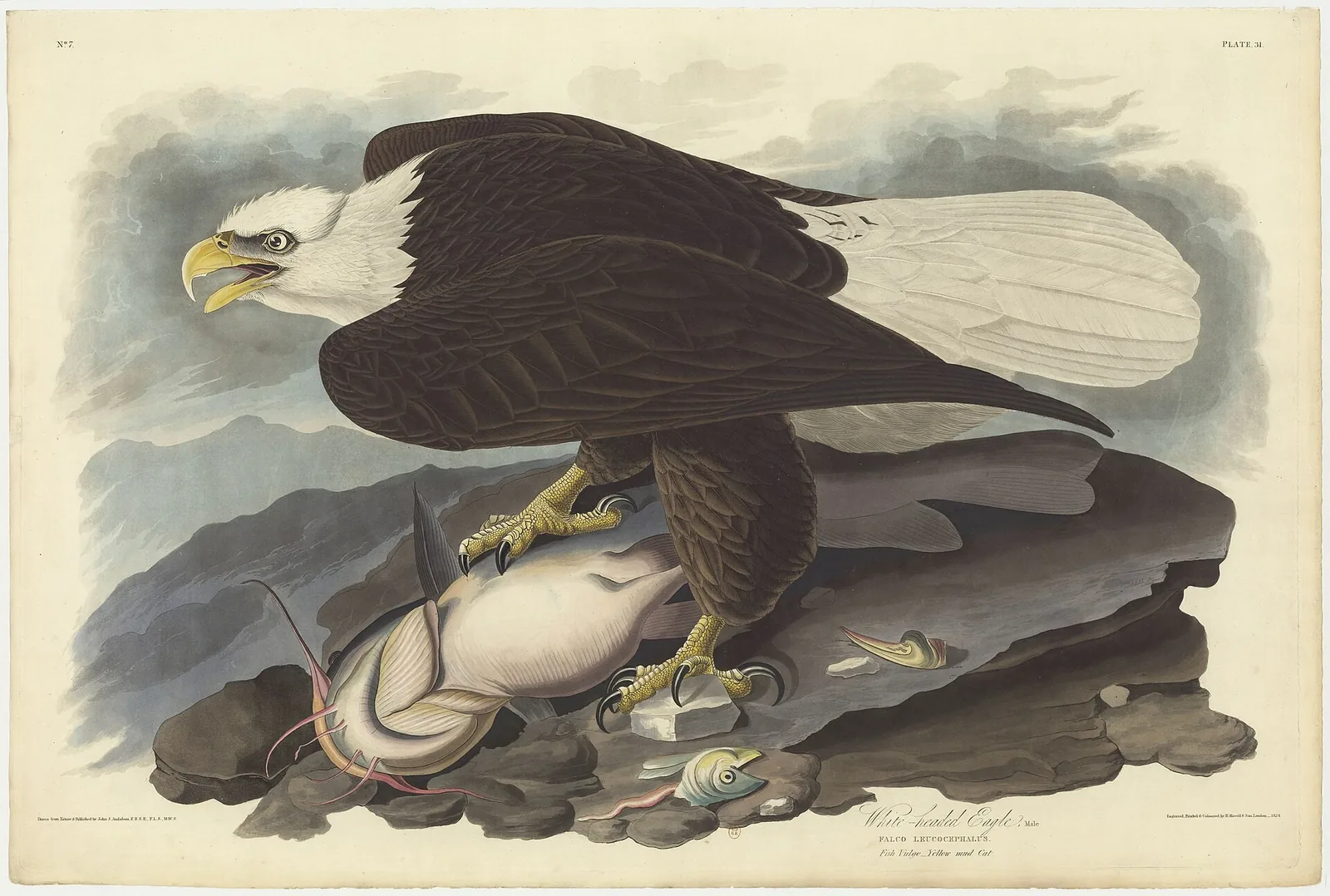
Audubon knew it. When he engraved the bird for The Birds of America, he labelled the plate White-headed Eagle. The bird in that picture is standing on a catfish it almost certainly did not catch.
So the emblem on the seal is a white-headed fish thief with a borrowed voice. That is not a diminishment. It is a far more interesting bird than the one in the advertisement, with the advantage of being real.
Sources:
- Audubon: Birdist Rule #50: Learn to Live with Bird Errors in TV and Movies
- Founders Online, National Archives: Benjamin Franklin to Sarah Bache, 26 January 1784
- Britannica: Why Are Bald Eagles Called Bald?
- Etymonline: piebald
- Cornell Lab of Ornithology: Bald Eagle sounds, All About Birds
- New England Public Media: Hollywood has been lying about what bald eagles really sound like