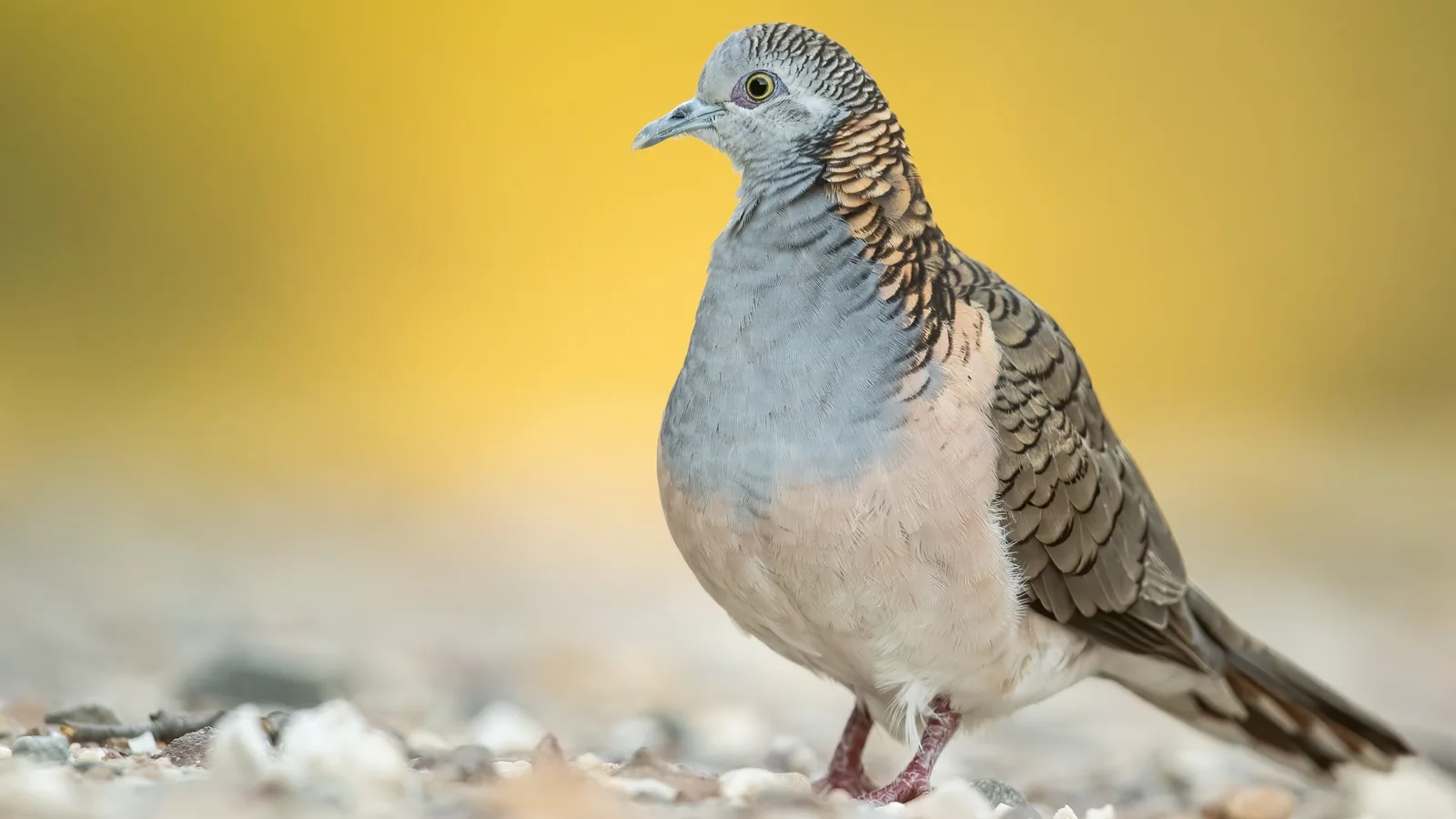

The Kookawook at First Light
If you wake somewhere along the tropical coast of Australia, anywhere from Cairns up to Darwin, one of the first sounds of the morning is a soft, rolling “cook-a-wook” repeated from a fence post or a powerline. It comes from a dove most people walk straight past. The Bar-shouldered Dove is plain at a glance and quietly spectacular up close, and its voice has been part of the northern soundscape for as long as anyone has been waking up there.
Bronze on the Shoulder
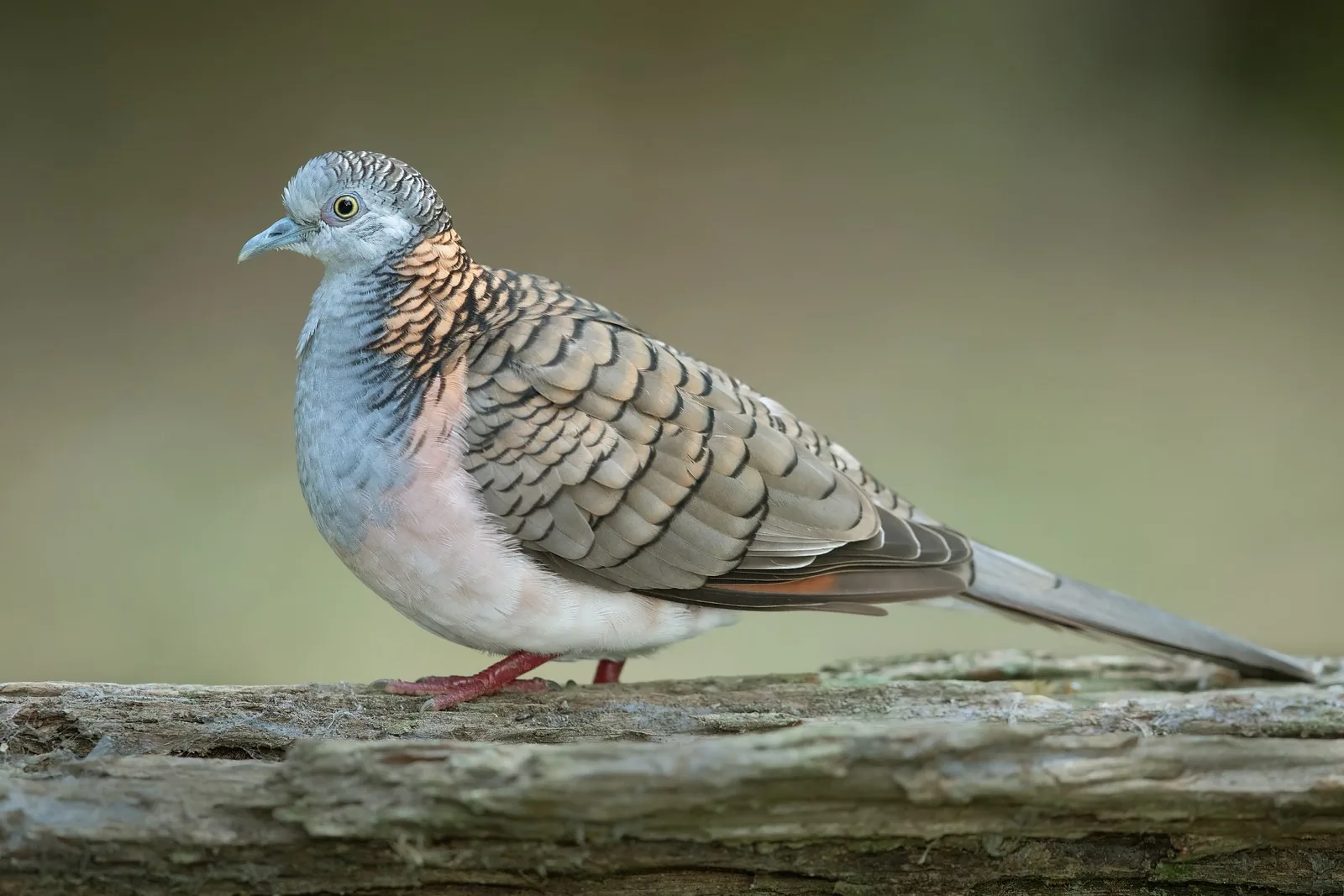
The name does the bird a small disservice. Yes, the wings are barred, scalloped in black over warm brown like fish scales. But the real showpiece is the back of the neck: a patch of coppery feathers, each one edged in black, that genuinely glistens when the light catches it. The scientific name is more modest. Geopelia comes from the Greek for “ground dove,” because this is a bird that spends its day walking and feeding on bare earth rather than up in the canopy. The species name, humeralis, is simply Latin for “of the shoulder.” Older field names get closer to where you actually find it: Mangrove Dove, Scrub Dove.
The Bird Named After Its Own Voice
The call is the thing. The standard rendering is “cook coo cook coo,” usually delivered two or three times, sometimes trailing off into a bubbling run that sounds oddly like soft laughter. Different ears hear different words in it. Some people write it as “coolicoo,” others as “hollyhock.” One of the bird’s own names, Kookawook, is really just an attempt to spell the sound. In 2000, the aviculturist (bird-keeper) Tony Brancato called that “cook-awook” one of the most characteristic sounds of the Australian tropical coast, and he was right. In Darwin and Cairns it is the common street-dove, cooing over the traffic at dawn and again in the late afternoon.
Quietly Moving In
Here is the part backyard birders tend to miss. The Bar-shouldered Dove is on the move. It has done well out of farmland clearing and watered suburban gardens, and over the past few decades it has been pushing south, into the Blue Mountains and the Illawarra, and even reaching north-western Victoria, well beyond its old tropical range. And like all pigeons and doves, the parents raise their two chicks on “crop milk,” a rich secretion that both the mother and the father produce in the throat. It is the closest thing in the bird world to a mammal nursing its young. A dove you wrote off as background noise turns out to be doing something almost no other animal with feathers can.
So the next time that “cook-a-wook” drifts through an open window at first light, give it a second look. The plain grey dove on the wire has a coppery collar most people never notice and a name built entirely out of its own call. It is also quietly colonising suburbs a thousand kilometres south of where it has any business being.
Sources:
- Wikipedia: Bar-shouldered dove
- Wikipedia: Geopelia (genus etymology)
- Birds in Backyards (BirdLife Australia): Bar-shouldered Dove
- Oiseaux-Birds: Bar-shouldered Dove
- AFA Watchbird (Tony Brancato, 2000): The Bar-shouldered Dove (Geopelia humeralis)
- Etymonline: humerus (Latin for “shoulder”)
- Wikipedia: Crop milk