
The Forest's Dinner Question
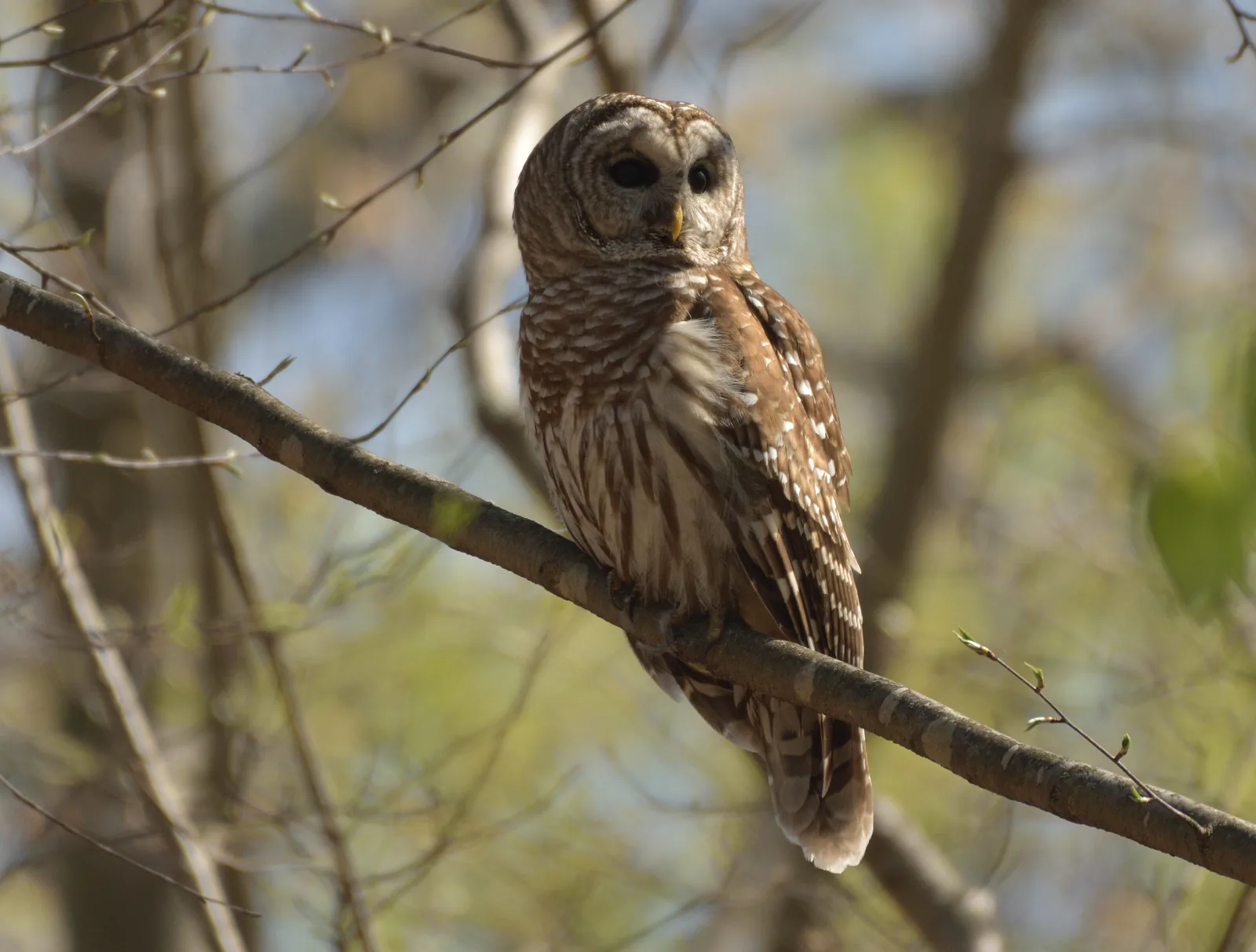
“Who cooks for you? Who cooks for you-all?” That is how the Cornell Lab of Ornithology writes the hooting of the Barred Owl, a classic sound of old forests and treed swamps. If you wake up near woods like that in eastern North America, or now in the Pacific Northwest, you may have heard the question yourself. The rhythm of eight accented hoots has also earned the bird the nickname “old eight-hooter.”
A Homebody at Heart
Barred Owls don’t migrate, and they barely move around at all. Of 158 birds that were banded and later found again, none had gone farther than 6 miles.
They also have some unexpected skills. Young owls can climb trees by gripping the bark with bill and talons, flapping their wings and walking up the trunk. Adults sometimes wade into shallow water after fish and crayfish.
The Long Way West
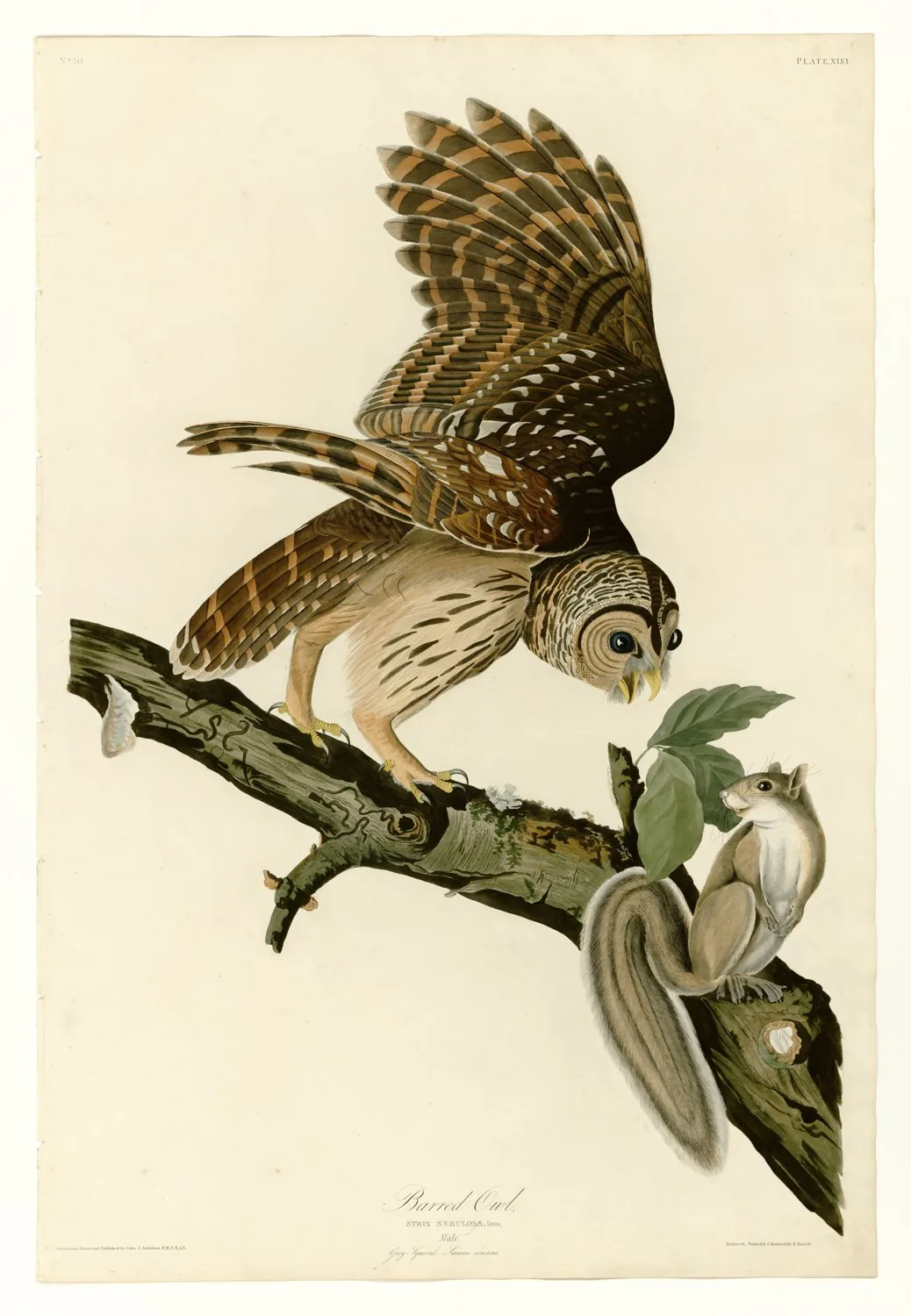
Despite all that staying put, the species as a whole has traveled a long way. Until the twentieth century, Barred Owls lived in old forests in the east. Frequent fires probably kept them out of the northwestern boreal forests. Fire suppression, along with tree planting on the Great Plains, then let them spread north and west, and eventually down the West Coast as far as California.
There they met their slightly smaller relative, the Spotted Owl. Barred Owls have displaced Spotted Owls and hybridized with them, on top of the habitat loss Spotted Owls already faced.
A Hard Choice
Scientists tested what would happen if Barred Owls were removed. In a large experiment published in 2021 in the journal PNAS, Northern Spotted Owl numbers stabilized where Barred Owls were removed, with a 0.2 percent decline per year. Where they were not removed, the decline continued at 12.1 percent per year.
In 2024, the U.S. Fish and Wildlife Service adopted a strategy that includes lethal removal of Barred Owls in parts of Washington, Oregon and California. It relies on willing land managers and landowners. The agency says that at most it would remove less than half of 1 percent of the North American population each year.
The owl went where changing forests let it go. Its question still carries through the woods.
Sources:
- Cornell Lab of Ornithology: Barred Owl overview, All About Birds
- Cornell Lab of Ornithology: Barred Owl life history, All About Birds
- PNAS (via PubMed Central): Wiens et al. (2021), Invader removal triggers competitive release in a threatened avian predator
- U.S. Fish and Wildlife Service: Strategy to manage invasive barred owls to protect imperiled spotted owls
- Wikipedia: Barred owl