_Great_Bay_Wildlife_Management_Area,_New_Jersey,_USA.png)
The Mudflat's Watchful Whistler
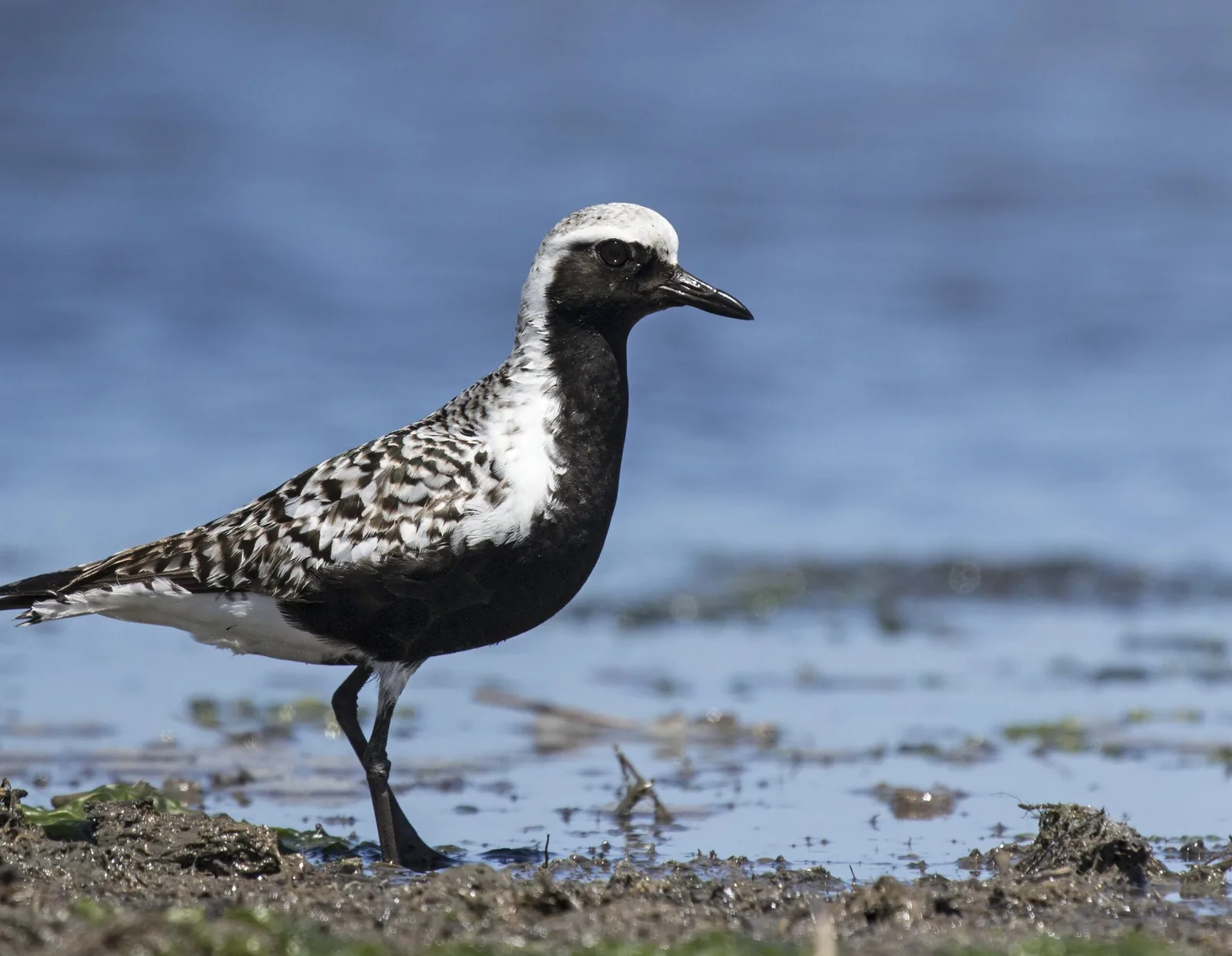
Picture a quiet mudflat at low tide. Most of the shorebirds have their heads down, probing. One bird stands tall, head up, scanning. That’s the Black-bellied Plover, and on every coast from Florida to Mumbai it keeps the lookout for everybody else.
A Name That Means Rain
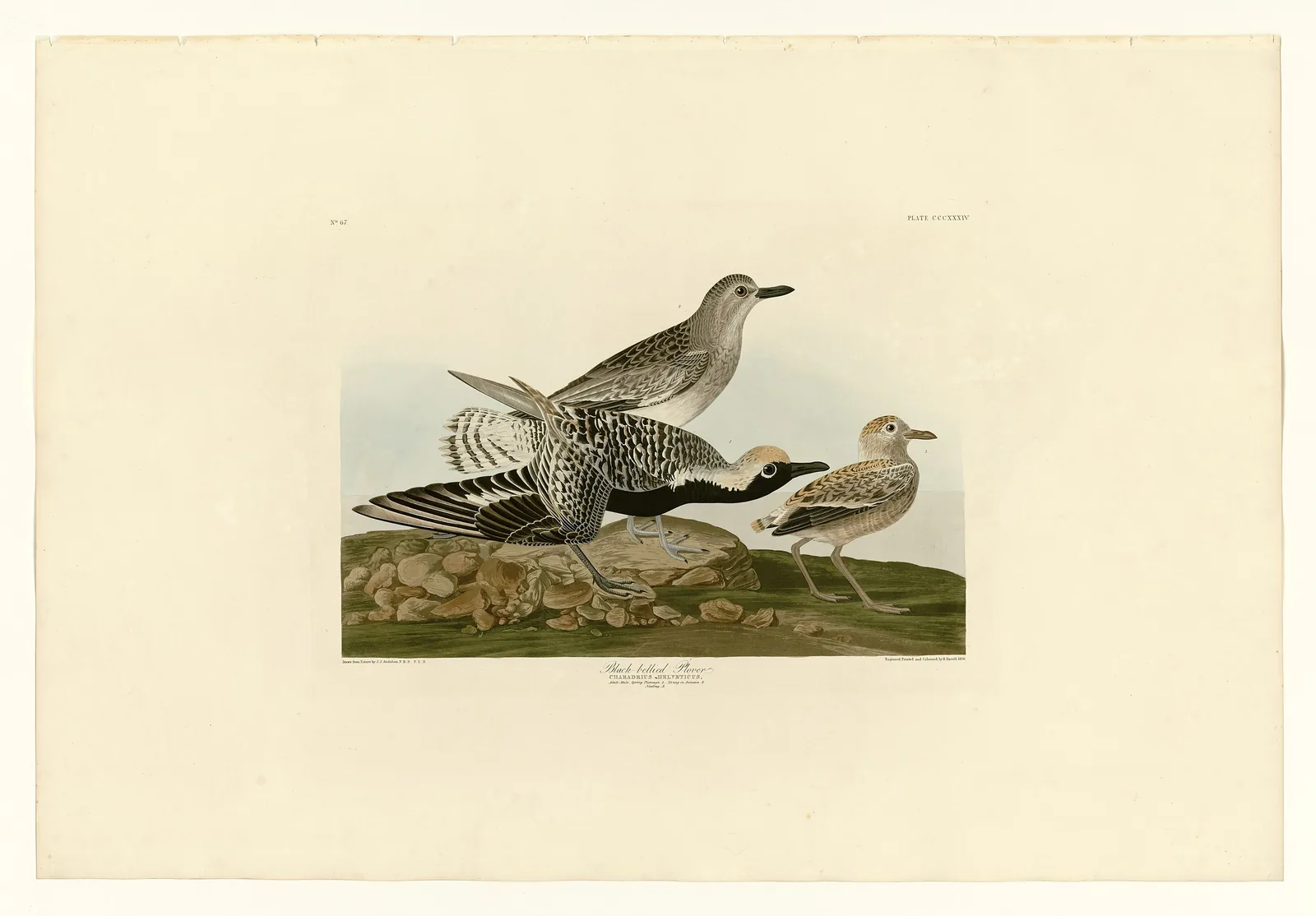
The genus Pluvialis comes from Latin pluvia, rain. When Mathurin Jacques Brisson, an 18th-century French naturalist, formalised the genus in 1760, he was reaching back to a country belief older than scientific ornithology: that these plovers flocked before rain came. The species name squatarola is older and stranger. It is a Latinised form of Sgatarola, the local Venetian name for the bird. Seventeenth-century English naturalists travelling through Venice wrote the word down without bothering to ask what it meant, and the name carried into formal taxonomy a century later.
Then English-speaking ornithology split the bird in two. North America picked the breeding plumage and called it Black-bellied Plover. The rest of the world, from Britain to Australia, chose the off-duty look and called it Grey Plover. Older books knew it as silver plover or bullhead. Same bird, four names.
The Watchman of the Mudflats
Most shorebirds feed in dense, busy flocks. The Black-bellied Plover prefers space. It scatters across the tideline, well apart from its neighbours, hunting by sight rather than by probing the mud, with the head up far more than down. That posture is doing real work. Because its eyes are on the horizon as often as on the ground, the plover almost always spots a peregrine falcon before any of its neighbours do. And the moment it does, it calls.
The call itself is hard to forget. A clear, plaintive three-note whistle, pee-oo-wee, carries far across mudflats by day or by night. When the plover whistles and lifts, every shorebird nearby goes up with it. Cornell Lab calls it the world’s sentinel for mixed shorebird flocks.
That wariness once saved the species. In the late nineteenth century, market gunners shot most of the Atlantic coast’s shorebirds for the meat trade. They tried hard to shoot Black-bellied Plovers and largely failed. The plover’s habit of standing apart and watching the sky kept it out of range while shorebirds of similar size were nearly wiped out.
If the Bird Rise app plays a Black-bellied Plover at sunrise, the three falling notes are what every shorebird on a Florida beach woke up listening for.
Sources:
- Wikipedia: Grey plover
- Wikipedia: Pluvialis (genus)
- Cornell Lab, Birds of the World: Black-bellied Plover: Introduction
- Audubon Field Guide: Black-bellied Plover
- Audubon Birds of America: Plate 334, Black-bellied Plover
- Wiktionary: pluvialis