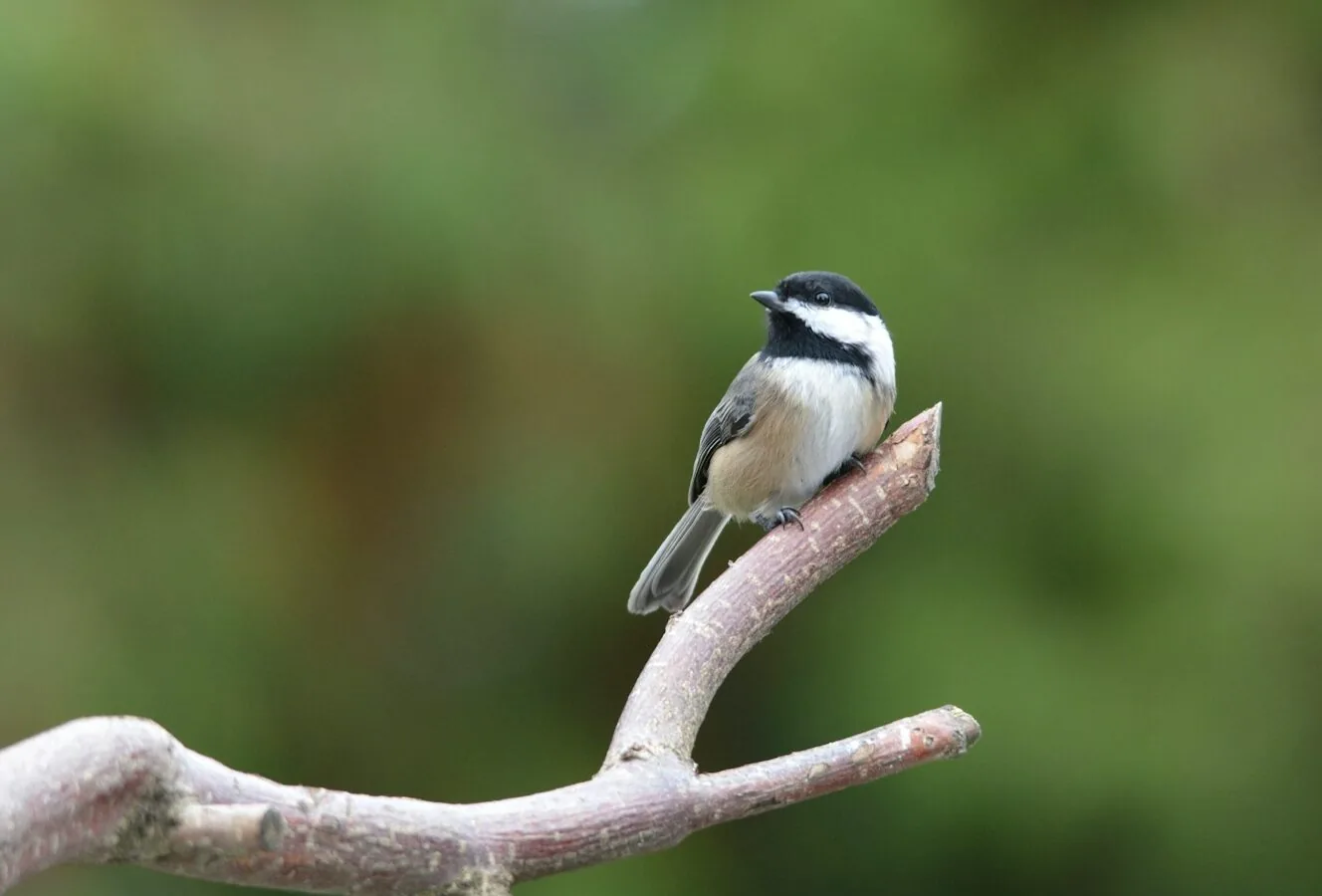
The Black-capped Chickadee does not shout to be heard. It speaks to be understood.
When it gives the familiar “chick-a-dee-dee” call, that sound is not a generic warning. Decades of research show the call changes depending on the threat. Fewer “dee” notes signal a low-risk predator. Many “dee” notes mean danger that requires immediate attention. A small, fast owl hiding in a tree triggers a longer, more intense version than a slow-moving hawk overhead. Other birds listen closely and respond accordingly, either freezing or joining a mobbing response.
This matters because the call does not just describe fear. It carries instructions. The chickadee is effectively telling nearby birds how urgent the situation is and how to behave next. That level of vocal precision is rare, and it changes how you hear that call the next time it cuts through a quiet morning.
“Chickadees produce more ‘dee’ notes when the predator is smaller and more dangerous.” — Templeton, Greene & Davis, Science, 2005
A Name That Imitates Behavior
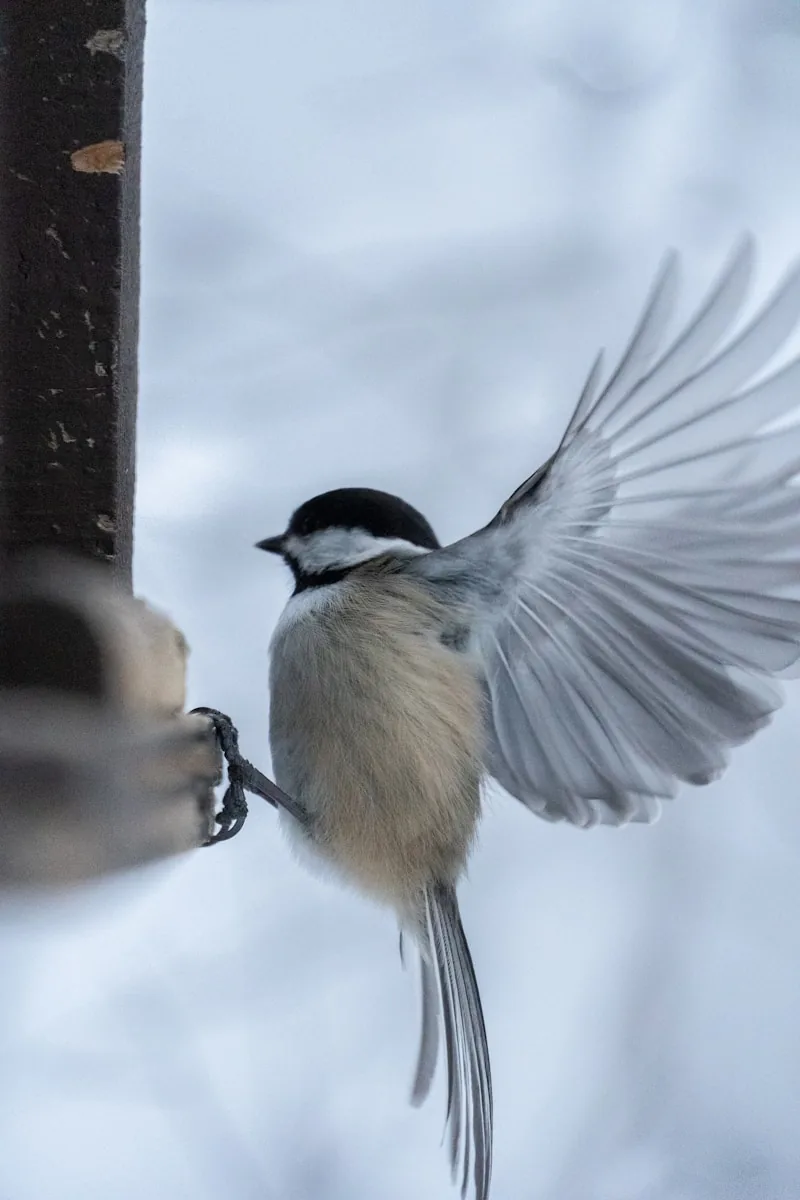
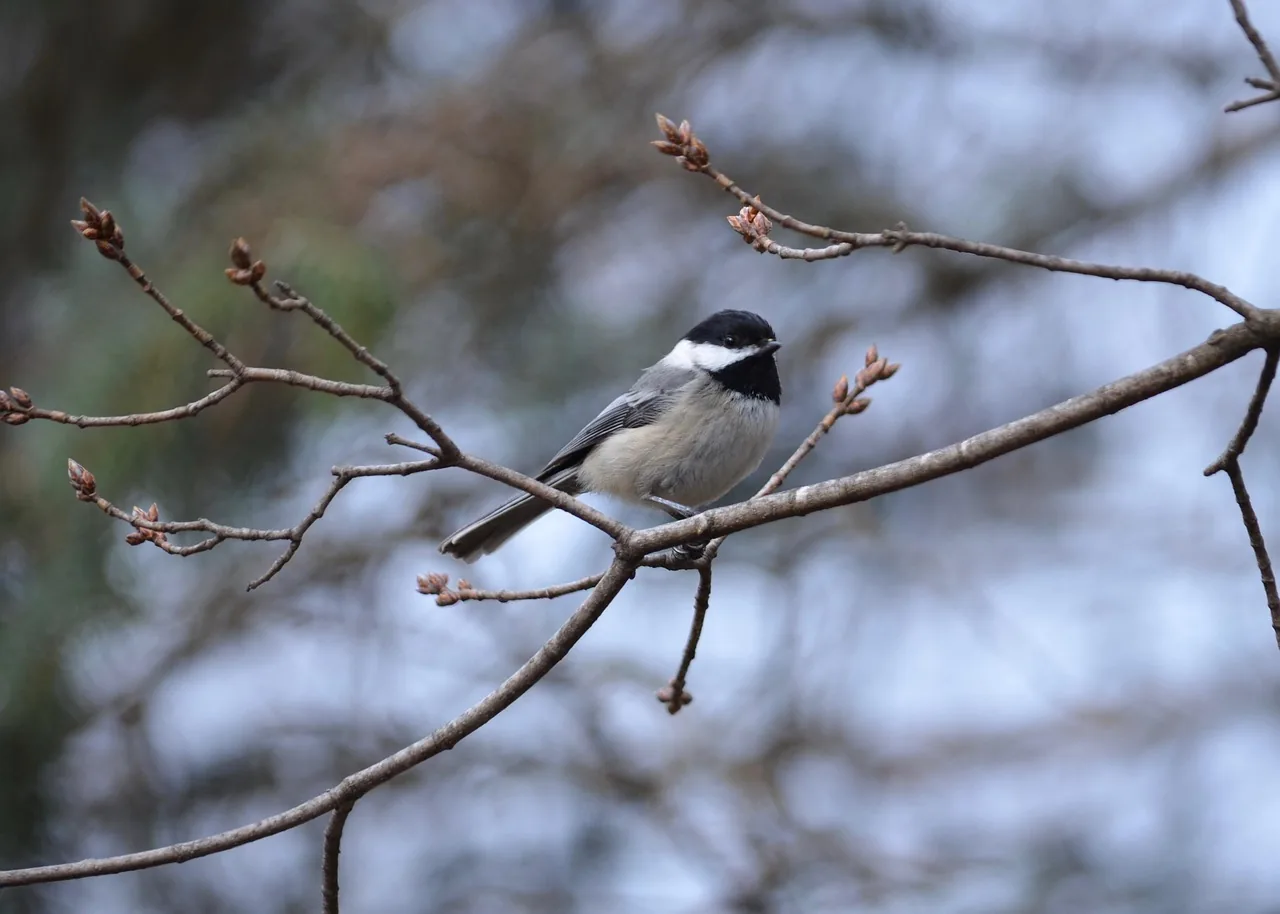
“Chickadee” is not poetic. It is literal. The name comes directly from the sound of the call itself, an example of onomatopoeia baked into common language. English speakers named the bird by repeating what they heard.
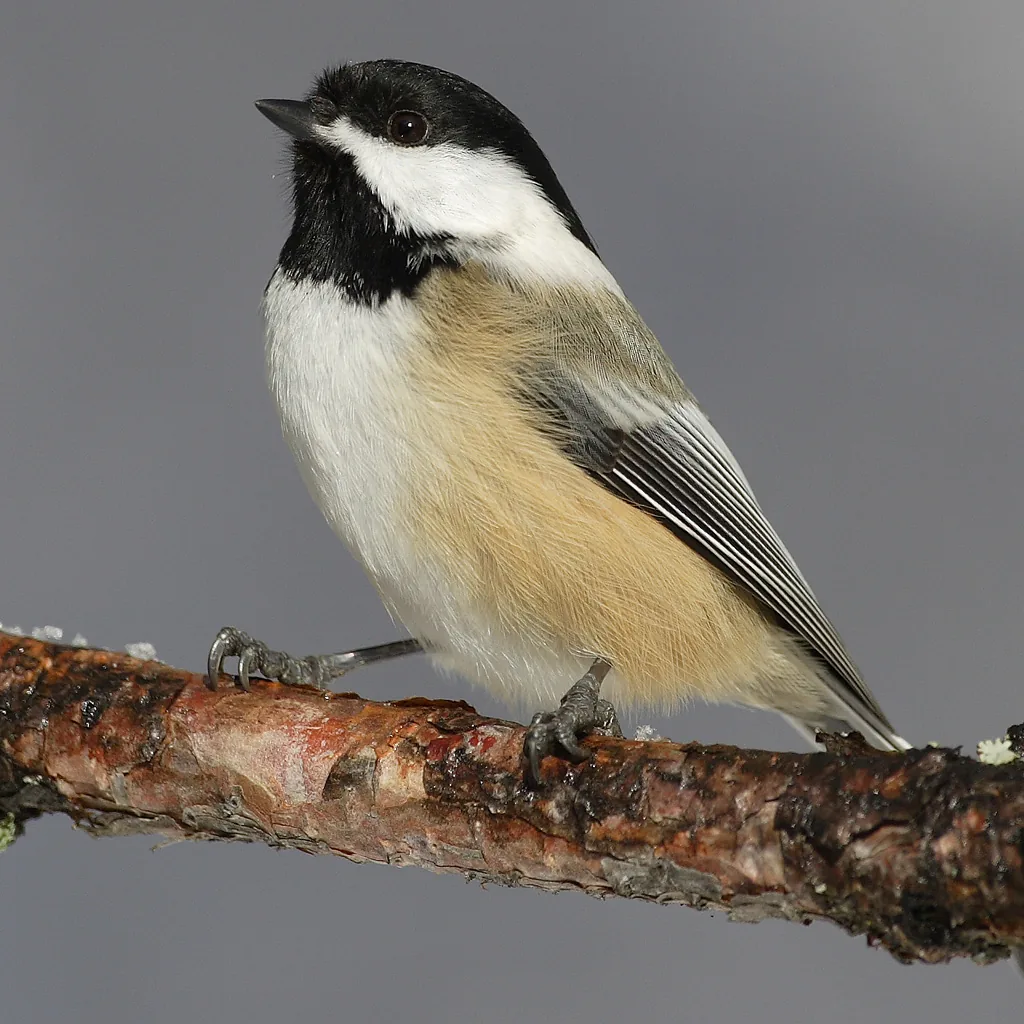
That instinct shows up elsewhere too. In Cherokee, the bird is traditionally called tsigili’i, another name shaped by its voice rather than its appearance. French speakers call it mésange à tête noire, describing the black cap, but English stuck with sound over sight.
The name tells you what people noticed first. Not the color. Not the size. The voice.
Familiar Enough to Become a Symbol
The Black-capped Chickadee holds an unusual place in North American culture because it is both wild and approachable. It is the official bird of Massachusetts and New Brunswick, chosen not for rarity or beauty, but for familiarity and resilience.
Aldo Leopold wrote about a banded chickadee that survived multiple Wisconsin winters, using it to argue that toughness does not require size. The bird also slips easily into popular culture. The 1940 film My Little Chickadee used the name as shorthand for charm and pluck, trusting audiences to already understand the reference.
“So small a bundle of large enthusiasms.” — Aldo Leopold
The reputation sticks because the bird earns it. Alert, social, and outspoken, the chickadee behaves like a participant in its environment rather than a background presence.
Sources:
- Cornell Lab of Ornithology – Species profile
- Templeton, Greene & Davis (2005), Science
- Audubon Society – Black-capped Chickadee