
A Flame for Anna Blackburne
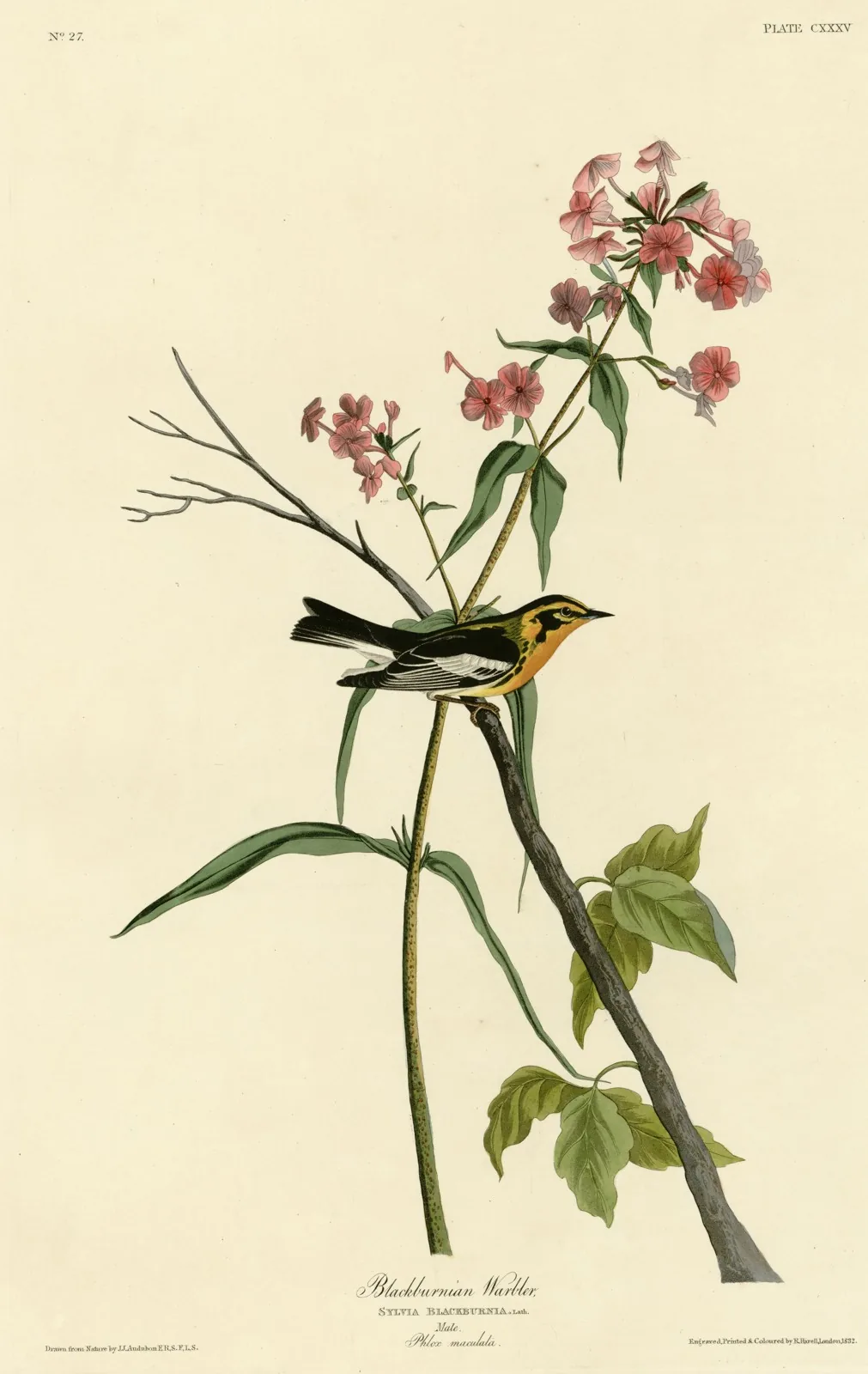
If you wake up near spruce or hemlock forest in eastern Canada or the Appalachians in spring, a Blackburnian Warbler may be singing somewhere above you. The song ends in what the Cornell Lab of Ornithology calls an “impossibly high-pitched flourish.” The name sounds like a place, but it belongs to an 18th-century Englishwoman who had North American birds shipped to her home.
The Woman Behind the Name
Anna Blackburne was born in 1726 at Orford Hall, near Warrington in northwest England. She learned Latin so she could read the Systema Naturae of Carl Linnaeus, the Swedish scientist behind the modern system of naming species. She also built her own natural history museum, with insects, shells, minerals and birds.
Her brother Ashton lived in New York and sent her bird specimens. That collection caught the attention of Thomas Pennant, a Welsh naturalist who visited Orford Hall in 1772. He wrote that, “not content with the botanic, she causes North America to be explored for its animals.”
Pennant went on to study those birds for his book Arctic Zoology. In its preface, he thanked “the rich museum of American Birds, preserved by Mrs. Anna Blackburn” for letting him describe almost every bird known in Jersey, New York and Connecticut. The “Mrs.” was a courtesy of the time, since she never married. In 1785, he gave the warbler its English name in her honor.
Orange at the Top of the Tree
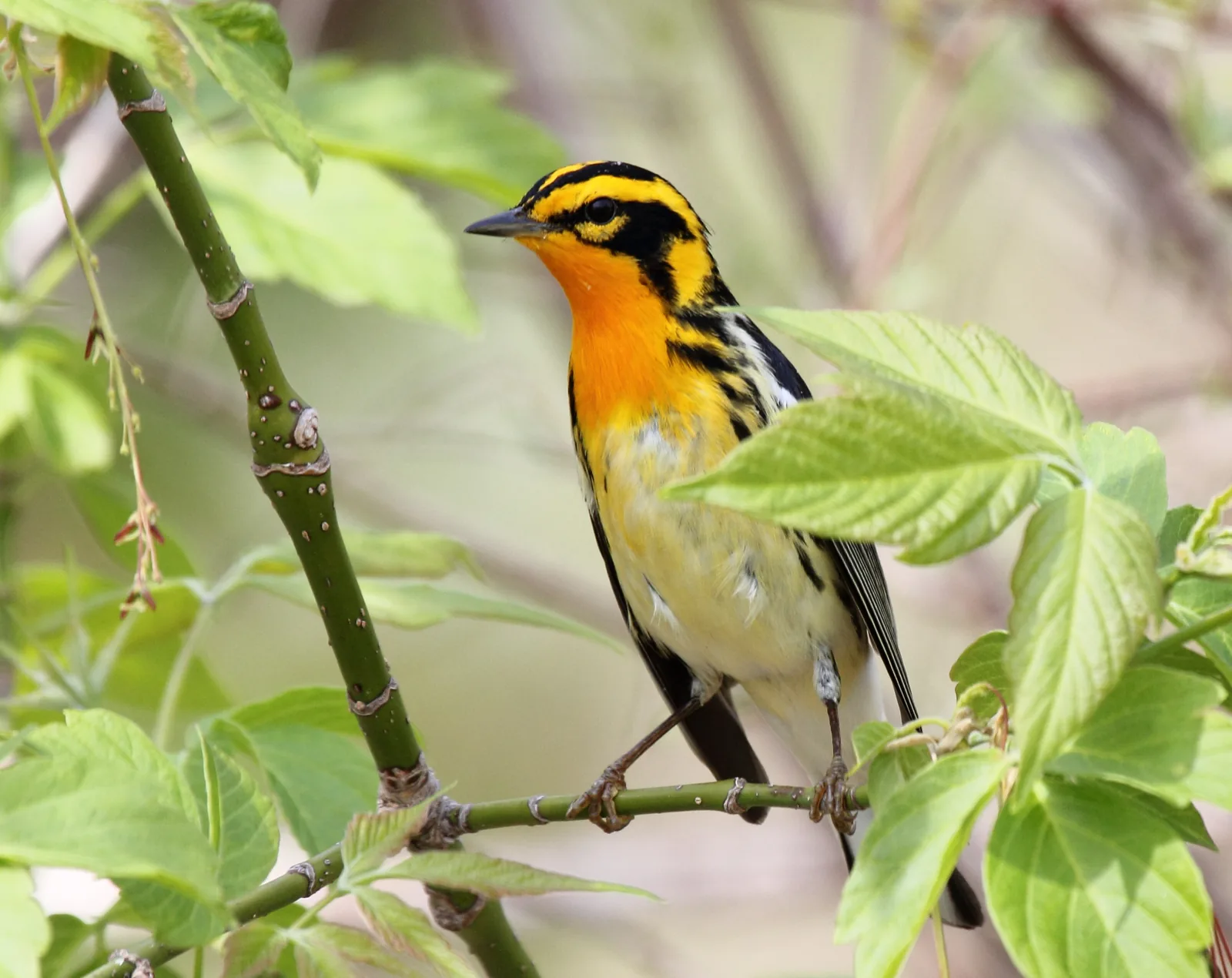
The breeding male is hard to forget, with a flame-orange face and throat set against black and white. Cornell notes that no other North American warbler has an orange throat.
Seeing one is another matter. These birds specialize in the forest canopy and are seldom at eye level except on migration. Their nests are usually higher in the tree than those of other warblers, up to 80 feet off the ground. Up there they eat large quantities of caterpillars, including spruce budworm.
An Aerial Ballet
In spring, rival males settle their borders in the air. Cornell says these fights “recall an aerial ballet,” with the birds chasing each other around the treetops in loops and plummeting through the branches in a whirling pattern. Researchers even have a name for one slow, exaggerated flapping display: “moth flight.” Once territories are settled, the aerobatics die down.
The warbler still carries the name of a woman who learned Latin to read about nature, and who took a real part in how North American birds came to be described.
Sources:
- Wikipedia: Anna Blackburne
- Wikipedia: Blackburnian warbler
- Cornell Lab of Ornithology: Blackburnian Warbler overview, All About Birds
- Cornell Lab of Ornithology: Blackburnian Warbler life history, All About Birds