
The Tiny Mimic With the Wrong Name
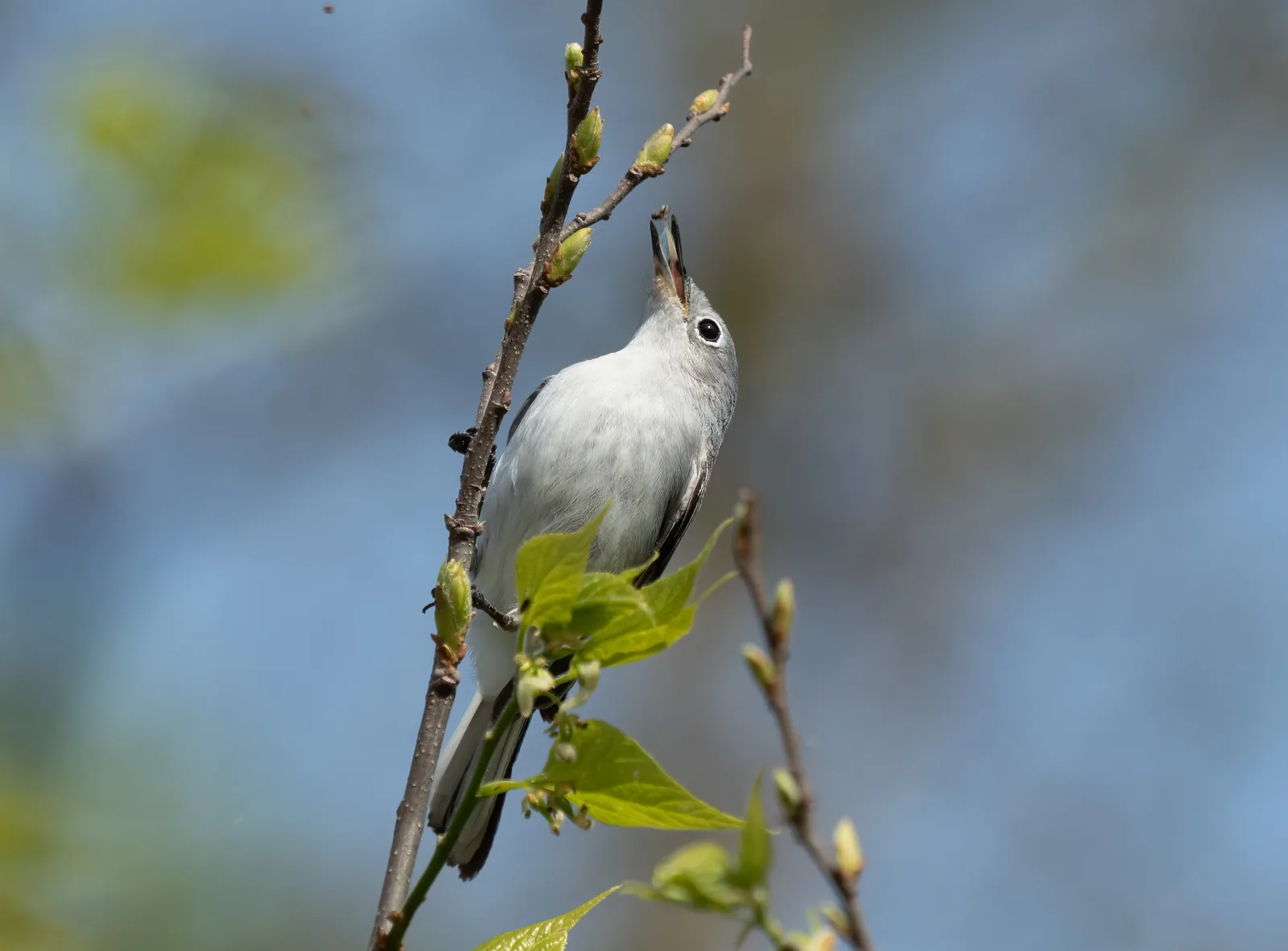
The Blue-gray Gnatcatcher has a misleading name. The Cornell Lab of Ornithology says plainly that gnats do not form a significant part of its diet. If you wake up in the eastern or southwestern United States, southern Ontario or Mexico, you may hear this tiny bird in spring. It weighs only about 5 to 9 grams.
A Bird That Skips the Gnats
What it does eat is small insects and spiders, and the menu changes with the region. In the Northeast, adult and larval moths can make up to half of its prey. It hops through the outer leaves flicking its long, white-edged tail from side to side, which may help it flush insects out of hiding.
Table manners are not gentle. The smallest prey gets swallowed alive. Larger prey has its wings torn off, and the body is beaten on a perch before the bird eats it.
The Little Mockingbird
The song is high and nasal, and it is not entirely original. The gnatcatcher mixes snippets of other birds’ sounds into its own, which, along with its gray coloring and long tail, has earned it the nickname “Little Mockingbird.”
For something so small, it takes its territory very seriously. Cornell describes rivals being chased as far as 70 feet. If an intruder holds out, the two can end up climbing steeply through the air, breast to breast, snapping at each other.
Seven Nests in a Season
The nest is the real achievement. Both parents build it, taking up to two weeks over a cup only 2 to 3 inches wide. It is held together and fixed to the branch with spiderweb, then decorated on the outside with bits of lichen.
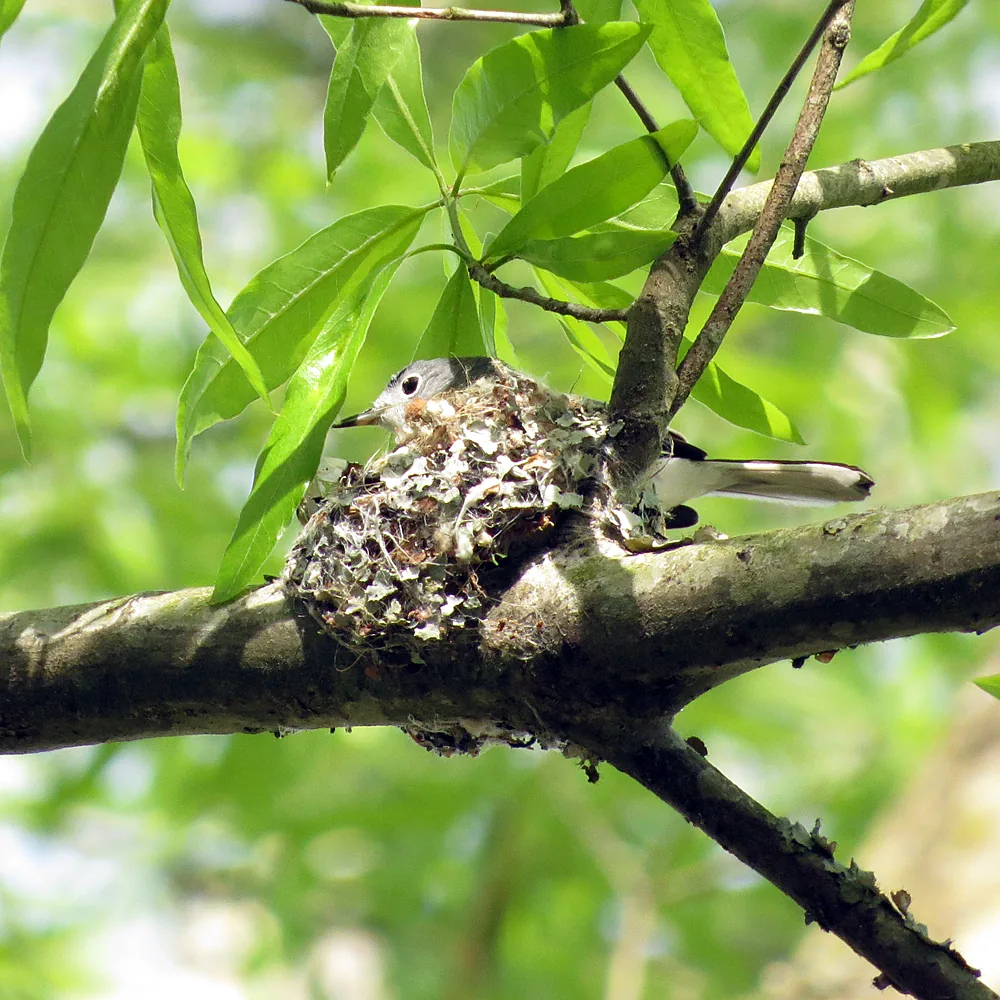
All that work often has to be repeated. Nests are frequently lost to predators or mites, and a pair can build up to seven in one breeding season. They often reuse material from earlier nests, which speeds up the next attempt.
So the name gets the diet wrong and says nothing about the song or the nest. For a bird this small, there is a lot it leaves out.
Sources:
- Cornell Lab of Ornithology: Blue-gray Gnatcatcher overview, All About Birds
- Cornell Lab of Ornithology: Blue-gray Gnatcatcher life history, All About Birds
- Cornell Lab of Ornithology: Blue-gray Gnatcatcher identification, All About Birds
- Wikipedia: Blue-gray gnatcatcher