.jpg)
The Plague Bird's Berry Bender
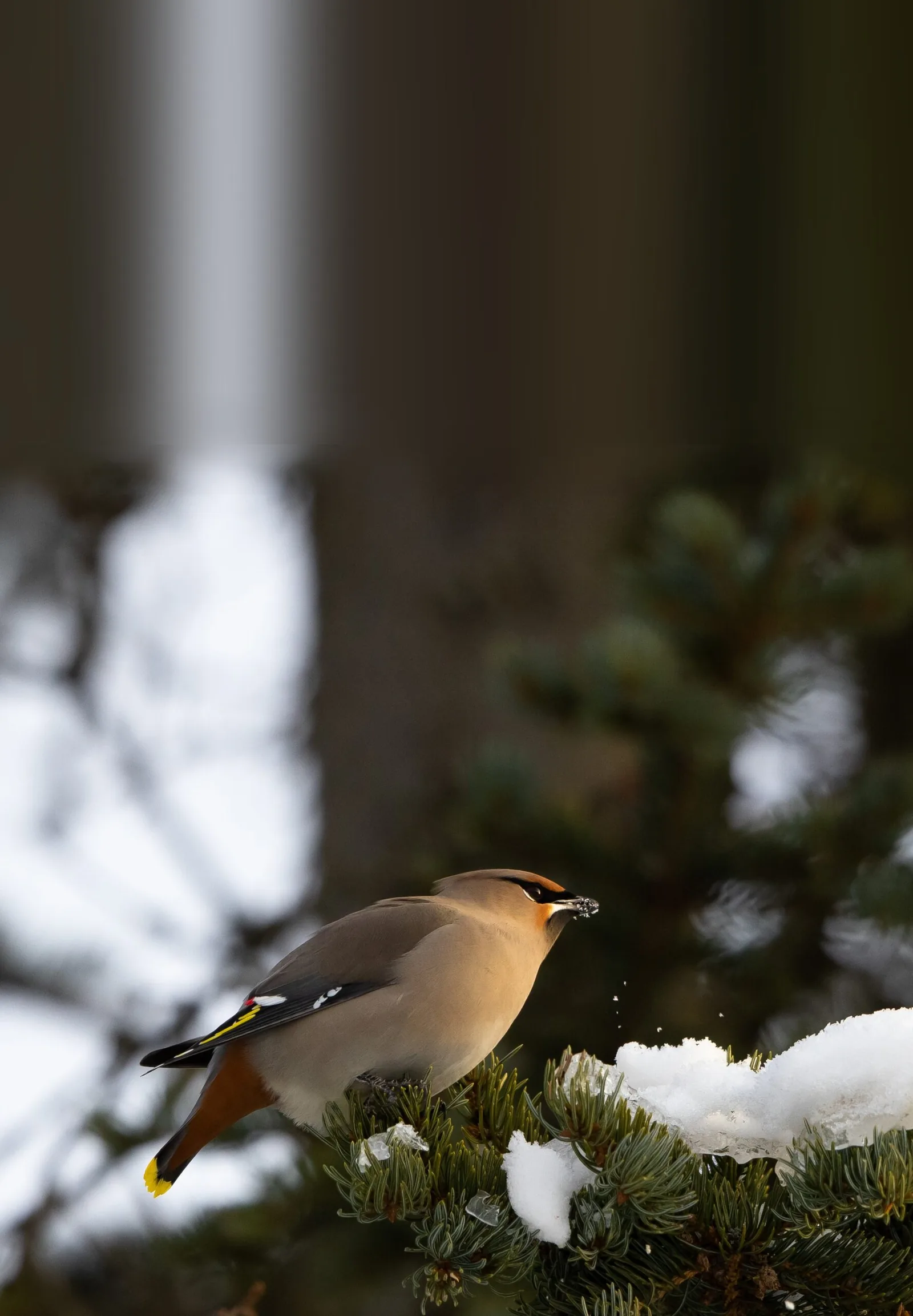
The Bohemian Waxwing isn’t from Bohemia, and the red drops on its wings aren’t really wax. Dutch villagers used to call it the plague bird. Every few winters a flock of these crested, silken berry-eaters descends on northern Europe’s rowan trees (mountain ash) by the thousand and proceeds to eat itself drunk on fermented fruit.
A Wanderer With Three Names
The Latin label Bombycilla garrulus is a Frankenstein. Bombycilla means “silktail,” a translation of the German Seidenschwänze. Garrulus is plain Latin for “talkative.” And Bohemian has nothing to do with the Czech region; it carries the older French sense of bohémien, the wandering life that later gave us la vie bohème.
In Dutch and Flemish villages, the years these flocks suddenly arrived sometimes coincided with outbreaks of cholera or plague, and the bird earned its other name: Pestvogel, the plague bird. Locals burned juniper branches to fumigate their houses and ate the berries for protection. The waxwings, indifferent to the omen, ate the same berries.
A Berry Bender That Sometimes Ends Badly
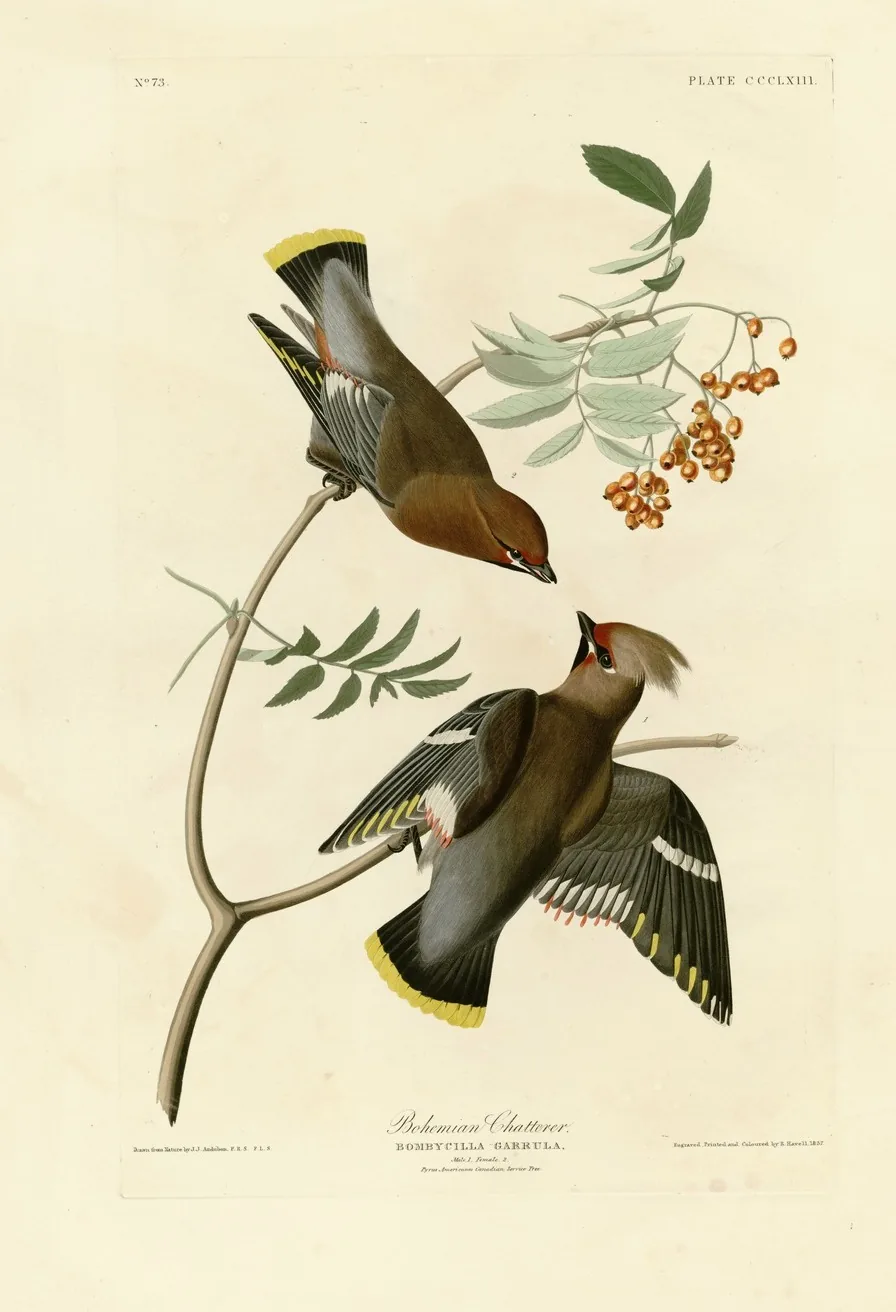
A single Bohemian Waxwing puts away 600 to 1,000 berries a day, more than twice its own body weight. By late winter the rowans have frozen and thawed enough times for the sugars to ferment. The waxwings keep eating; the berry still tastes like a berry.
Birds metabolise alcohol better than humans, but the system has a ceiling. Waxwings do become genuinely intoxicated on their own dinner, and the field reports note that the outcomes can be fatal.
The courtship feeding is gentler. A male places a berry into his partner’s bill, she passes it back, and roughly ninety percent of these exchanges lead to nothing more than the gift itself.
The Wax That Isn’t Wax
On an adult waxwing’s secondary flight feathers there is a row of small red droplets that look exactly like sealing wax. They are flattened tips of feather shafts, coloured red with astaxanthin, the same carotenoid that puts the pink in flamingos and shrimp.
The Bohemian Waxwing wears flamingo pigment on its wings and eats itself drunk on fermented berries every winter. Watch closely if a crested flock ever lands near you; they will not pass through again for years.
Sources:
- Wikipedia: Bohemian waxwing
- Wikipedia: Cedar waxwing (ethanol metabolism note)
- Wikipedia: Bohemianism (origin of bohémien)
- Wiktionary: garrulus
- Wiktionary: bombyx
- National Audubon Society: Bohemian Waxwing field guide
- British Trust for Ornithology: Waxwing BirdFacts
- RSPB: Waxwing species guide
- Wikimedia Commons: Audubon, Bohemian Chatterer, Plate 363
