.jpg)
The Forest's Million-Bird Wave
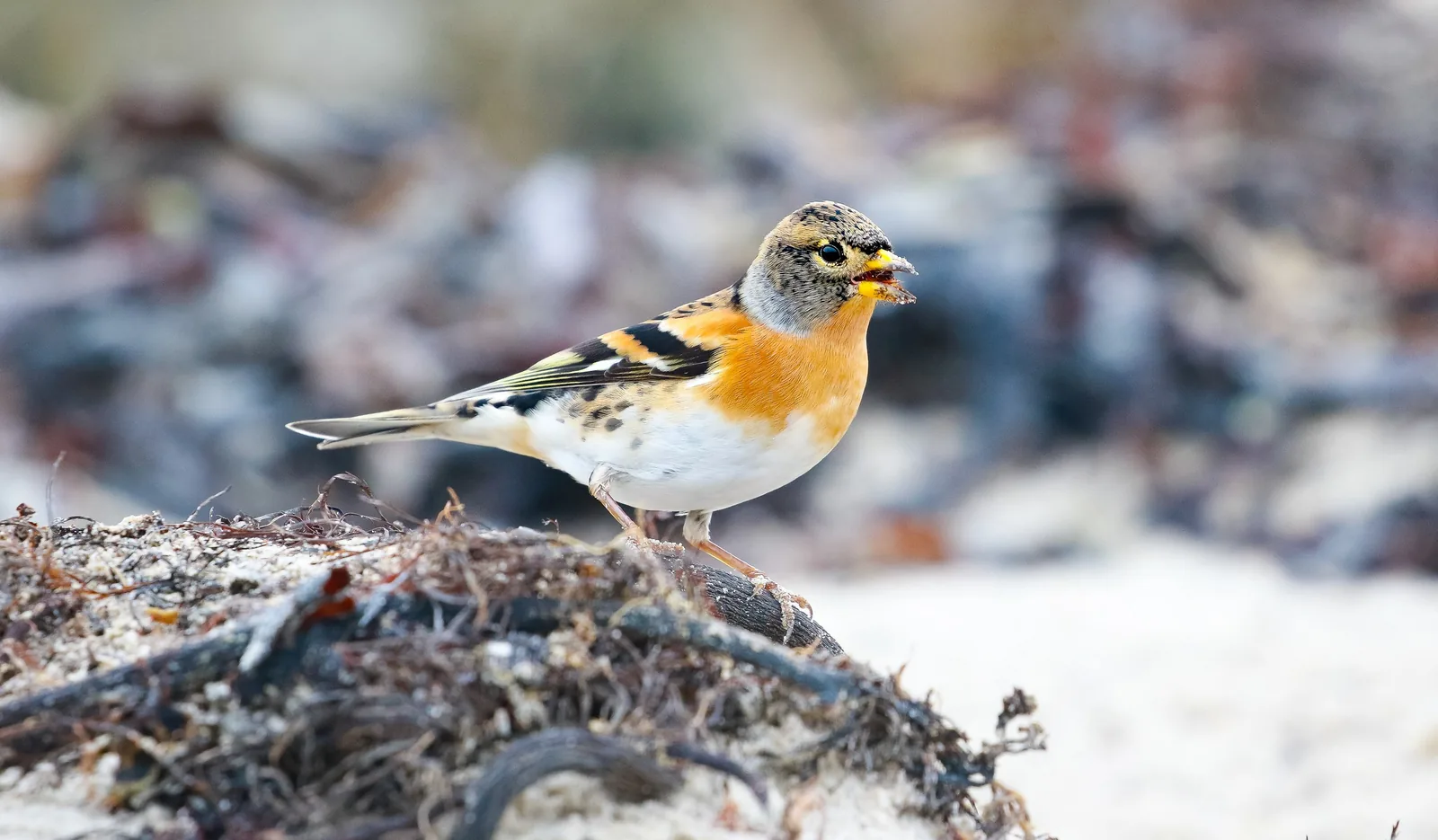
The Brambling is a small finch with an orange chest, a black-and-white head, and a wing pattern that looks copied from a chaffinch’s. Most winters it goes unnoticed. Then, every so often, a beech wood somewhere in Europe fills with so many Bramblings that nobody can count them, and ornithologists are still arguing about the figure seventy years later.
A Million Birds in Two Football Fields
The most famous of these gatherings settled into a Swiss beech wood in the winter of 1951 to 1952. The original Swiss reports put the roost at seventy million birds. That figure passed into bird books for two generations. In 2021 the Swedish ornithologist Tobias Svensson read every published mass-roost paper for the species and argued that the largest defensible total was closer to fifteen million. Either way, no other Brambling roost has come near it since.
Even the cautious figure is hard to picture. Svensson estimates the density at about one million Bramblings per hectare, which is roughly two American football fields’ worth of forest.
The phenomenon has not gone away. In January 2018, a flock of between two and five million Bramblings settled in the Zasavje hills along the Sava river in Slovenia, and the exact roost coordinates were withheld to keep the crowds away.
A Mountain Finch That Skips the Mountain
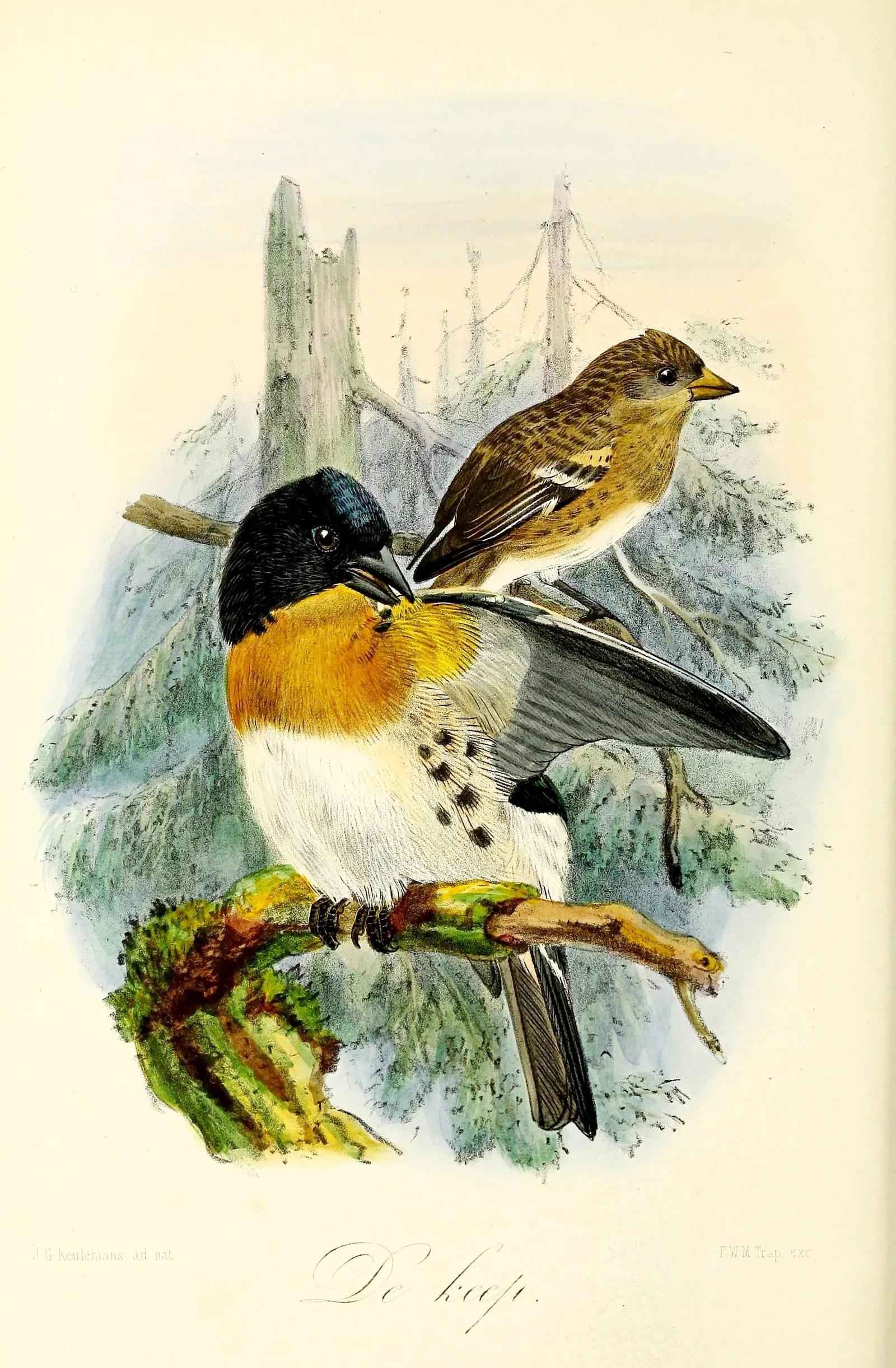
The 16th-century English physician William Turner published the first printed book devoted entirely to birds in 1544, and the Brambling appears in it under the English name bramlyng. The Swedish naturalist Carl Linnaeus latinised the genus as Fringilla in 1758 and added the species epithet montifringilla, meaning mountain finch. The bird politely ignored him. Bramblings breed across the boreal forest belt of Fennoscandia, the Baltic states, and Russia, in flat conifer country, almost never in the high mountains the Latin name suggests.
Scotland kept its own opinions. In the eastern and southern Highlands the bird was once known as Cock o’ the North, after the rust-and-black plumage of the breeding male, and Tartan Back, for the same reason in fewer syllables. The English chose Bramble Finch and Mountain Finch, neither of which fits, and the modern textbooks settled on Brambling for reasons no one quite remembers.
A Wheezy Voice and a Following Wind
The Brambling does not sing the way a chaffinch sings. Where the chaffinch builds a clean falling phrase, the Brambling produces a long, nasal, drawn-out wheeze, often written as zhweee or tsweep. The flight call is the same shape, only shorter, and a beech wood in February can sound less like a forest and more like a vast wheezing chorus of harmonicas.
What makes that choir possible is the beech mast. Beech trees synchronise their seed crop across regions, fruiting hard one year and barely the next. Bramblings track the surplus across continents, which is why a Slovenian forest can hold five million birds one winter and almost none the next. Even on the Bird Rise app, what plays is not one bird but several, with others answering somewhere in the distance. The wild thing arrives on a following wind in numbers past counting. It eats the woodland floor clean and vanishes before anyone has finished explaining it.
Sources:
- Wikipedia: Brambling species page
- Tobias Svensson, Ornis Svecica (2021): A review of mass concentrations of Bramblings Fringilla montifringilla
- Rare Bird Alert (Jan 2018): Mega flock of 5 million Brambling in Slovenia
- British Trust for Ornithology: Brambling species page
- Birdfact: Brambling species profile
- Wikipedia: Cock o’ the North (disambiguation)
- Wikipedia: William Turner (naturalist)
- Animal Diversity Web (University of Michigan): Fringilla montifringilla life history