
The Singer Hidden in the Rock
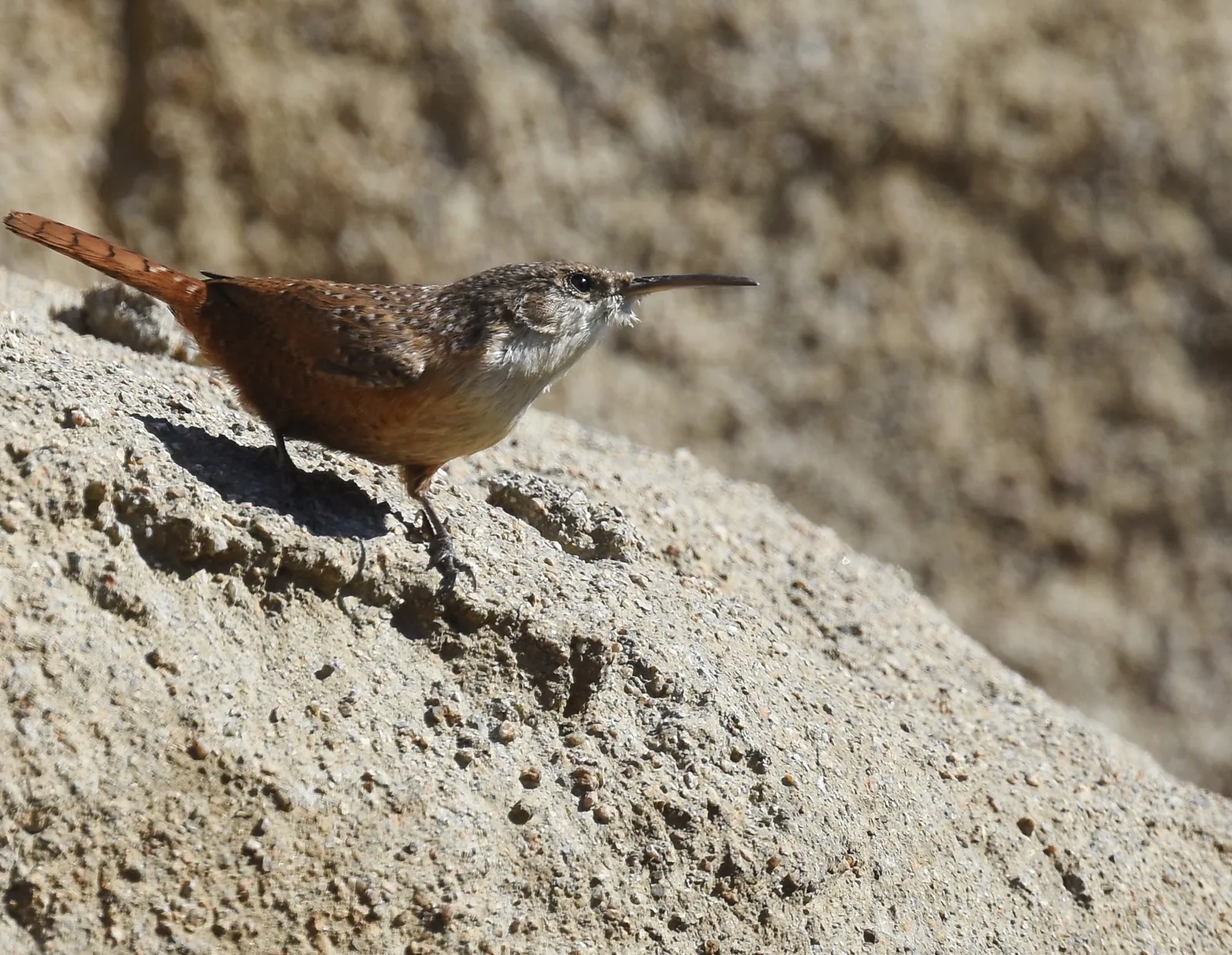
The Canyon Wren is easy to miss and hard to forget. It is a small, cinnamon-brown bird with a bright white throat, and it blends into the rock so well that most people find it by ear. If you wake up in a dry, rocky canyon of western North America, listen for a run of sweet, clear whistles that tumble down the scale and echo off the canyon walls.
Built for Cracks in the Rock
This wren spends its life on cliffs and canyon walls, and its body is shaped for it. Its scientific name, Catherpes mexicanus, comes partly from a Greek word for creeping down, a nod to the way it clings to vertical rock. Its backbone joins the skull higher than in most birds, and its skull is slightly flattened. Together, these let it push its long, thin bill deep into narrow cracks without bumping its head.
Inside those cracks it finds insects and spiders. It will also steal insects caught in spiderwebs or stored in wasp nests. The Canyon Wren is not known to drink at all. It has been seen feeding beside desert springs without taking a sip, and it probably gets all the water it needs from its prey.
A Song the Neighbors Distrust
Not everyone on the cliff enjoys the music. White-throated Swifts sometimes nest on the same rock walls, and researchers in Arizona found that the swifts reacted aggressively to the sound of a Canyon Wren, calling loudly or diving at the singer. That suggests the swifts see the wren as a threat to their nests, much as House Wrens are known to raid the nests of other birds.
From Utah to the Concert Hall
People have been kinder. In 1972, the French composer Olivier Messiaen, who wrote many pieces based on birdsong, traveled to Utah. The birds and colorful rock of Bryce Canyon inspired his large orchestral work From the Canyons to the Stars, written for the 200th anniversary of the Declaration of Independence. One movement is a solo for French horn, and among its calls is the voice of the Canyon Wren. Horn players now often perform that solo on its own.
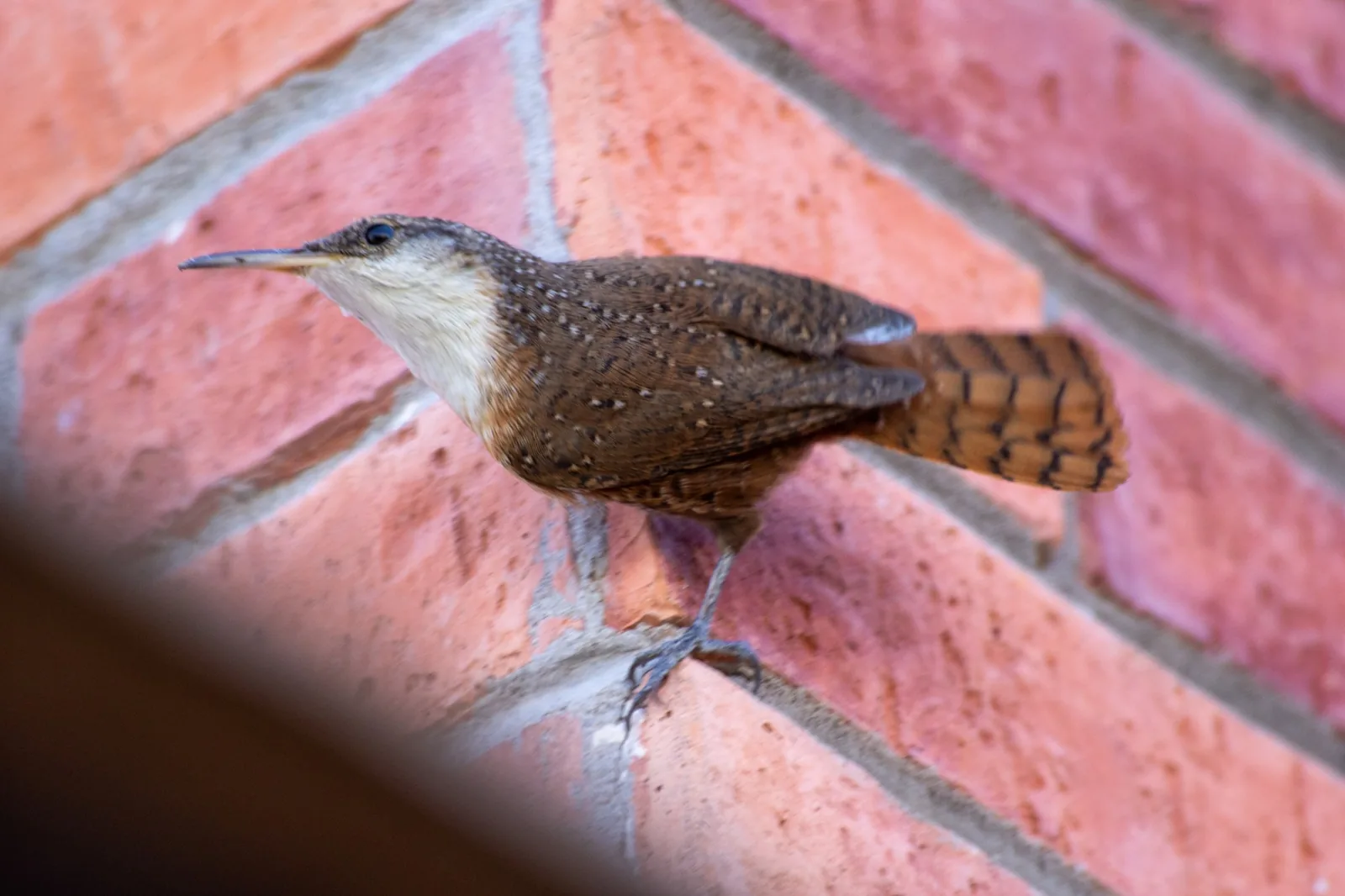
Back in the canyons, Canyon Wren pairs appear to stay together all year, foraging side by side along the rock. So the next time a falling string of whistles echoes off a canyon wall, look closely at the stone. The singer may be right there, the same color as the rock.
Sources:
- Cornell Lab of Ornithology: Canyon Wren overview, All About Birds
- Cornell Lab of Ornithology: Canyon Wren life history, All About Birds
- Wikipedia: Canyon wren
- Wikipedia: Des canyons aux étoiles…