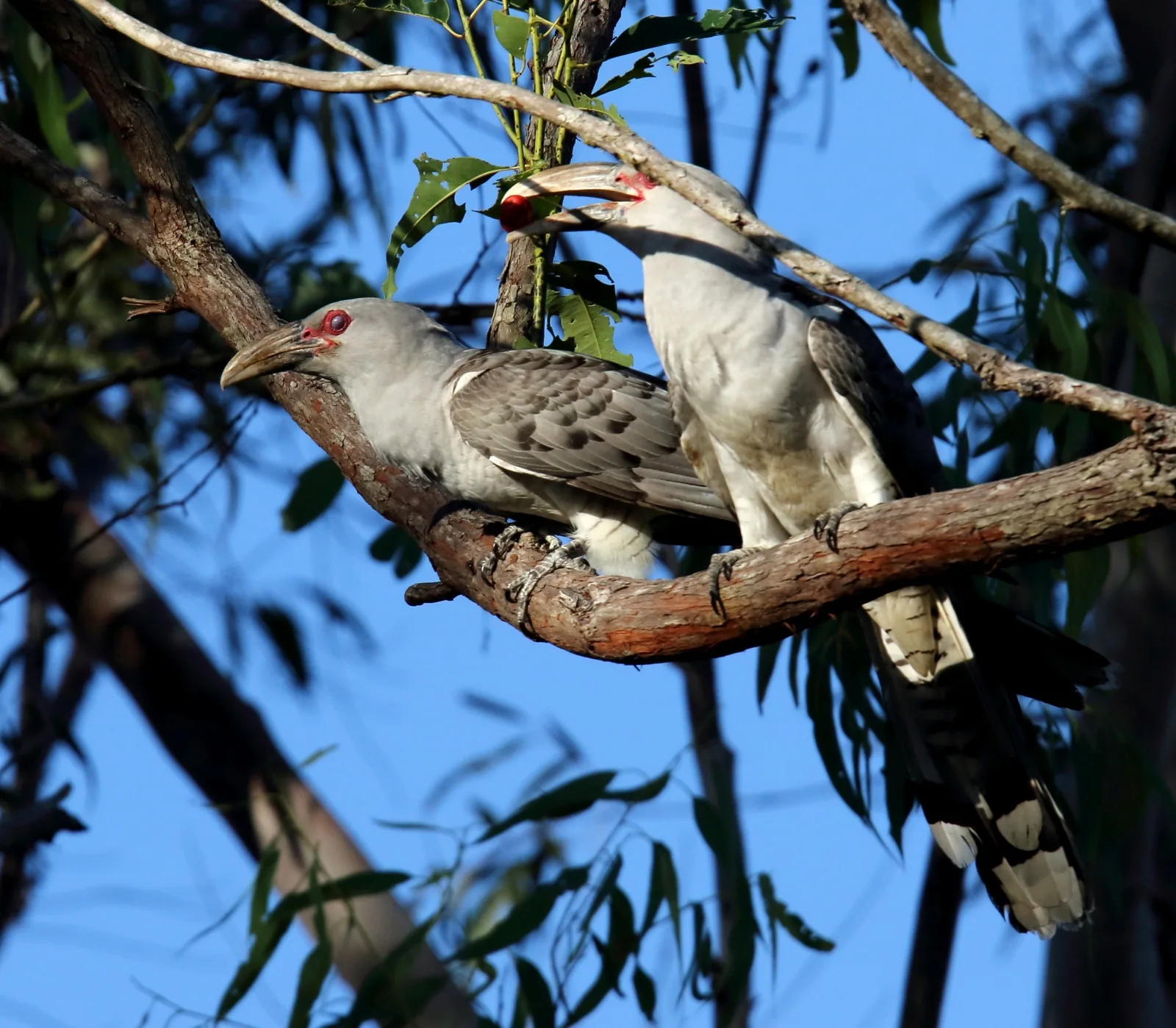

The Cuckoo of Sleepless Spring Nights
Every spring, a loud cuckoo flies into Australia from New Guinea and Indonesia. The Channel-billed Cuckoo arrives between August and October, and during the breeding season it is known for calling all night long. If you wake up in northern or eastern Australia to a harsh “kawk” followed by a faster, weaker “awk-awk-awk”, it may be this bird.
Leaving the Chicks to Crows
This is the largest parasitic cuckoo in the world. Instead of raising its own young, it lays its eggs in the nests of other large birds, mainly crows, ravens, currawongs and Australian Magpies. A pair may work together to get past the owners. The male flies over the nest so the adults rush out to chase him, while the female slips in and lays an egg.
Unlike many cuckoo chicks, a young Channel-billed Cuckoo does not push the host’s eggs or chicks out of the nest. It simply grows faster and takes most of the food, so the host’s own young rarely survive. The foster parents keep feeding it for weeks after it leaves the nest.
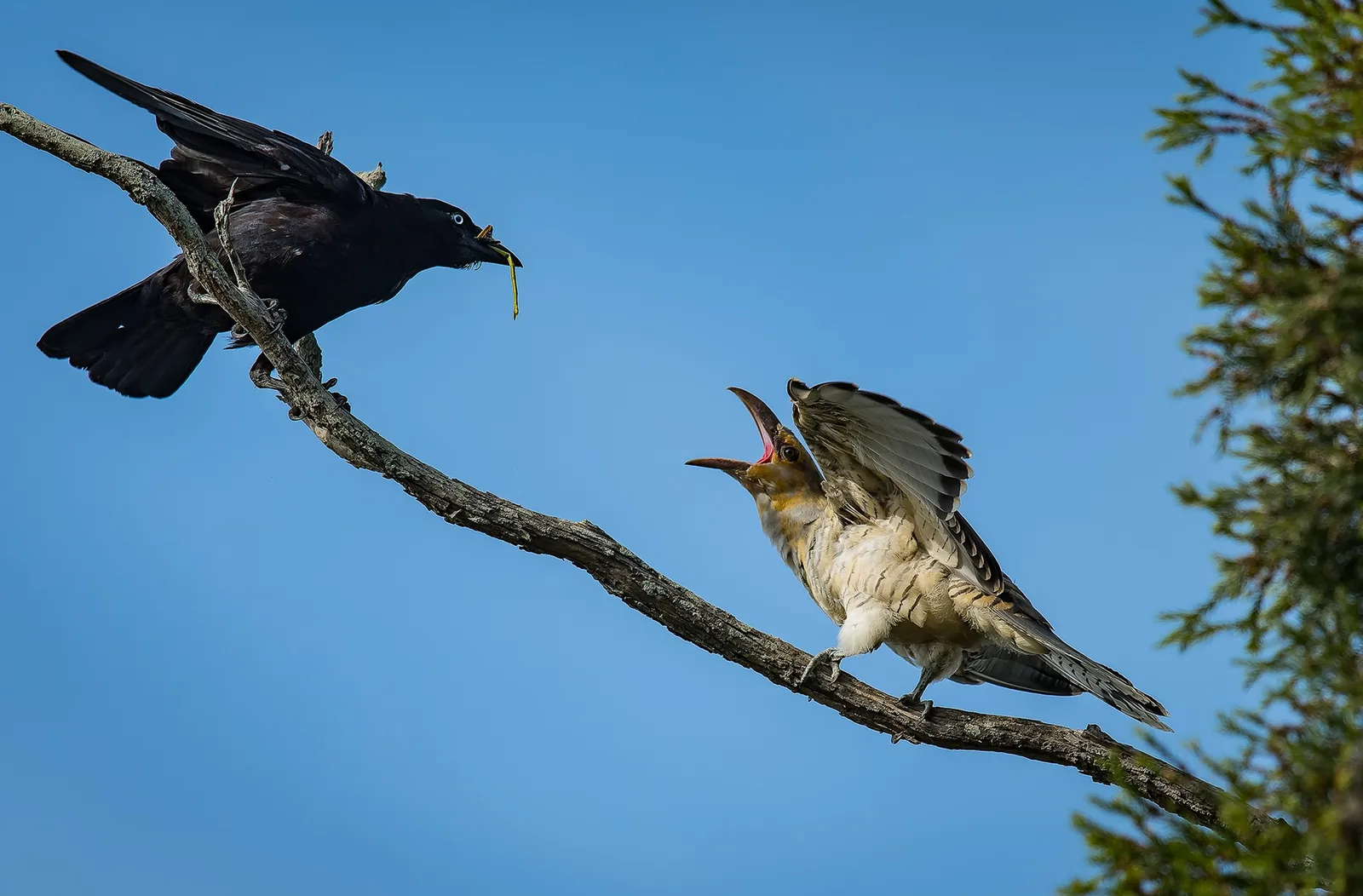
Fig Hawks and Storm Birds
Adults mostly eat fruit, especially native figs, along with insects and sometimes the eggs or chicks of other birds. That diet, together with a hawk-like shape in flight, earned it the nickname fig hawk. In northern Australia, its arrival matches the start of the rainy season, which is why it is also called the storm bird or rain bird.
Cities have treated it well. Gardens planted around Australian cities have helped the birds it uses as hosts, and the cuckoo’s numbers have grown in some areas along with them.
So while crows and currawongs raise its chicks, this cuckoo spends its nights calling. If a raucous call keeps you up on a spring night in Australia, it may be this bird, back for the season.
Sources:
- BirdLife Australia: Channel-billed Cuckoo
- Australian Museum: Channel-billed Cuckoo
- Wikipedia: Channel-billed cuckoo