
The Finch With Its Own Arena
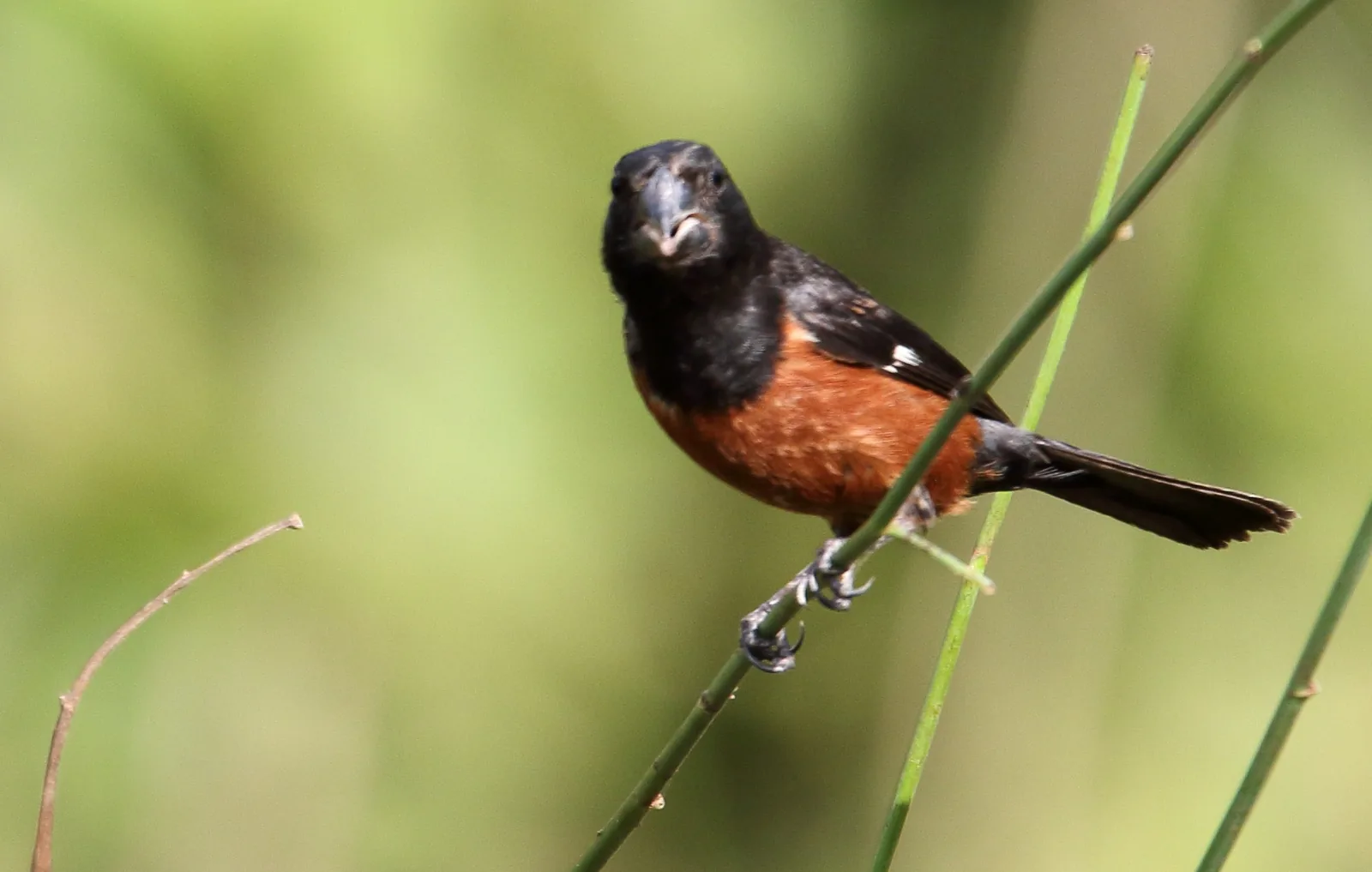
In Florianópolis, a city in southern Brazil, one small finch has its own arena. The Curiódromo is named for the curió, the Brazilian name for the Chestnut-bellied Seed Finch. If you wake up near the forest edges of tropical South America, you may hear this bird singing in the wild, a long run of whistled notes mixed with chatter and often ending in a trill.
The male is black above with a deep chestnut belly. The female is a warm brown. Its scientific name, Sporophila angolensis, points to Angola, where it does not live. George Edwards, the English naturalist who first illustrated it, had mistakenly believed that it came from there.
A Gymnasium for Singing
The Curiódromo was created in 1980 and is described as the first of its kind in Brazil. It stands in the Trindade neighborhood and is run by the Sociedade Amigos do Curió, or Friends of the Curió Society, which had about 1,200 members in 2018.
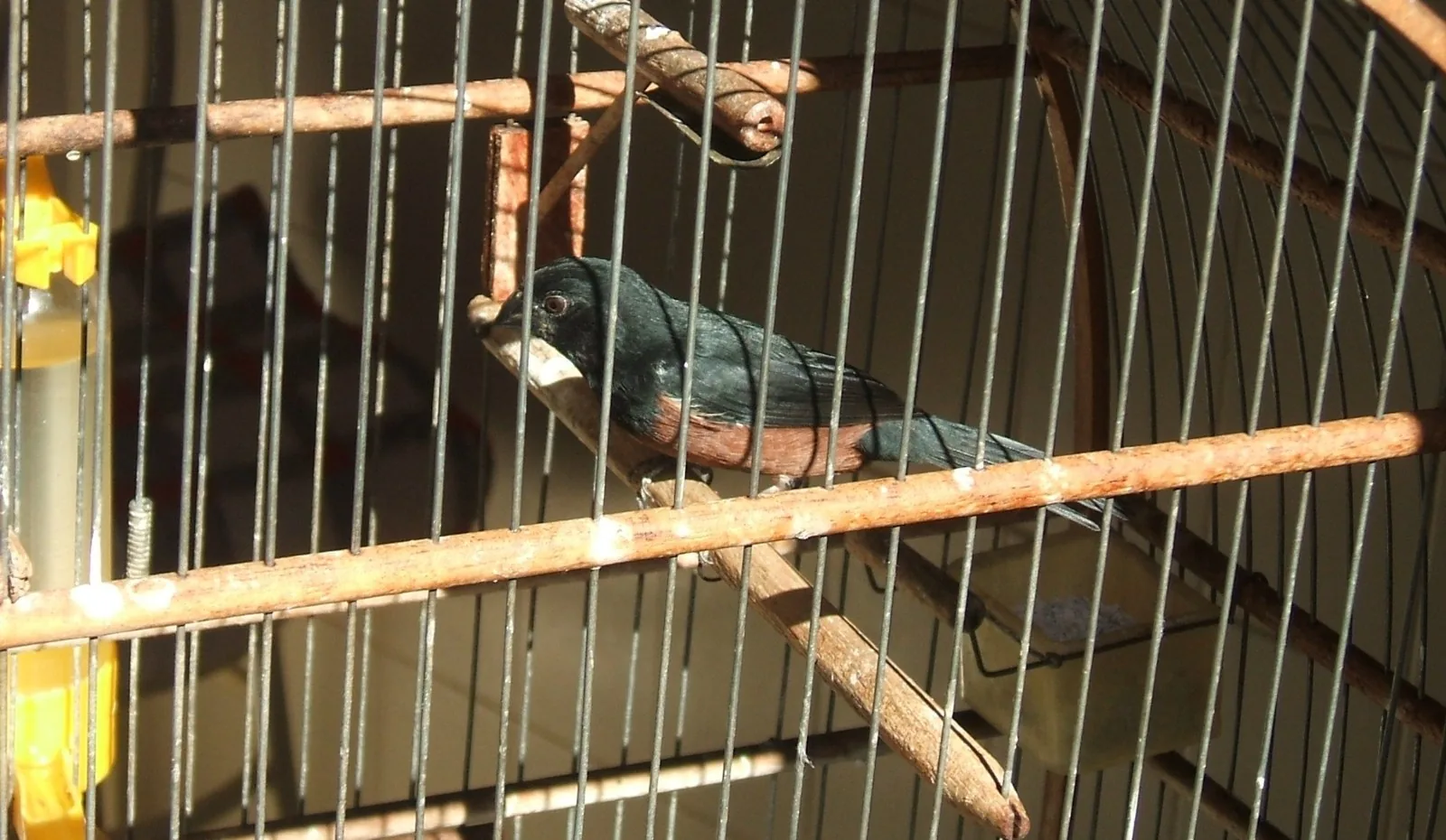
The best-known contest here tests endurance. In a 2008 article in the journal Cadernos Pagu, the researcher Flávia de Mattos Motta described a Sunday morning contest she observed in 2001. About 120 cages stood side by side in a circle, while judges counted each bird’s songs. Only the 40 strongest singers went through to the next round, and the top 30 won trophies. Final counts ran from about 70 to 130 songs. Another contest judges quality instead, scoring how accurately a bird performs the notes.
A Song Saved on Cassette
Santa Catarina, the state around Florianópolis, banned capturing these birds in 1967, and breeding took off among people who loved the song. Forest clearing and farm chemicals had already hit wild birds hard, and free curiós are now rare in southern Brazil.
That created an unusual problem. The local wild birds had their own way of singing, a kind of regional dialect, and it was at risk of disappearing as captive birds mixed with birds from elsewhere. According to a breeders’ account, the song was first recorded in 1982, on a cassette, from a bird named Fininho. Breeders then used recordings to teach young birds. Today this style is called the Canto Florianópolis, with its own official contest rules since 2006.
Out for a Walk
The tradition reaches beyond the arena. Local newspaper ND reported in 2018 that retirees in Florianópolis still walk their caged birds through the neighborhood, then gather at local bars on weekends. A good singer cost at least R$5,000, and one breeder reportedly turned down R$100,000 for a bird. Owners must carry papers for each bird, which the federal environmental agency can check. Illegal trade remains a threat to seed finches in Brazil, and scientists have developed DNA markers that could help authorities trace trafficked birds.
Worldwide, the species is rated Least Concern. In Santa Catarina, it has been listed as critically endangered. The song that started in those local forests now lives on largely through recordings and cages.
Sources:
- Cadernos Pagu: Motta (2008), Curió Valente: representações de gênero em competições de pássaros canoros
- ND Mais: Passear com curió, coleira ou trinca-ferro é um hábito que permanece em Florianópolis
- Guia Floripa: Island Curiodrome
- Curiozeiros: Os curiós da capital catarinense and Curiódromo, o Canto Florianópolis
- Molecular Biology Reports: Lima-Rezende et al. (2019), Polymorphic microsatellite loci and partial mitogenome for the Chestnut-bellied Seed-finch
- Wikipedia: Chestnut-bellied seed finch
- Wikipedia (Portuguese): Curió