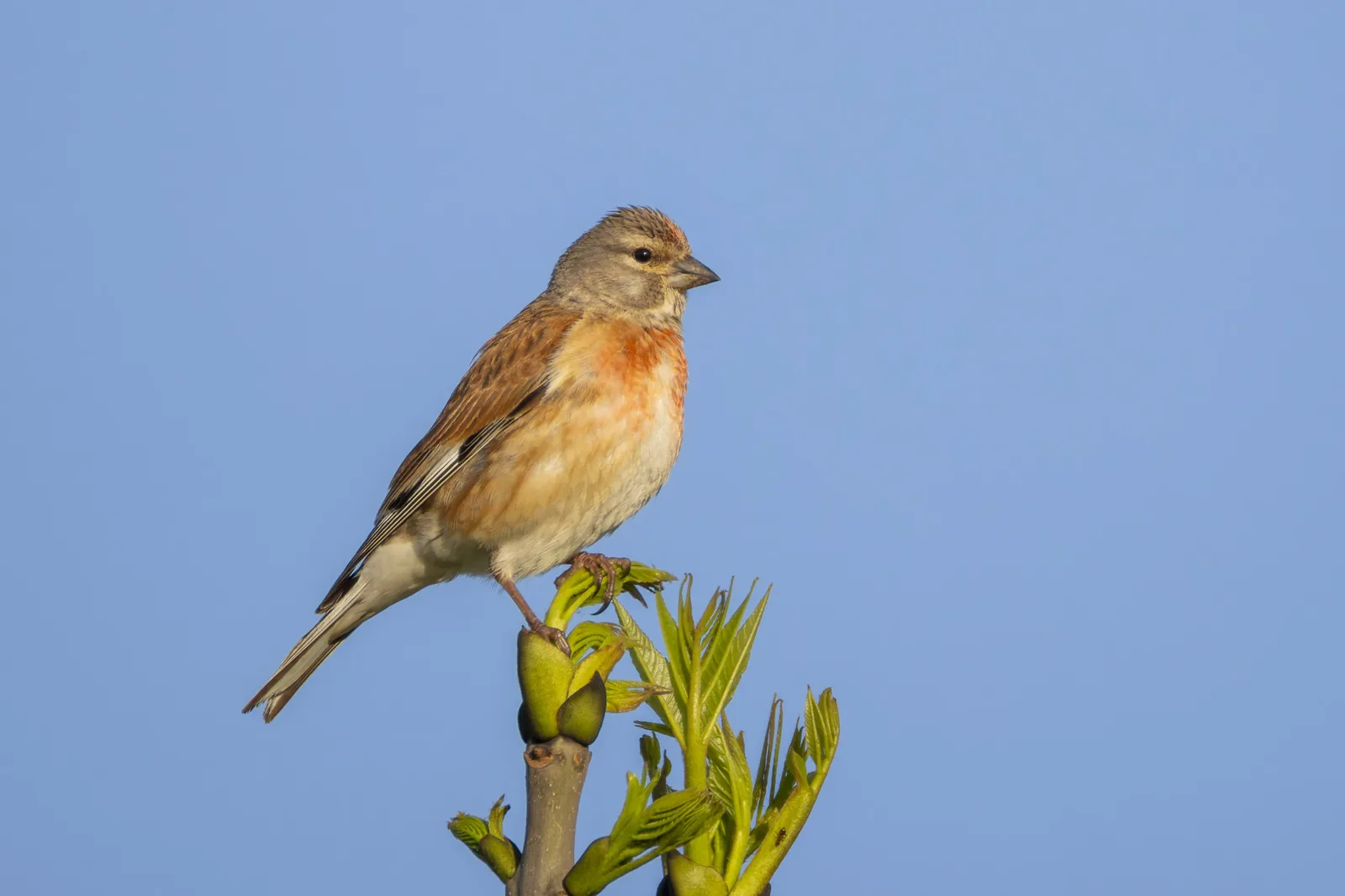

The Flax-Named, Hemp-Fed Songbird
Across two languages, this small brown finch is named for nothing more glamorous than its lunch. The English word “linnet” traces to Old French linette, from lin, meaning flax. The Latin Linaria cannabina repeats the joke, pairing a flax reference (linum) with one for hemp (cannabis). Twice over, the same bird has been christened after the oil-rich seeds it rides on. There is a reason.
The Bird Named Twice for Lunch
Most small songbirds switch to insects when they have chicks to feed. Nestlings grow fast and need protein, and protein is what spiders and caterpillars deliver. Cardueline finches, the linnet’s subfamily, break that rule. They regurgitate partly-digested seeds straight into their young, and that is what baby linnets grow on. Ian Newton’s 1973 monograph Finches was the book that pinned down how unusual the habit is among European passerines. So when Old French speakers named the bird linette and Linnaeus settled on cannabina in 1758, both names were pointing at the same biological fact. A linnet’s whole life, from first feeding to last winter flock, runs on small oily seeds.
A Cage Full of Poets
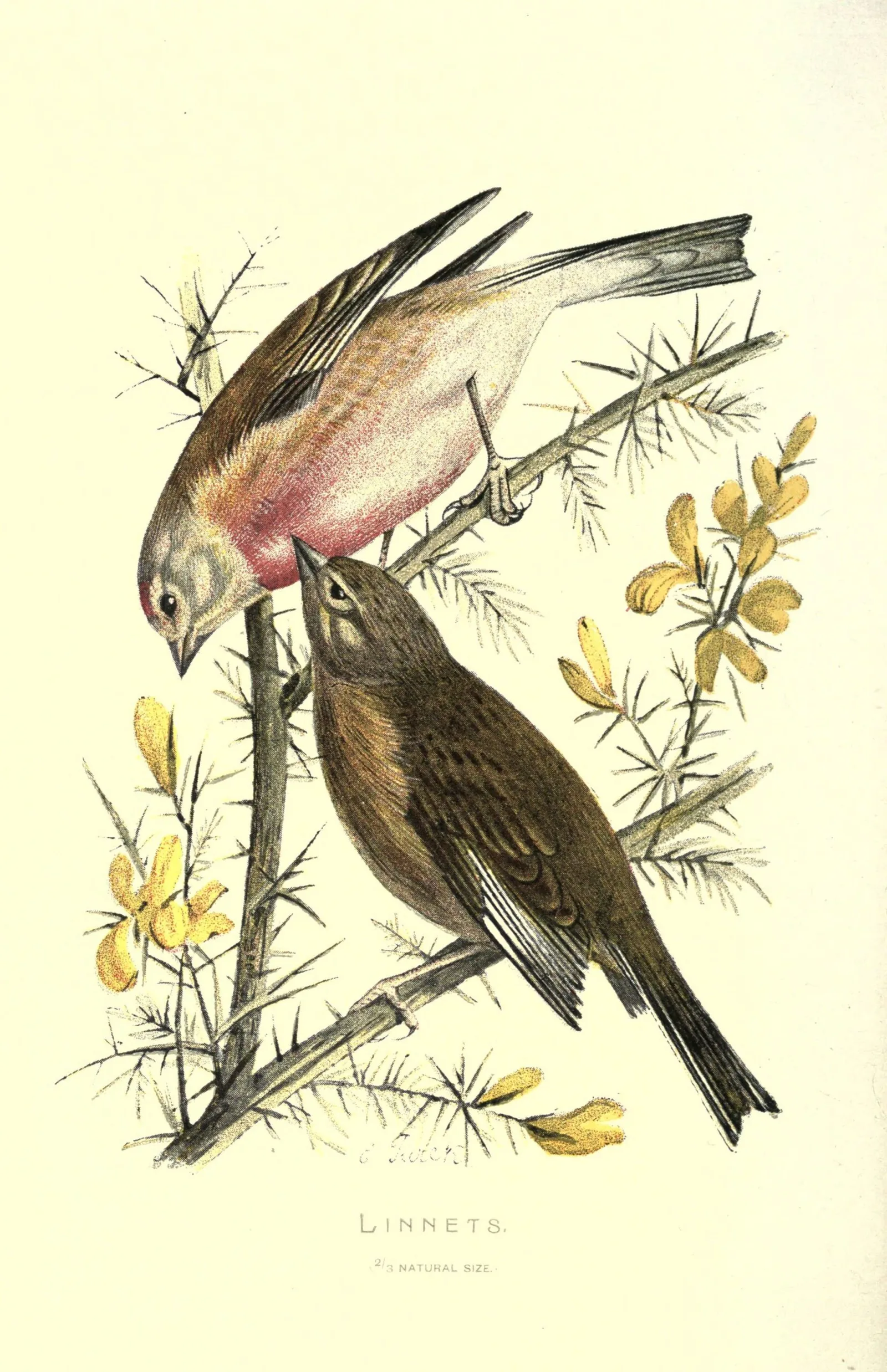
The linnet’s rambling, tinkling song made it a popular British cage bird through the late Victorian and Edwardian eras, kept in parlours for the song alone. The reputation rippled through the era’s poetry. Tennyson, working through his grief for Arthur Hallam in In Memoriam A.H.H. (1850), named the caged linnet as one of the few things he refused to envy: “The linnet born within the cage / That never knew the summer woods.” Oscar Wilde later gave a linnet the narrator’s role in his 1888 fable The Devoted Friend. By 1890, Yeats had published the line that still sticks, in The Lake Isle of Innisfree: “And evening full of the linnet’s wings.” The cage-bird fashion faded, and trapping wild linnets is now an offence under the Wildlife and Countryside Act 1981. The bigger threat turned out to be the countryside itself. As weedy field margins and rough scrub were tidied out of British farmland through the mid-twentieth century, the linnet population crashed. The RSPB records a 57% drop in British breeding numbers between 1970 and 2014, and the species now sits on the UK Red List.
If the app wakes you with a linnet, you are hearing the bird Yeats chose to evoke peace with. Listen for the short tinkling runs above the denser twitter. That is the song Victorians once caught wild birds for. The linnet does not need a cage any more. It needs the opposite: a scruffy hedge margin thick with flax and thistle, still carrying the seeds it takes both its names from.
Sources:
- Wikipedia: Common Linnet (Linaria cannabina)
- Wiktionary: Etymology of “linnet”
- Wikipedia: Carduelinae: seed-feeding of nestlings, citing Newton 1973
- RSPB: Linnet species page and decline statistics
- BTO: Linnet Birdfacts: Red-list status
- Project Gutenberg: In Memoriam by Alfred, Lord Tennyson
- Wikipedia: “The Lake Isle of Innisfree” by W. B. Yeats
- Wikipedia: “The Devoted Friend” by Oscar Wilde
- Wikipedia: Wildlife and Countryside Act 1981