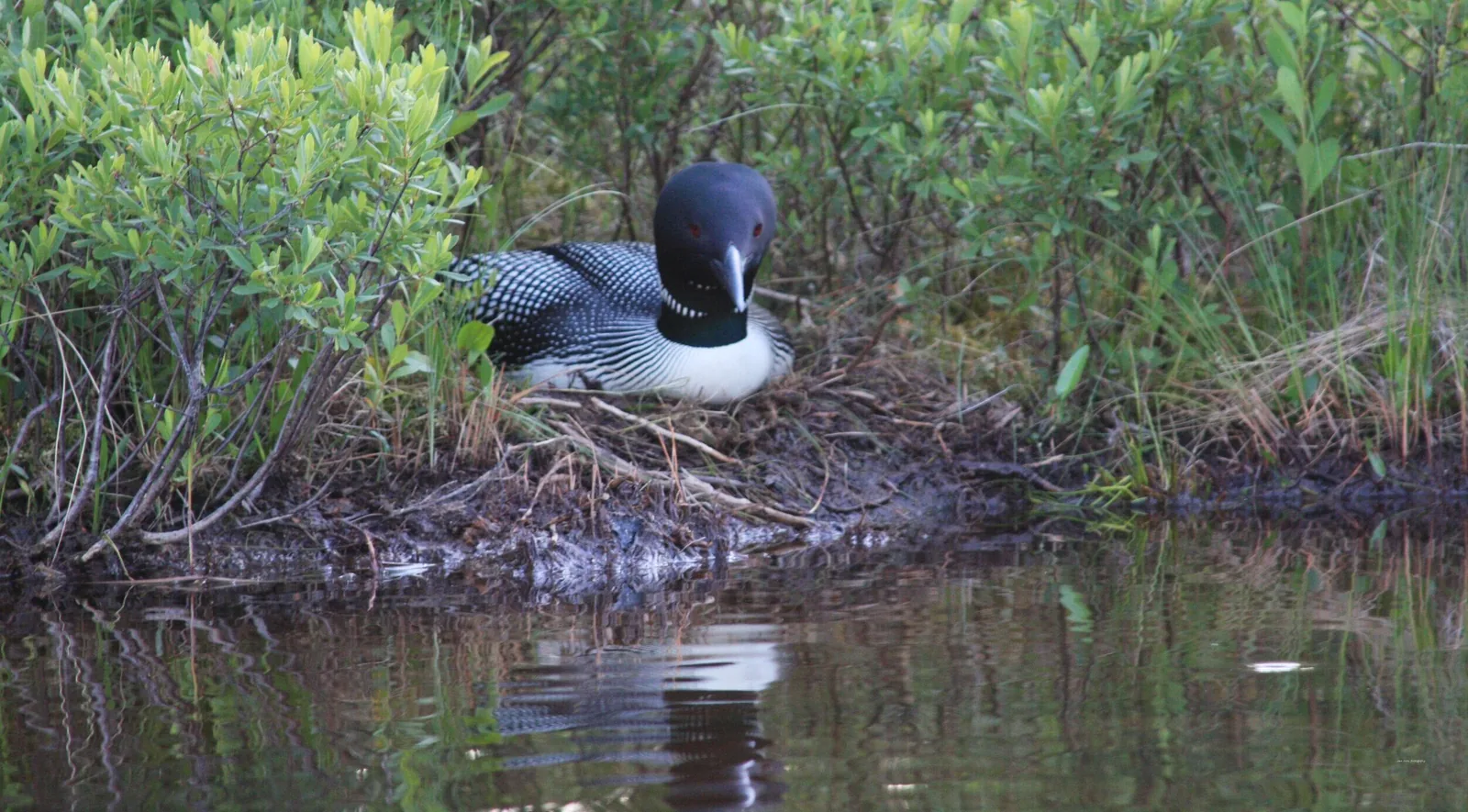
.jpg)
The Lake's Long-Drawn Howl
Wake up beside a lake in Maine, Ontario, or Iceland between May and October and the first sound through the cabin window is unlikely to be a songbird. It is more likely to be a wavering falsetto laugh, or a slow rising wail that listeners describe variously as a wolf or a person grieving in the next valley over. The Common Loon (Gavia immer) has four distinct calls and a body engineered to disappear into 200 feet of cold water.
Looning, According to Thoreau
In Walden, Henry David Thoreau, the 19th-century Massachusetts essayist, devotes a whole passage of “Brute Neighbors” to one autumn afternoon spent rowing in circles after a loon. Every time he closed in, the bird dove and surfaced fifty rods away, laughing. The bird’s usual note was a “demoniac laughter,” he writes, but occasionally it switched to “a long-drawn unearthly howl, probably more like that of a wolf than any bird.” He coined a verb for it: looning. “This was his looning, perhaps the wildest sound that is ever heard here.”
Built Like a Submarine
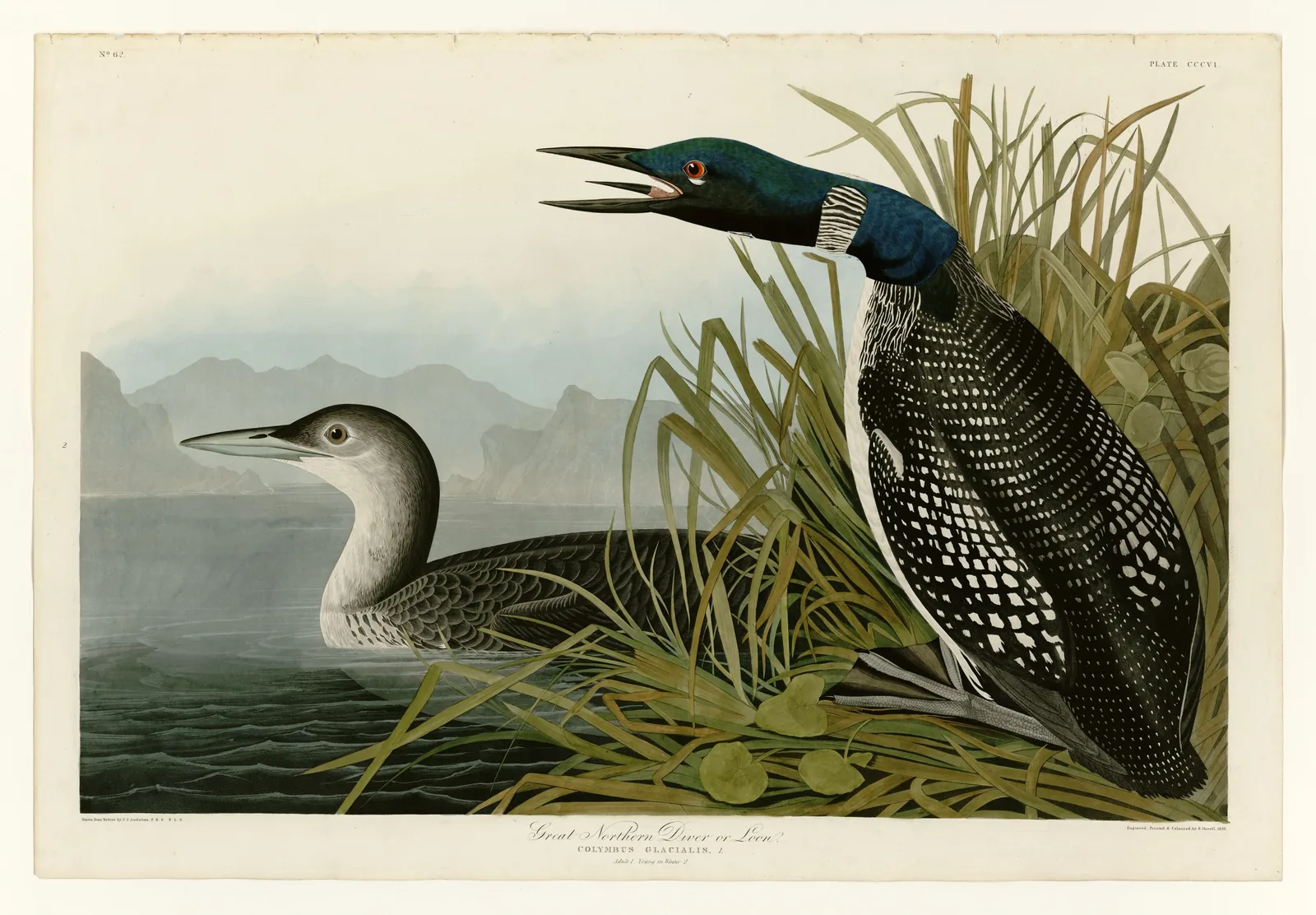
Most birds have hollow bones, the adaptation that lets robins flit and swallows soar. Loons do not. Their bones are dense, which makes them heavy in the air and devastating underwater. A diving Common Loon can reach 200 feet on a single breath. Their legs are pushed so far back on the body that they essentially cannot walk on land.
The four calls split the work cleanly. The wail is the long “ooo-AAH-ooo” mates use to find each other across a lake. The tremolo, the trembling laugh that unnerved Thoreau, is the alarm call and the only one delivered in flight. The yodel belongs to territorial males alone; each male’s is individually distinct, so researchers can identify a specific bird by ear. The hoot is the intimate call adults use to summon chicks for a feed.
From Earth-Diver to Loonie
Across many Indigenous nations of northern North America, creation stories begin with a diving bird sent through primordial water to retrieve the first speck of mud. Among the Anishinaabe (the cultural family that includes the Ojibwe), the Loon Clan, Maang, is one of two leadership clans alongside the Crane, “responsible for over-seeing and leading the people.”
The bird also accidentally redesigned Canadian money. In 1987 the Royal Canadian Mint planned a Voyageur canoe coin, but the master dies were lost in transit, an episode later blamed on a $43.50 courier. The fallback design by Robert-Ralph Carmichael was a Common Loon on still water. English Canada nicknamed the coin a “loonie” within days.
The wail that wakes a Bird Rise app sleeper at six in the morning is the same one Thoreau heard from a rowboat in 1854, and the same one Anishinaabe leader-clans have answered to for far longer. Long-drawn and old.
Sources:
- Wikipedia: Common loon
- Project Gutenberg: Walden by Henry David Thoreau, “Brute Neighbors”
- Audubon: Common Loon Field Guide
- Wikipedia: Anishinaabe clan system
- Wikipedia: Earth diver
- Wikipedia: Loonie