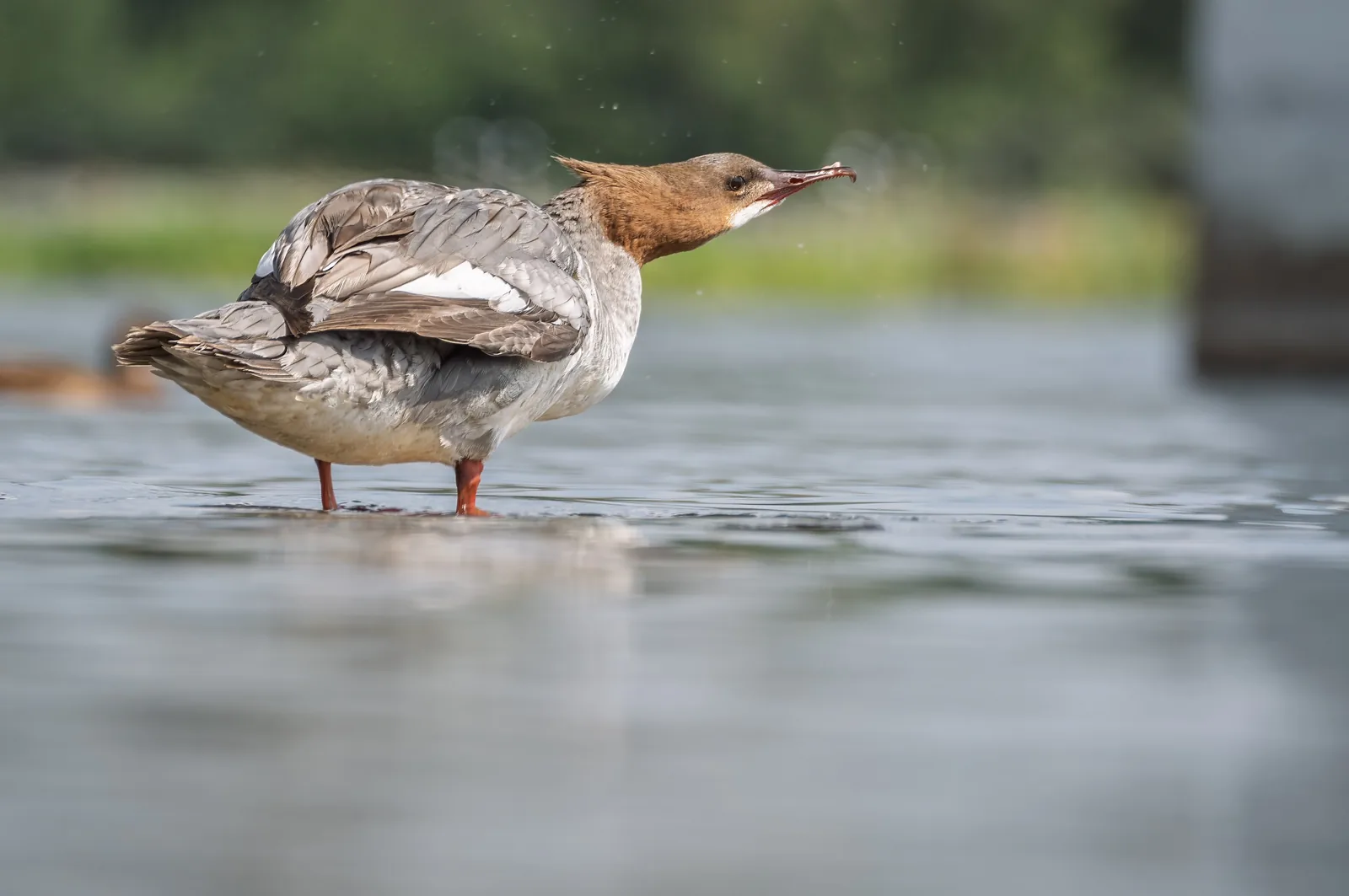

The Sawbill's Borrowed Brood
On a windy June afternoon in 2018, the photographer Brent Cizek was scouting the shoreline of Lake Bemidji in northern Minnesota when a single duck appeared towing seventy-six ducklings. The picture went around the world. People rightly thought it looked like a Disney film. The bird was a Common Merganser, and the ducklings, mostly, were not hers.
Mother of Seventy-Six
Common Mergansers do this. The behaviour has a name, crèching, and what looks like one impossible family is technically a brood amalgamation. An experienced female ends up paddling with the young of several other hens stacked behind her in a tidy line. Steve Cordts and Dave Rave, biologists with the Minnesota Department of Natural Resources, explained Lake Bemidji’s particular summer. A late thaw had forced every nesting hen to wait for the same hatching week, and mild weather then brought almost all of them out within days. Exactly how this particular hen ended up with seventy-six is harder to pin down. Some of the ducklings were probably her own, others were likely transferred by younger mothers, and the rest were almost certainly orphans of broods that lost their hen in the first vulnerable days. What is certain is that a dominant female who knows the lake’s shallows and its predators is a very good adult to follow if you are four days old.
The ducklings would have started life on her back. Newly hatched merganser chicks are carried to open water within hours of leaving the nest cavity, and a female who has just hatched twelve of her own can comfortably ferry several more.
A Goose-Named Sawbill
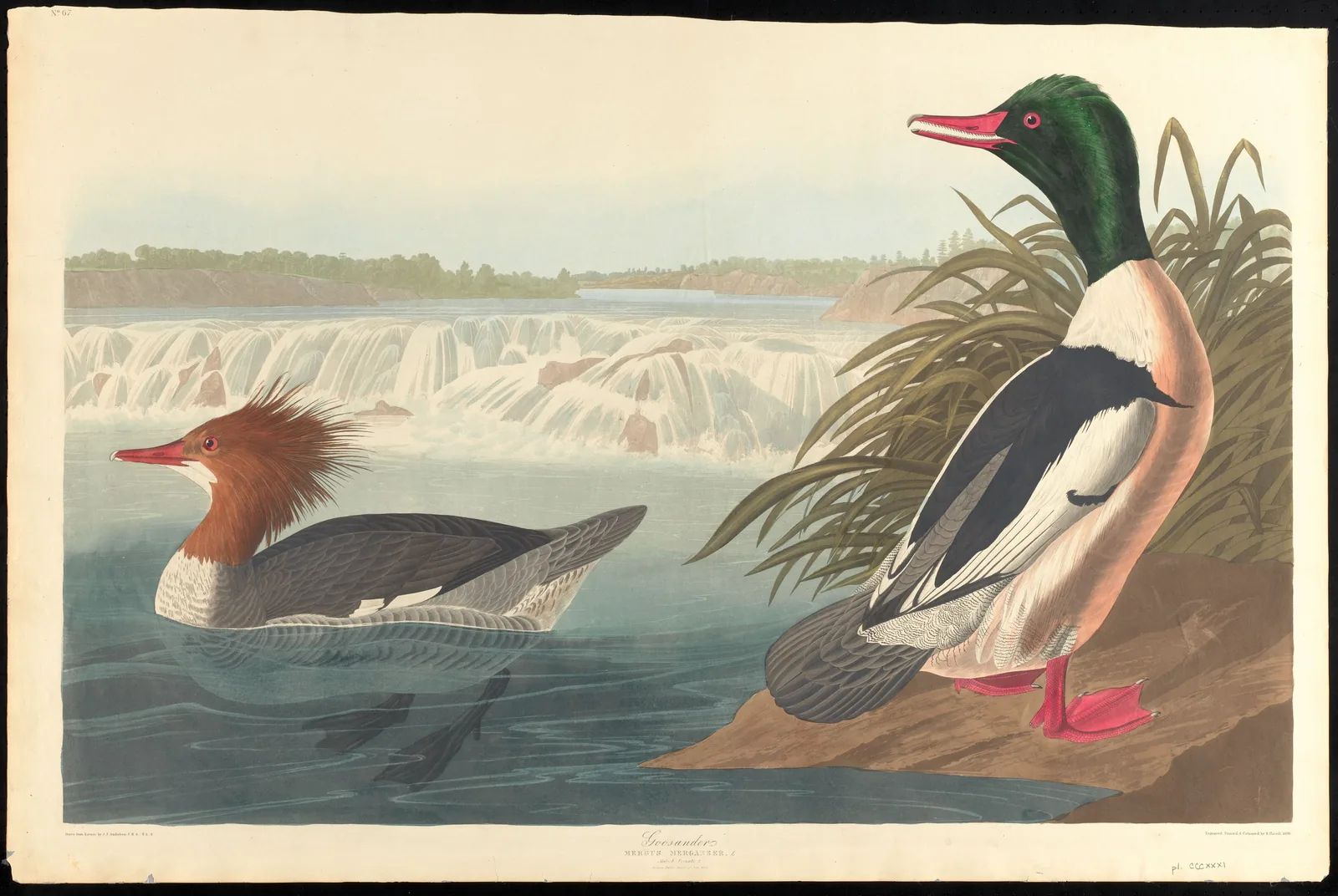
Across Britain the same bird is called the goosander, a name built on “goose.” Michael Drayton, the English topographical poet, first set the word in print in 1622: “The Gossander with them, my goodly Fennes doe show, / His head as Ebon blacke, the rest as white as Snow.” A century later, Linnaeus, the Swedish naturalist who organised the binomial system, did the same thing in Latin. Mergus merganser is, more or less, the diving goose.
It is not a goose. It is a duck that hunts like an otter. Old British counties called the bird by its tools. Aberdeenshire’s word was “sawneb,” Stirlingshire’s was “sawbill,” and Suffolk read it as “sawyer.” Welsh has the most clinical version of all: hwyaden ddanheddog, the serrated duck. Every name points at the same equipment: a long red bill edged with tooth-like serrations that grip slippery fish. In flocks they hunt cooperatively, forming a semicircle that drives shoals of small fish into the shallows where they are easy to catch. Dublin folk wisdom called it the land cormorant.
If the Bird Rise app wakes you with a goosander croak, the bird is somewhere on a wooded lake or fast river in the temperate north. She is mostly silent. The low rasping call only comes out when something approaches her tree-cavity nest, and even then only briefly. Most of the time she is paddling with her head underwater, scanning for fish. Her ducklings, however many of them are technically hers, paddle behind her in a line.
Sources:
- Wikipedia: Common merganser
- The Poly-Olbion Project, University of Exeter: Goosander in Drayton’s Poly-Olbion
- National Geographic: Why this mother duck has 76 ducklings
- Live Science: This Duck Supermom Leads 76 Ducklings in Amazing, Adorable Photo
- Earthstar (Susan Cumins): Goosie, goosie, goosander
- Wiktionary: goosander
- Merriam-Webster: goosander
- Audubon, Birds of America (1836): Plate 331, Goosander
