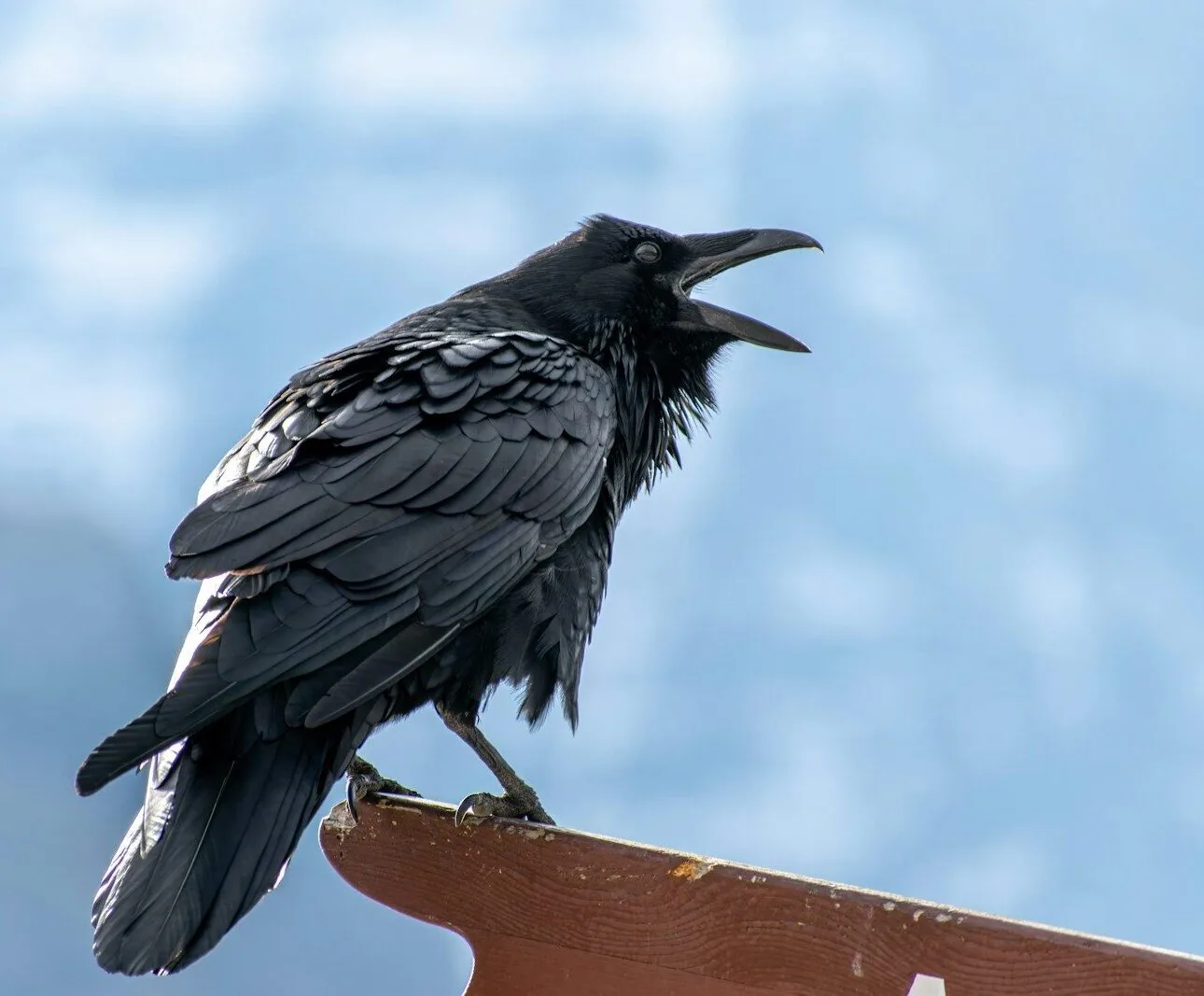
The Bird Odin Sent at Dawn
The Common Raven (Corvus corax) is the heaviest songbird on Earth, and it lives almost everywhere on the northern half of it. Iceland, Mongolia, Mexico, the high deserts of North Africa, the slopes of Mount Everest at 6,350 metres. The silhouette is generic and the croak sounds rough. Thirty years of cognition research argue otherwise.
The Mind That Plans for a Watcher
In 2016 the Vienna biologist Thomas Bugnyar and his team ran a peephole experiment at Haidlhof Research Station. Two rooms shared a small hole in the wall. First the ravens were trained: each bird used the hole to watch a human hide food on the other side, then went round and stole it. The hole worked as a spy-glass.
Then they reversed the roles. The window between the rooms was covered. The bird was given food to hide; a speaker on the other side played the sound of another raven. The peephole was open in one trial, closed in another.
With the peephole open, the ravens hid their food as if being watched. They sped up. They hid behind cover. With it closed, the same sound produced no reaction.
Bugnyar and the philosopher Cameron Buckner argued in Nature Communications that the same hole the ravens had used to watch others could now let others watch them. No gaze cues. A sound and a hole in the wall.
Thought and Memory
A thousand years before the Vienna lab, the same insight had a name. Odin keeps two ravens, Huginn (“thought”) and Muninn (“memory”). They fly out from Asgard at dawn and return at dusk with the day’s news.
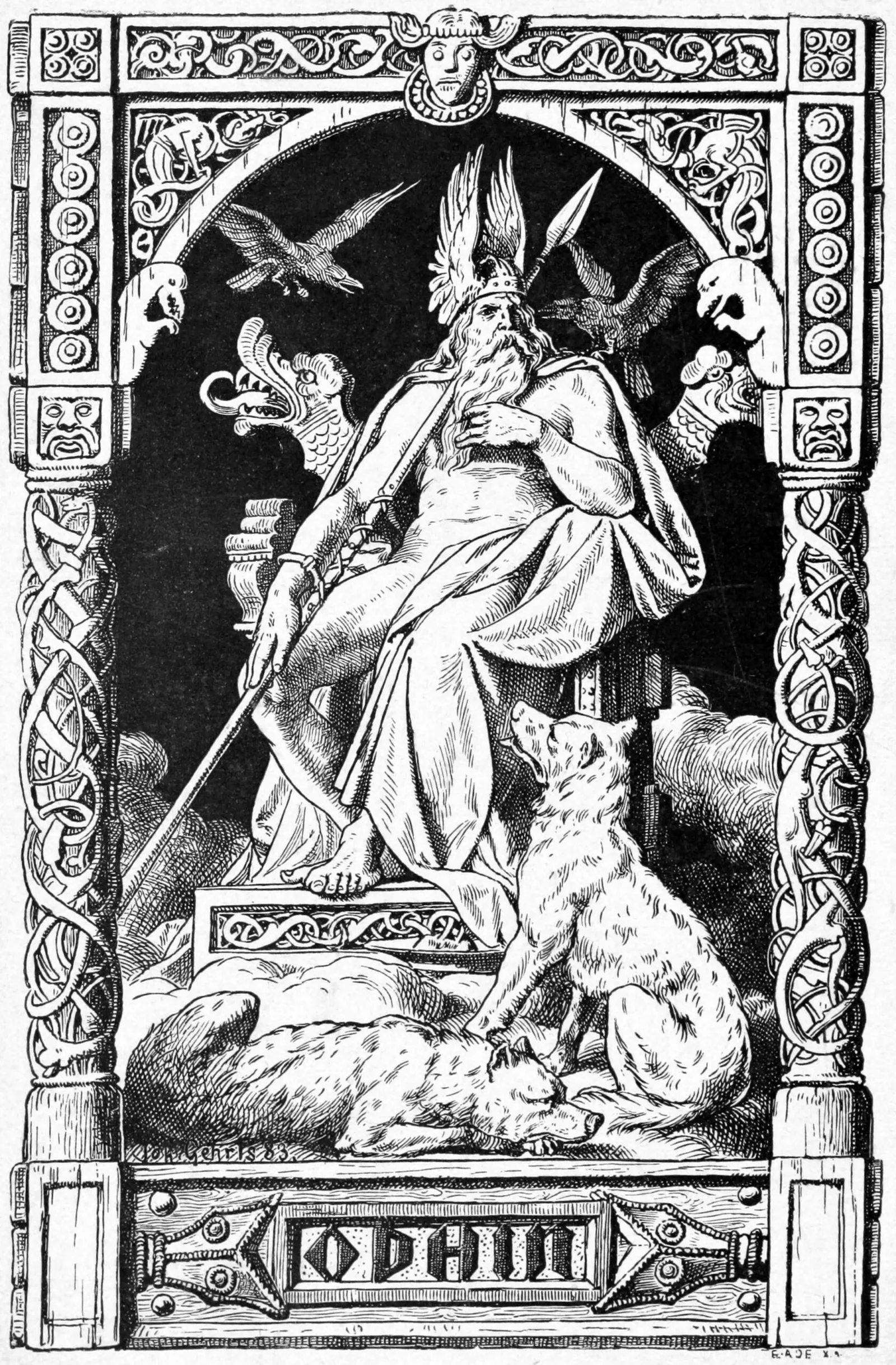
The 13th-century poem Grímnismál puts Odin’s anxiety in his own voice. In Henry Adams Bellows’s 1923 translation:
O’er Mithgarth Hugin and Munin both Each day set forth to fly; For Hugin I fear lest he come not home, But for Munin my care is more.
A god who fears losing thought, but losing memory more. The Old Norse poets had been watching the bird a long time.
The Tower’s Newer Ghosts
The other piece of raven mythology lives at the Tower of London. The legend says Charles II decreed that ravens always be kept there, and that England falls the day they leave. It is a great story, and not a thousand years old. The American folklorist Boria Sax found no record of ravens at the Tower before 1883, two centuries after Charles II’s death. The “if they go, England falls” line is first attested in 1944. The Tower’s own historians now call it a Victorian invention.
Eight ravens are still there, with six the working minimum, all fed on raw meat by a Yeoman Warder who carries the title Ravenmaster.
Fifteen to thirty calls have been recorded for the species, most of them social. The deep guttural croak you hear at dawn is one raven heading out, the way Huginn and Muninn did.
Sources:
- Bugnyar, Reber & Buckner (2016): Ravens attribute visual access to unseen competitors, Nature Communications, open-access full text on PMC.
- University of Houston: With Ravens, Out of Sight is Not Out of Mind, the Bugnyar 2016 study explained.
- Wikipedia: Common Raven species profile, range, vocalisations, intelligence.
- Wikipedia: Huginn and Muninn, names, sources, Bellows translation.
- JSTOR Daily: The Truth Behind the Tower Ravens, Boria Sax’s debunking of the Charles II legend.
- Wikipedia: Ravens of the Tower of London, Ravenmaster, current flock, legend history.
- Xeno-canto: Corvus corax recordings, field recordings of calls.