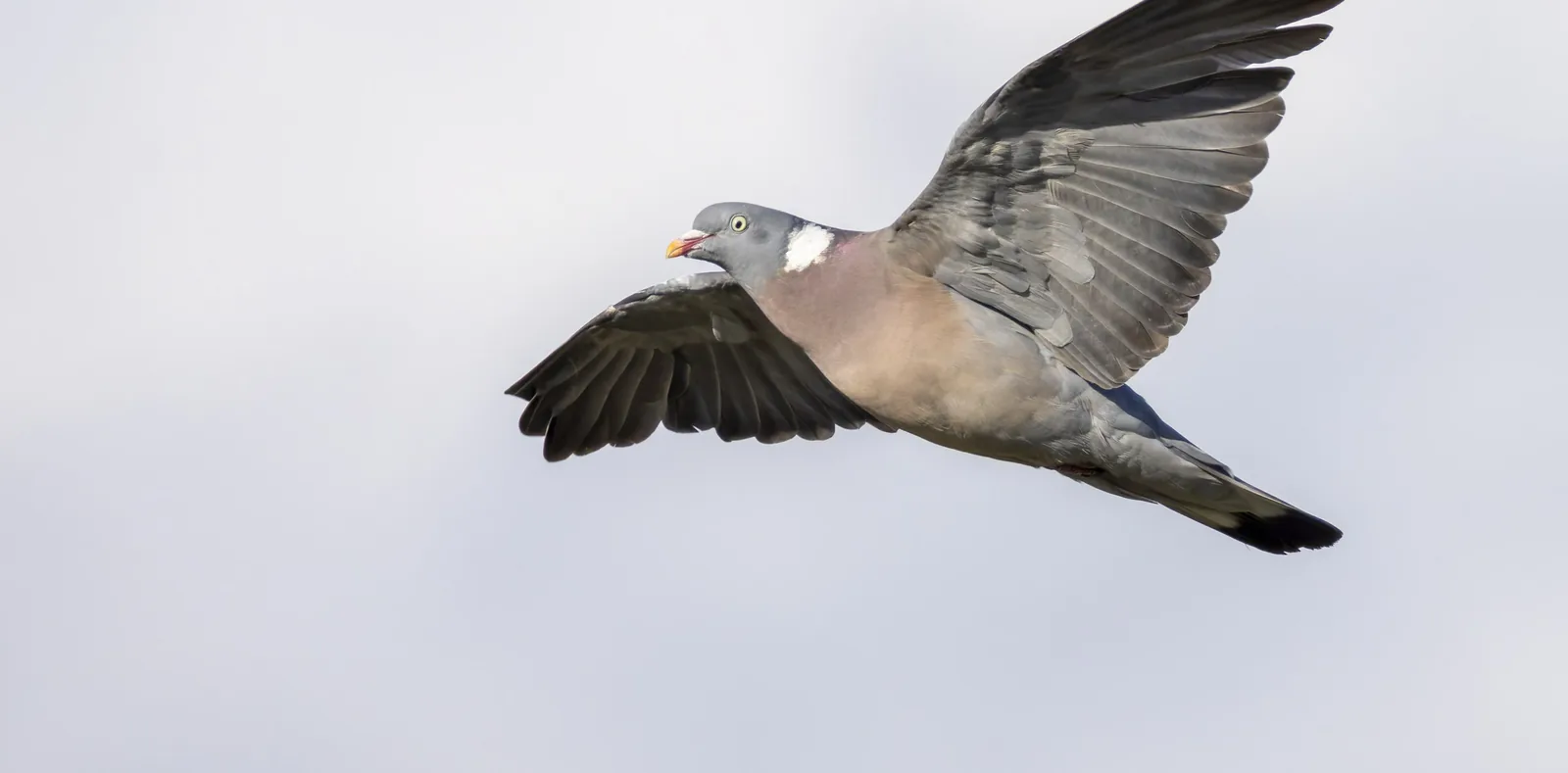

Father's Milk, Whip-Crack Wing
Most British gardens have a wood pigeon in them. Both parents feed the chicks on milk.
A Father’s Milk
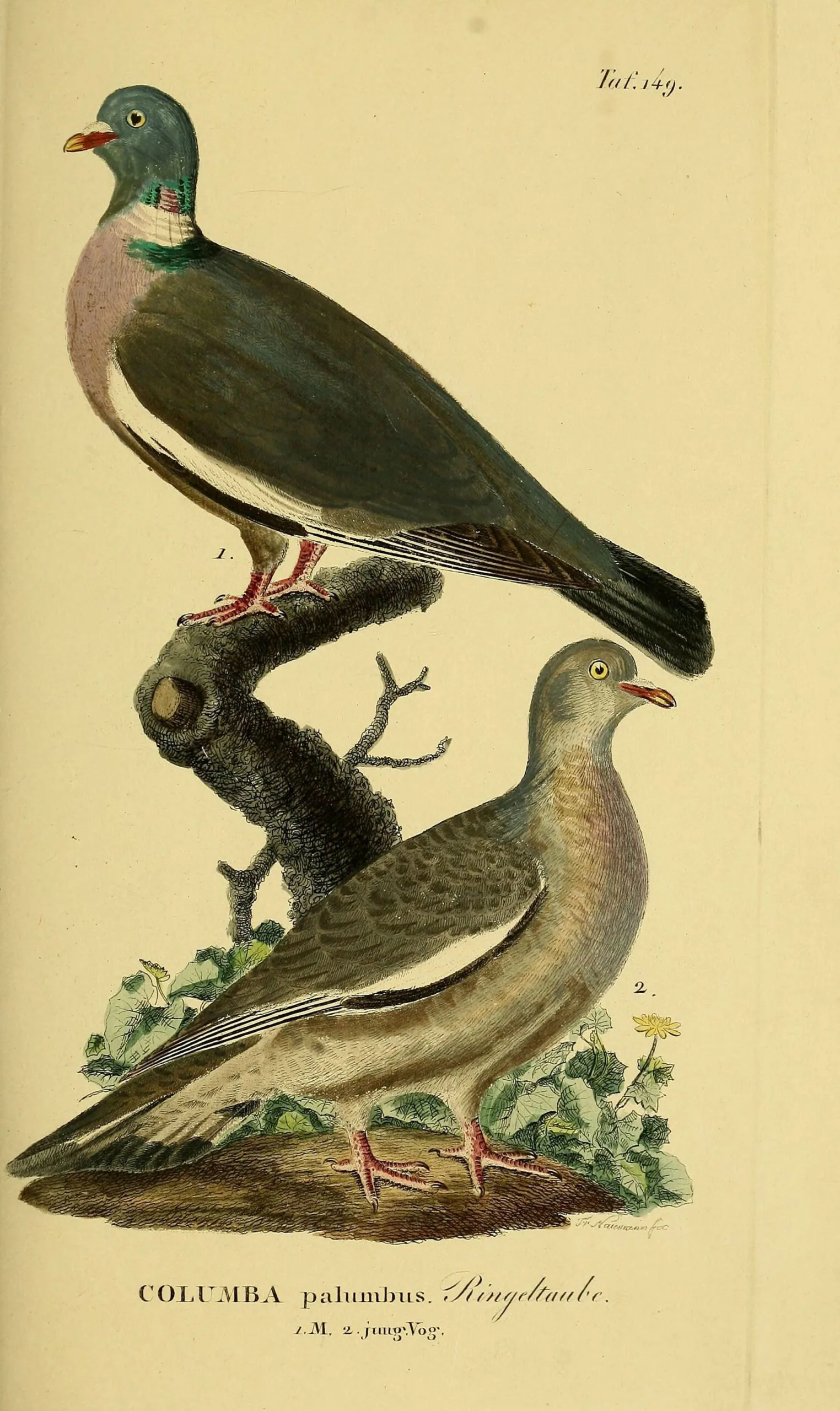
It is called crop milk. Not seeds, not regurgitated insects. A pale, curd-like substance that a parent sloughs off the inner wall of its crop (the pouch in a bird’s throat that stores food before the stomach) and pumps into the chick’s beak. It contains more protein and fat than cow’s milk or human breast milk. There are no carbohydrates, and the substance is loaded with antibodies. The hormone that triggers its production is prolactin, the same one that makes mammals lactate.
The unusual part is who produces it. In mammals only the mother nurses. In pigeons the father produces it too, on the same hormone and the same schedule. A nest of wood pigeons has two parents both feeding milk to the chicks.
Chicks live on pure crop milk for about the first week, then move onto seeds. They fatten quickly and leave the nest at around thirty-three days. The trick is not unique to pigeons either. Flamingos make crop milk, and so do male emperor penguins, all working off the same hormone to do it.
I Don’t Want to Go
Britain has a long tradition of putting English words to the wood pigeon’s five-note coo. Countryside birders heard it as I don’t want to go, with stress on the third syllable. The bird repeats the phrase until something interrupts it.
The other wood pigeon sound is harder to mistake. During courtship the male climbs steeply, and on the way down his wings crack like a small whip as he glides on stiff outstretched wings. The sound is mechanical, made by the wings striking each other, not a vocalization. He climbs and repeats the cycle. Anyone in suburban Europe in May has heard one without knowing what it was.
If the Bird Rise app plays a Common Wood Pigeon at sunrise, the coo on the speaker is the same five-note loop someone is hearing right now from their garden.