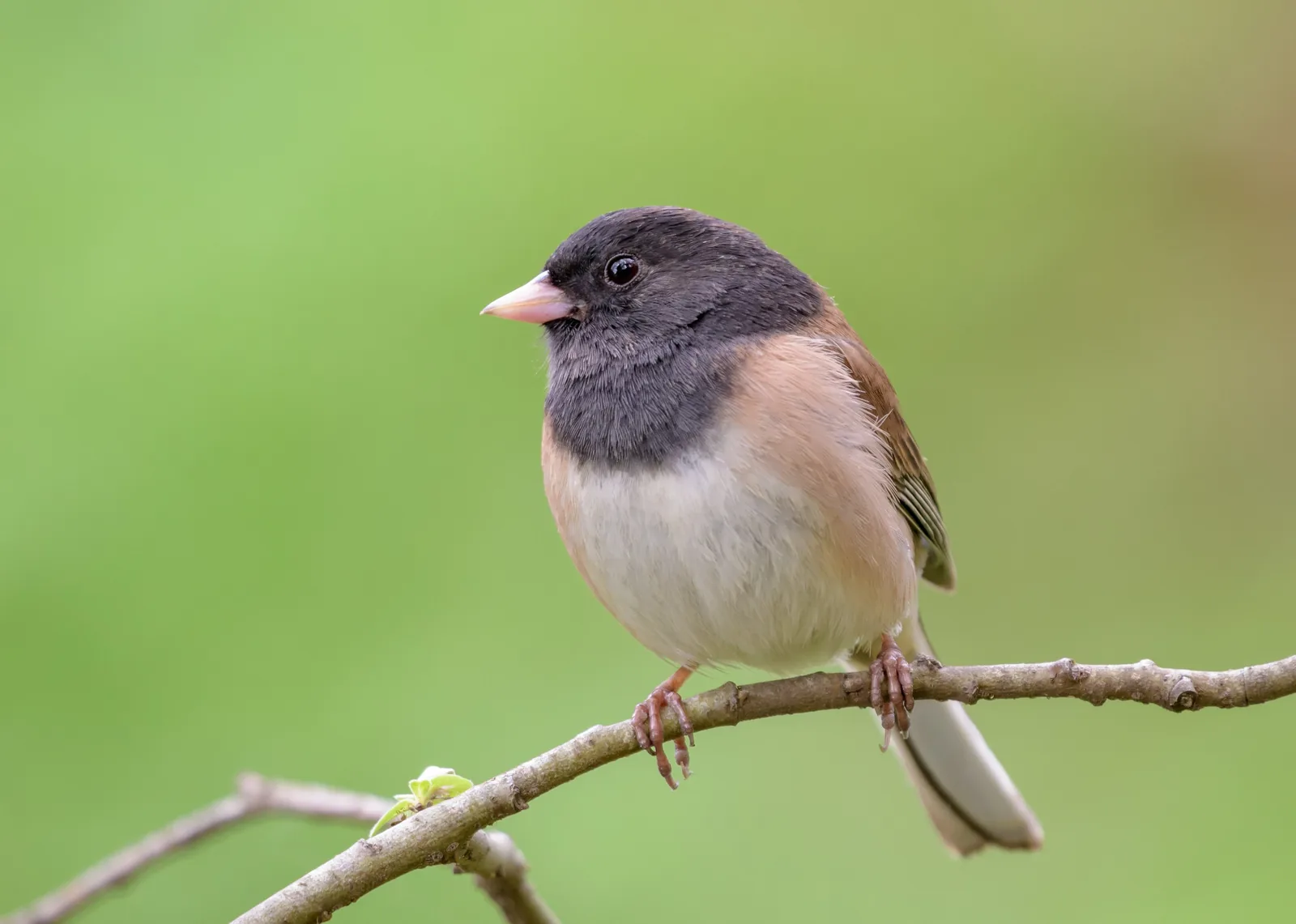

The Snowbird of the College Campus
For much of North America, the Dark-eyed Junco is a winter bird. It turns up under feeders as the cold sets in and leaves again in spring, which is why many people call it the snowbird. If you wake up near woods or a backyard feeder in winter, you may hear its twittering call or a steady trill, and see white tail feathers flash as it flies off.
A Mountain Bird Goes to College
In the early 1980s, a small group of juncos settled on the campus of the University of California, San Diego. Juncos in southern California usually breed in the mountains, but these birds made a home among lawns and buildings near the coast, and they stopped migrating.
A 2022 genetic study found that they probably did not come from the nearest mountains. Their closest relatives were coastal juncos from central California, and the campus birds had split from them only 20 to 32 generations earlier.
City life changed them quickly. The campus juncos breed for more than twice as long each year as their mountain relatives and raise about twice as many young. They are also bolder, with a weaker stress hormone response, and those differences held up even in birds raised in captivity.
Nests in Strange Places
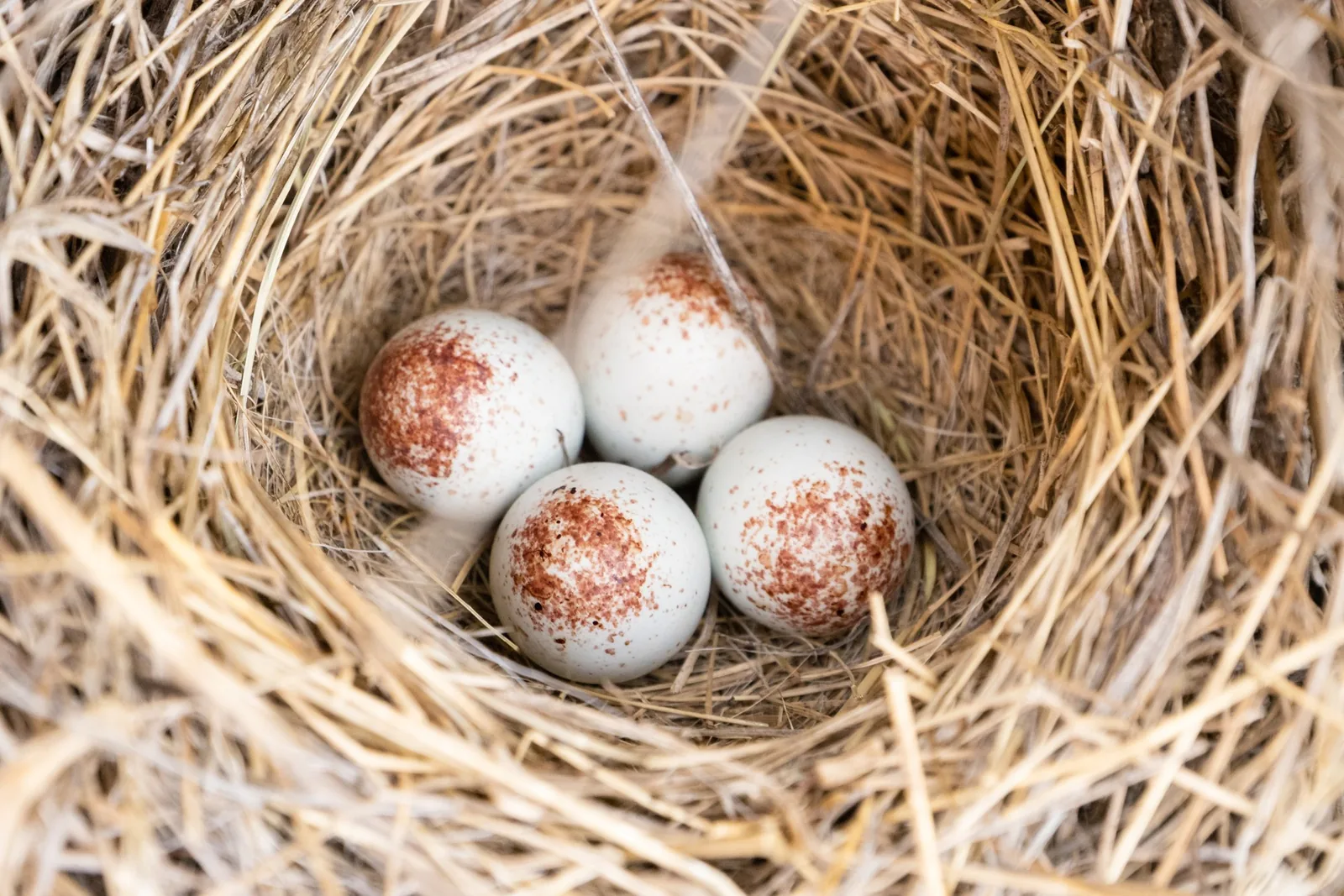
Juncos usually nest on the ground, tucked into a slope or among tree roots. Around people, they may also nest on window ledges, in hanging flower pots or even in light fixtures. A 2020 study of 170 nests in Los Angeles found that nests placed off the ground or on human-made surfaces were more successful.
A Pandemic Experiment
At the University of California, Los Angeles, where researchers have followed marked juncos since 2018, campus birds have shorter, thicker bills than juncos in the nearby mountains. The scientists suspect food waste from people plays a part. Then, in March 2020, COVID-19 lockdowns emptied the campus just before the first nests were due to hatch, and restrictions lasted until fall 2021.
According to a 2025 study in the journal PNAS, juncos that hatched during and soon after the restrictions had bills more like those of mountain birds. In the following years, new birds’ bills went back to the campus shape. Other researchers have questioned how such a fast change could happen, and the authors replied that shifts in food are the likely cause, so the debate is still open.
So the next time juncos show up under your feeder for the winter, remember that some of their relatives never left town.
Sources:
- Cornell Lab of Ornithology: Dark-eyed Junco overview, All About Birds
- Cornell Lab of Ornithology: Dark-eyed Junco life history, All About Birds
- The American Naturalist: Yeh and Price (2004), Adaptive phenotypic plasticity and the successful colonization of a novel environment
- Behavioral Ecology (via PubMed Central): Atwell et al. (2012), Boldness behavior and stress physiology in a novel urban environment suggest rapid correlated evolutionary adaptation
- Molecular Ecology: Friis et al. (2022), Rapid evolutionary divergence of a songbird population following recent colonization of an urban area
- Proceedings of the Royal Society B (via PubMed Central): Bressler et al. (2020), Nests in the cities: adaptive and non-adaptive phenotypic plasticity and convergence in an urban bird
- PNAS (via PubMed Central): Diamant and Yeh (2025), Rapid morphological change in an urban bird due to COVID-19 restrictions
- PNAS: Acoca-Pidolle and Mathieu (2026), Unexplained rapid bill-size changes in an urban bird during the COVID-19 anthropause
- PNAS (via PubMed Central): Diamant and Yeh (2026), Reply to Acoca-Pidolle and Mathieu