_3.jpg)
The Vicar's Favorite Hypocrite
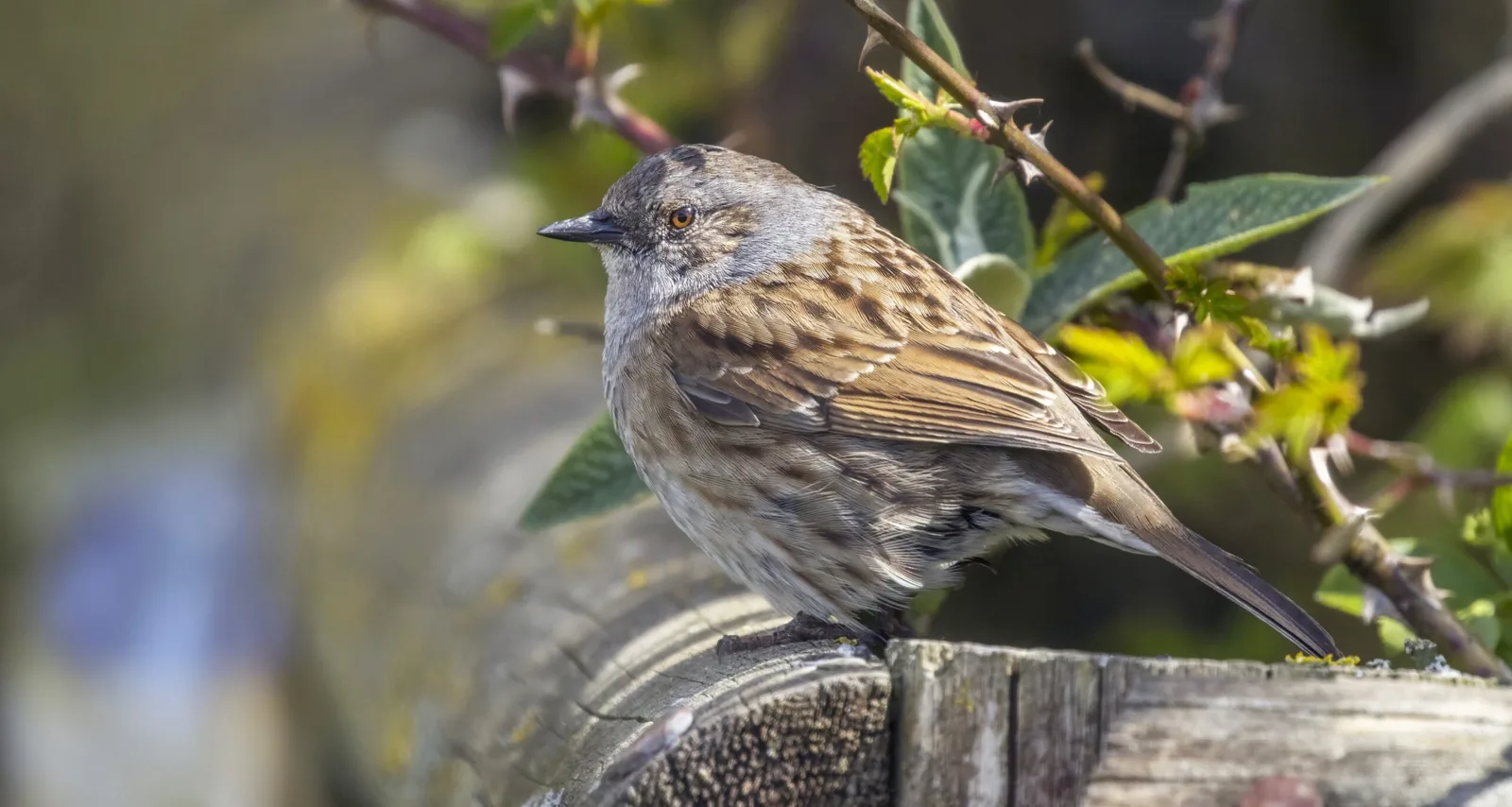
The Dunnock looks like a sparrow that ran out of ambition. It is plain brown, easy to overlook. In the 19th century, Victorian vicars held it up as a model of Christian modesty. They were, we now know, spectacularly wrong.
Not the Bird You Think It Is
“Dunnock” comes from Old English dunn, meaning dingy brown, plus a diminutive. Literally, “little brown bird.” The scientific name, Prunella modularis, dresses it up slightly. It blends Prunella (from the German Braunelle, a diminutive of braun, brown) with the Latin modularis, meaning “modulating” or “singing.” Essentially, “little brown singer.” English gardeners also called it the hedge sparrow, and that name stuck. It is wrong. The Dunnock is not a sparrow at all. It is an accentor, from a small family of thin-billed songbirds most comfortable scratching under a shrub. British folk names caught its character better: Shufflewing, for its constant wing flicking, or Creepie, for its low, hunched gait.
What the Vicar Missed
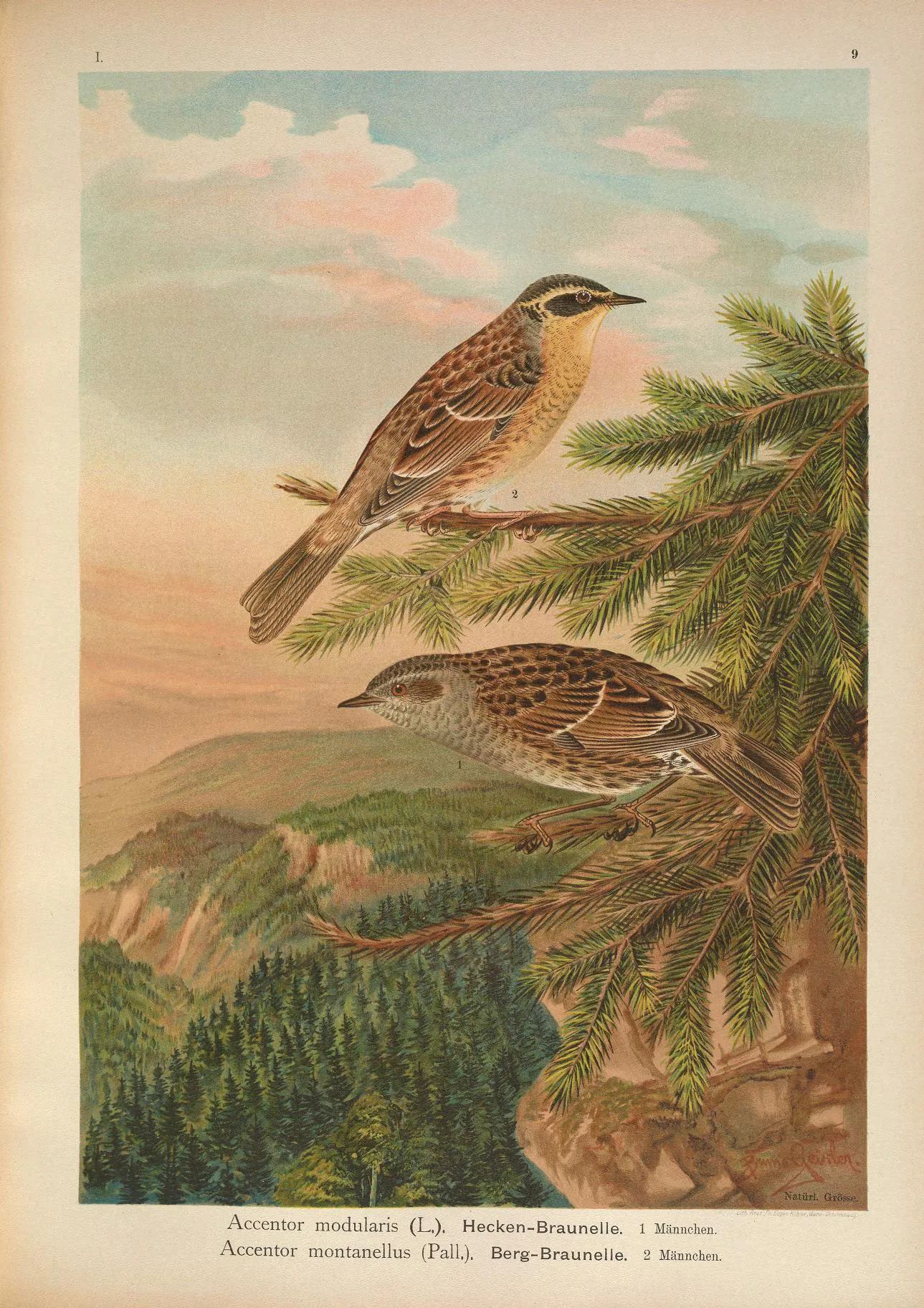
In the 1850s, Reverend Francis Orpen Morris, a Yorkshire clergyman with strong opinions about sparrows, wrote A History of British Birds. He used the Dunnock as an example for his parishioners.
Unobtrusive, quiet and retiring, without being shy, humble and homely in its deportment and habits, sober and unpretending in its dress … the Dunnock exhibits a pattern which many of a higher grade might imitate.
A feathered sermon. He had no idea what was happening on the other side of the hedge.
A century later, Cambridge behavioural ecologist Nick Davies spent years watching Dunnocks in a botanic garden, and what he found rearranged an entire field. A single Dunnock population runs four mating systems at once, on adjacent territories: monogamy, polygyny (one male, several females), polyandry (one female, several males), and polygynandry (everyone involved with everyone). When a male returns to his female after she has been with a rival, he pecks her cloaca until she ejects the other male’s sperm. Then they mate. A Dunnock pair can copulate more than a hundred times a day, each event lasting about a tenth of a second. Reverend Morris would have dropped his tea.
The Song in the Thorns
Dunnocks sing from hedgetops, a fast warble British birders compare to a squeaky shopping trolley. It is not beautiful in the way a blackbird is beautiful. It is rushed and scratchy. If you wake up to a Dunnock in a British garden in April, you are hearing a bird whose reputation its neighbours have only partly figured out. If you wake up to one anywhere else in its range, from the Norwegian coast to northern Iran, you are hearing exactly the same thing.
There is something to love in a bird that fooled an entire century of Victorian vicars. The Dunnock does not mind being called plain. It does not mind being called a sparrow. It just wants you to leave the hedge alone for a few minutes so it can get back to whatever it was doing.
Sources:
- Wikipedia: Dunnock
- BTO BirdFacts: Dunnock
- Animal Behaviour (ScienceDirect): Davies, N.B. (1985). Cooperation and conflict among dunnocks, Prunella modularis, in a variable mating system
- Internet Archive: Davies, N.B. (1992). Dunnock Behaviour and Social Evolution (Oxford University Press)
- Internet Archive: Morris, F.O. A History of British Birds, vol. 3 (1851)
- Tetrapod Zoology: Tell Me Something Interesting About Dunnocks
- RSPB: Dunnock species page
- Xeno-canto: Prunella modularis species page