.jpg)
An Inch and a Half From Extinction
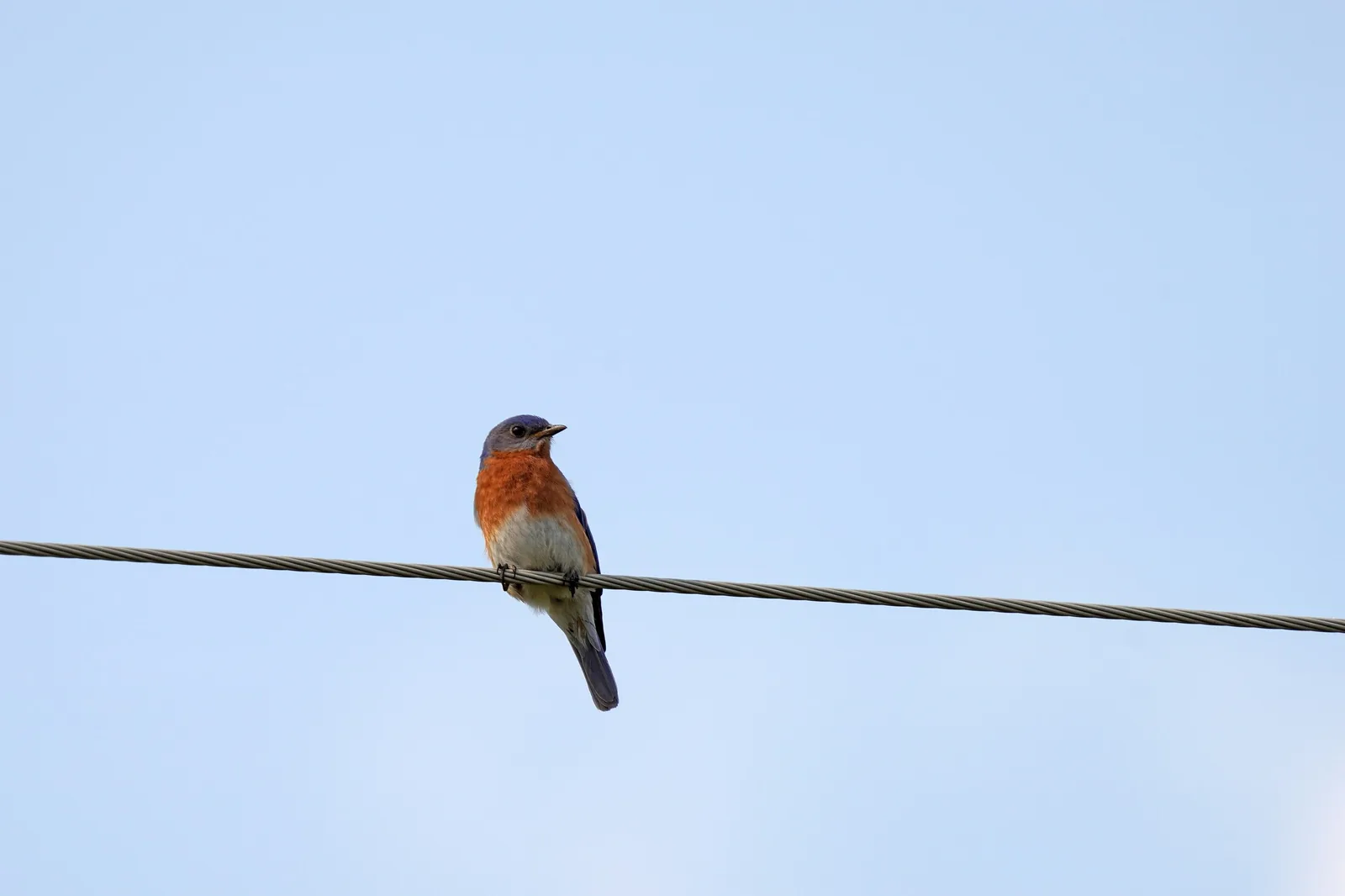
The Eastern Bluebird has been America’s official happiness mascot for about a century. The species nearly vanished in that same century. The gap between those two facts is mostly the work of one retired biochemist with a tape measure.
The Symbol That Almost Wasn’t
The bluebird ran two parallel careers in the twentieth century. In one, it perched on Disney’s shoulder in the 1946 song “Zip-A-Dee-Doo-Dah” and carried the title role of L’Oiseau Bleu, Belgian playwright Maurice Maeterlinck’s 1908 play that gave us “the bluebird of happiness.” The American poet Robert Frost made it a messenger in his 1916 poem “The Last Word of a Bluebird.”
In the other career, it was disappearing. Eastern populations crashed by roughly ninety percent between 1938 and the late 1970s. Wooden fence posts, drilled by woodpeckers and reused by bluebirds for nesting, were giving way to metal. DDT contaminated the grasshoppers and beetles that make up most of a bluebird’s diet, weakening eggshells. Two European cavity nesters introduced in the 1800s were outcompeting bluebirds for every remaining hole: the House Sparrow, released in Brooklyn in the 1850s, and the European Starling, established in Central Park in 1890.
An Inch and a Half
Lawrence Zeleny was an American USDA biochemist who retired in 1966 from the Beltsville Agricultural Research Center in Maryland. He stepped outside and started the work he is remembered for. In 1967 he set up thirteen nest boxes along the Beltsville grounds. The trail eventually grew to sixty boxes over ten miles.
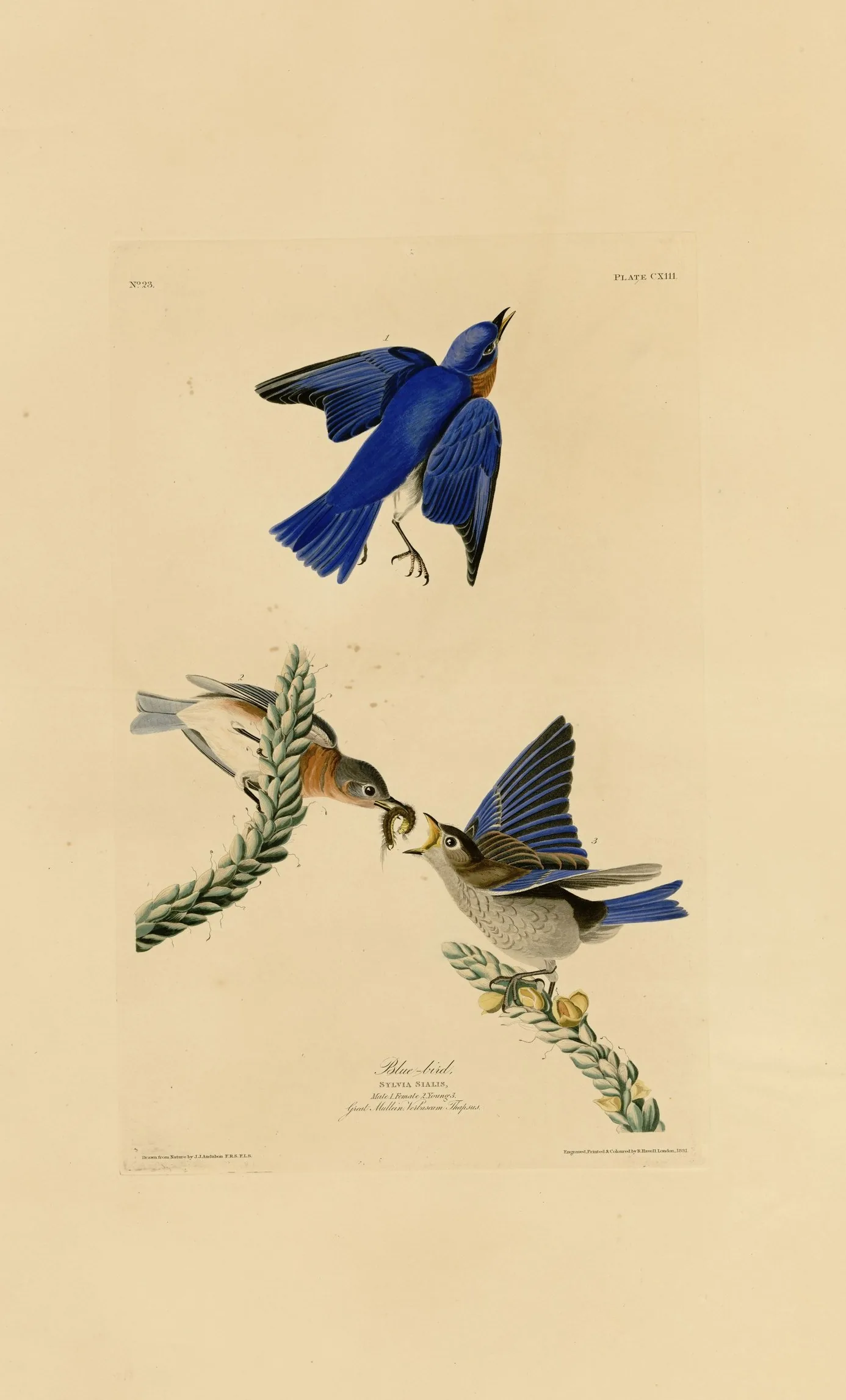
His insight was the entrance hole. It had to be exactly an inch and a half across: big enough for a bluebird, too small for a starling. Zeleny published The Bluebird: How You Can Help Its Fight for Survival in 1976 and a National Geographic article in June 1977 titled “Song of Hope for the Bluebirds.” In March 1978 he founded the North American Bluebird Society, whose quarterly journal is named Sialia, after the genus.
The species responded. Between 1966 and 2015, Breeding Bird Survey data show greater than 1.5% annual population growth across most of the eastern range. Partners in Flight now estimates a global breeding population of roughly twenty-three million. The recovery is widely credited to backyard nest boxes built to Zeleny’s spec.
What He Sings From the Post
The male’s song is the warble Disney was pretending to evoke. It is soft, often transcribed as chiti-WEEW-wewidoo. The contact call is a liquid turee or queedle. Both carry a long way across open ground. A bluebird sings from a high perch like a fence post, and hunts from the same one.
Females mostly stay silent. A 2020 paper in Behavioral Ecology and Sociobiology showed they sometimes sing when a predator is on the territory: a warning, not a courtship.
A bluebird on a Beltsville nest box in March is not the bluebird of happiness. It is real. It lives in a box because a retired biochemist measured the hole correctly, and the right drill bit can produce another one. That is a less mystical kind of happiness, and a more durable one.
Sources:
- Wikipedia: Eastern Bluebird (Sialia sialis)
- Wikipedia: Lawrence Zeleny
- North American Bluebird Society: NABS History
- Sialis.org: Bluebirder Lawrence Zeleny
- Audubon Field Guide: Eastern Bluebird
- Wikipedia: Bluebird of happiness
- Academy of American Poets: The Last Word of a Bluebird, Robert Frost
- Behavioral Ecology and Sociobiology, 2020: Female song in eastern bluebirds varies in acoustic structure according to social context
- Forest Preserve District of Will County: Bluebirds Saved From Extinction
- Biology Insights / Partners in Flight: How Many Bluebirds Are There in North America?