
Two Birds, One Whipcrack
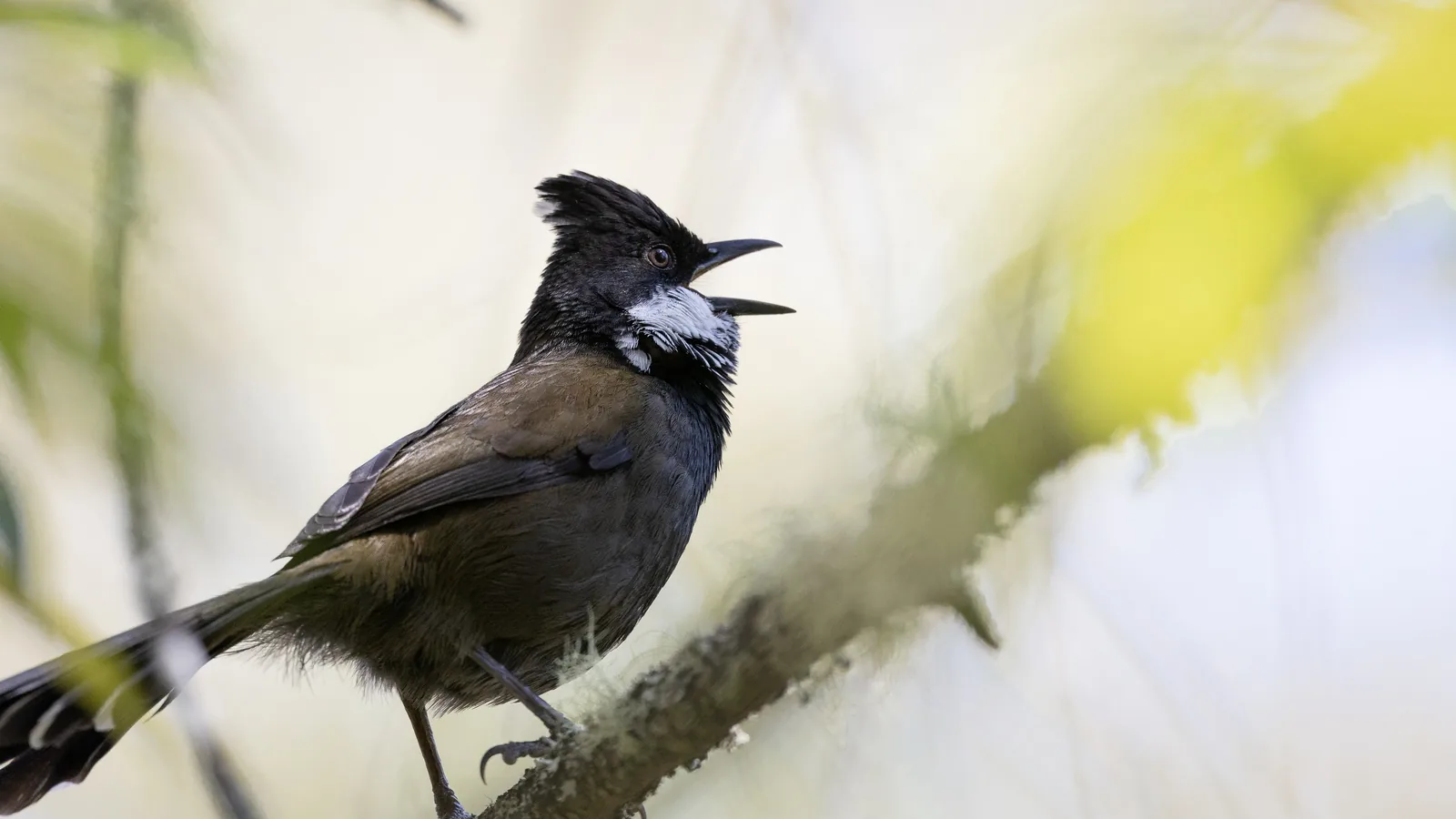
If a sharp whipcrack ever splits the quiet of an Australian rainforest at dawn, that is the Eastern Whipbird, and it is one of the loudest, most recognisable sounds in the Australian bush. Here is the twist almost nobody notices. That single crack is not made by one bird. It is a duet, and the timing is so tight your ear stitches two voices into one.
The Whipcrack Is a Duet
The male does the setup. He spins out a long, rising whistle, then snaps it off with the explosive crack that gives the bird its name. Before that sound has finished ringing, the female answers from a few metres away with a quick “choo-choo.” The handover happens in a fraction of a second, which is why the whole thing lands on your ear as one burst rather than two birds taking turns. Pairs use these duets to keep contact in dense undergrowth and to announce that this patch of forest is taken. So when you think you are hearing a single whipbird, you are almost always eavesdropping on a couple.
Named After a Bullock Driver’s Whip
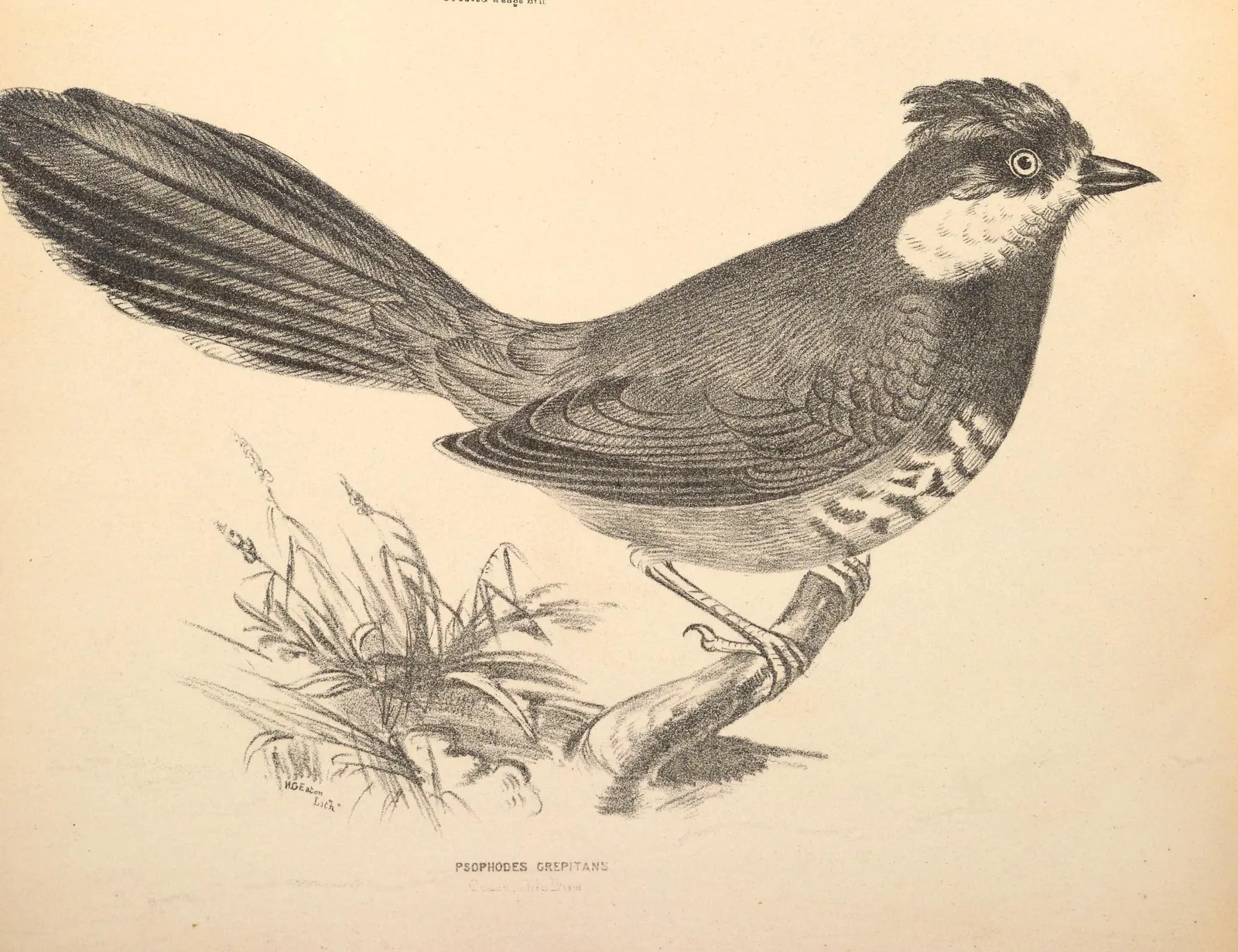
European settlers heard that crack and reached for the obvious comparison. They called it the coachwhip bird, or the stockwhip bird, after the whips that cracked over teams of bullocks. Its scientific name is Psophodes olivaceus, from a Greek word meaning “noisy” and a Latin one for its olive-green back. An older name caught the sound even better: Psophodes crepitans, with crepitans being Latin for “crackling.” The naturalist John Gould, who catalogued Australia’s birds in the 1840s, also wrote down a name used by Aboriginal people of the Hunter region in New South Wales: Djou.
His Line Never Changes. Hers Does.
Here is where it gets strange. The researchers Daniel Mennill and Amy Rogers compared whipbird recordings from sixteen populations up and down eastern Australia. The male’s whipcrack barely shifts. A male in Victoria and a male a couple of thousand kilometres north in Queensland crack out almost the same note. The females are a different story. Their answering calls split into distinct regional versions, like local accents, varying far more from place to place than anything the males produce.
And that answer is not only romance. When Rogers and her colleagues played recordings to wild pairs, females reacted hardest to the sound of other females, rushing in to sing over them. The leading explanation is that she is not simply harmonising with her mate. She is warning rival females off him. He cracks the whip to hold the territory. She answers to hold onto him.
So the bird you almost never see is even less of a solo act than it sounds. That famous crack is only half a sentence. The reply, if you listen for it, is the other half, and this particular couple has been finishing each other’s lines for a very long time.
Sources:
- Wikipedia: Eastern whipbird (Psophodes olivaceus)
- Mennill Lab, University of Windsor: Male and female song in the eastern whipbird (Mennill & Rogers, 2006)
- Mulder Lab, University of Melbourne: Eastern Whipbird duets and pair defence (Rogers, Langmore & Mulder)
- Xeno-canto: Eastern Whipbird call recordings