
The Bird Named for the Dawn
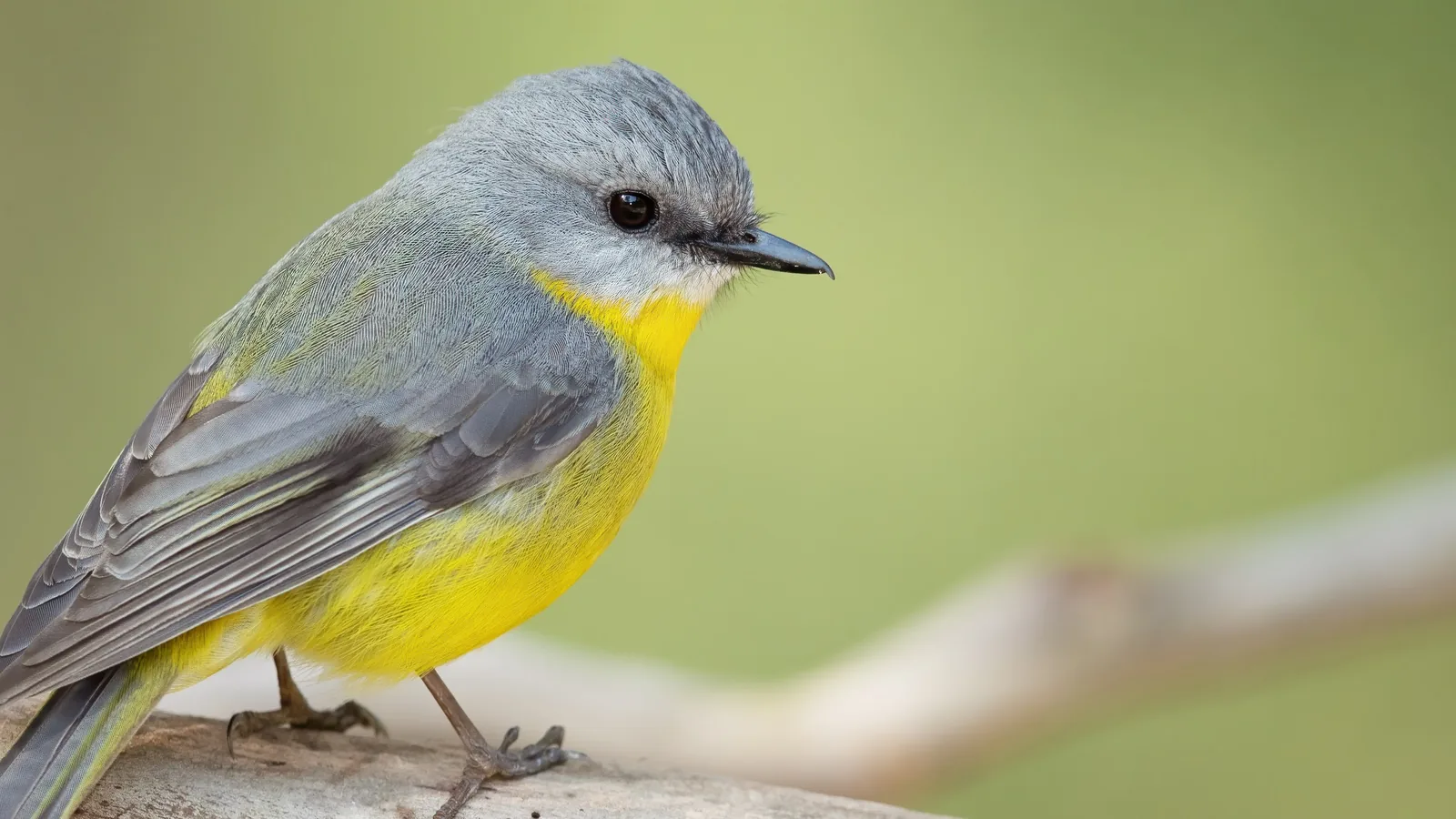
Most birds carry a scientific name lifted from a dead collector, a colour, or the place someone first shot one. This bird’s comes from a time of day. The first half of its scientific name, the genus (the group it shares with its closest relatives), is Eopsaltria: Greek for “dawn singer.” The Eastern Yellow Robin spends its mornings earning it. Across eastern Australia it is one of the first voices in the forest, often calling before there is any real light in the sky. If you wake near a fern gully in New South Wales or the rainforest edge in Queensland, the grey-and-yellow bird piping in the half-dark is the one the early naturalists named for the dawn itself.
A Name Built Out of Sunrise
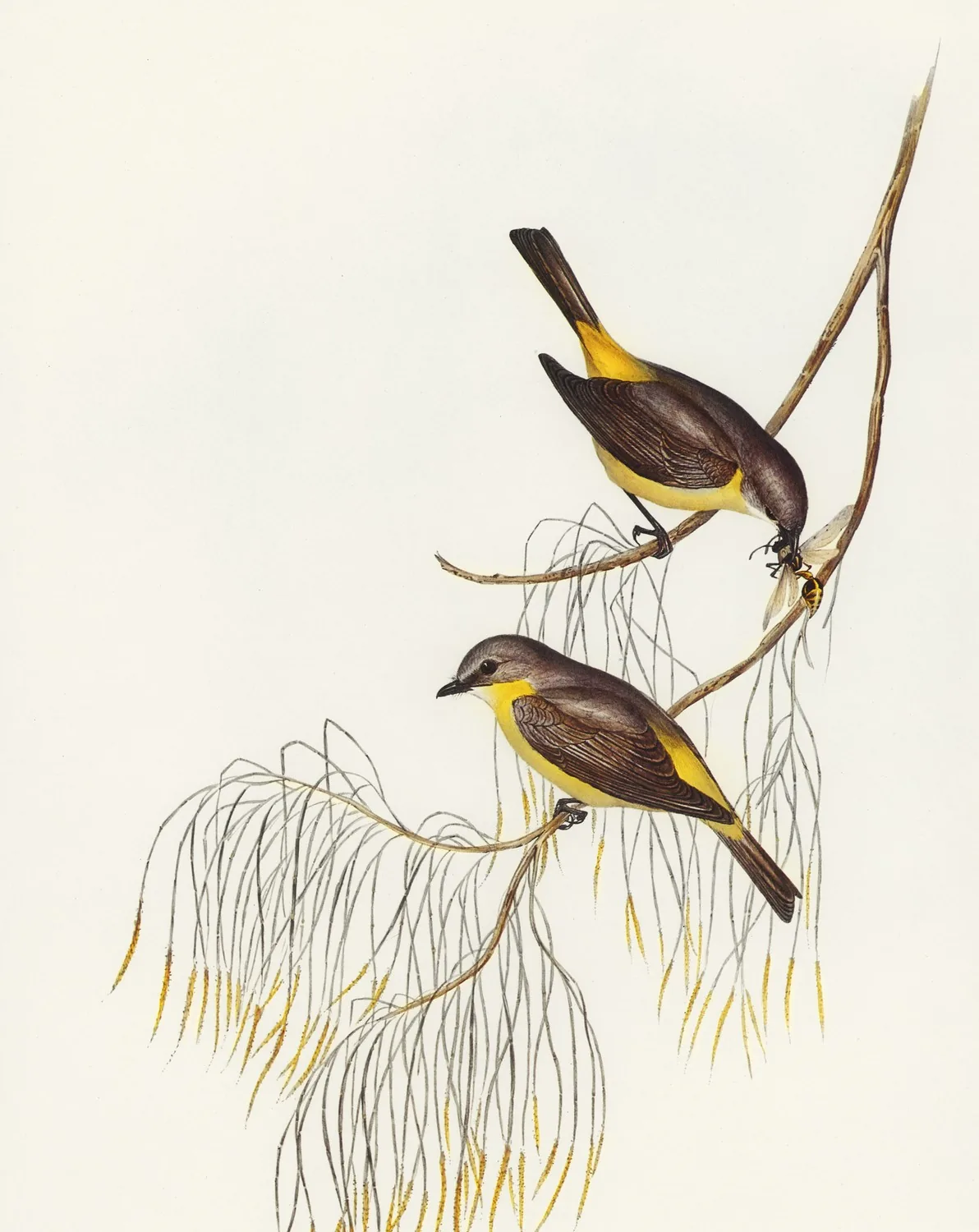
The name is older than Australia’s reputation for strange wildlife. William Swainson, an English naturalist, coined the genus Eopsaltria in 1832, stitching together two Greek words: eos, the dawn, and psaltria, a woman who plays the harp. A dawn harpist, in other words. The species half, australis, is the plain part. It simply means “southern.” For all the European echo in the word “robin,” this bird is no relation to the red-breasted robin of English gardens, nor to the American robin. It only reminded homesick settlers of them. The Eastern Yellow Robin belongs to the Australasian robins, a family of its own, grey above with a clean wash of yellow below.
It Hunts Sideways, and the Family Pitches In
Watch one a while and it does not perch like a songbird should. The Eastern Yellow Robin clings sideways to a vertical tree trunk, gripping the bark with its head angled down, then drops onto an insect in the litter and bounces back to another low perch. The home life is just as particular. The female does the building, weaving a small cup of bark and grass, binding it with spider web, then disguising the outside with lichen and moss until it reads as a knot on the branch. She also does all the sitting, laying up to three clutches of two or three eggs a season. The chicks, though, are raised by more than two. Both parents feed them, and sometimes other helpers do too.
What You’ll Hear at First Light
The song is a run of clear piping whistles, repeated and sliding down in pitch, the kind of sound that carries through a still, damp forest. The dawn signature is something sharper. At first light, and again at dusk, the male throws out a loud, ringing “tcheow tcheow,” a call with an edge to it that cuts across the quieter chorus. If you wake somewhere between Cooktown and Melbourne and hear that piping start while the rest of the bush is still dark, that is the dawn singer keeping its appointment.
It is a tidy piece of naming. A small bird, grey-backed and yellow-bellied, carrying an ancient Greek word for daybreak because someone two centuries ago noticed it was always the first one awake. Plenty of birds are named after some forgotten collector. This one is named after the hour it sings.
Sources:
- Wikipedia: Eastern yellow robin
- Wikipedia: Eopsaltria (genus), etymology
- Museums Victoria: Eopsaltria australis, Eastern Yellow Robin
- Wild Ambience: Eastern Yellow Robin Calls & Sounds
- Xeno-canto: Eastern Yellow Robin call recordings
- Wikimedia Commons: The Birds of Australia (Gould & Richter), Eopsaltria australis plate
