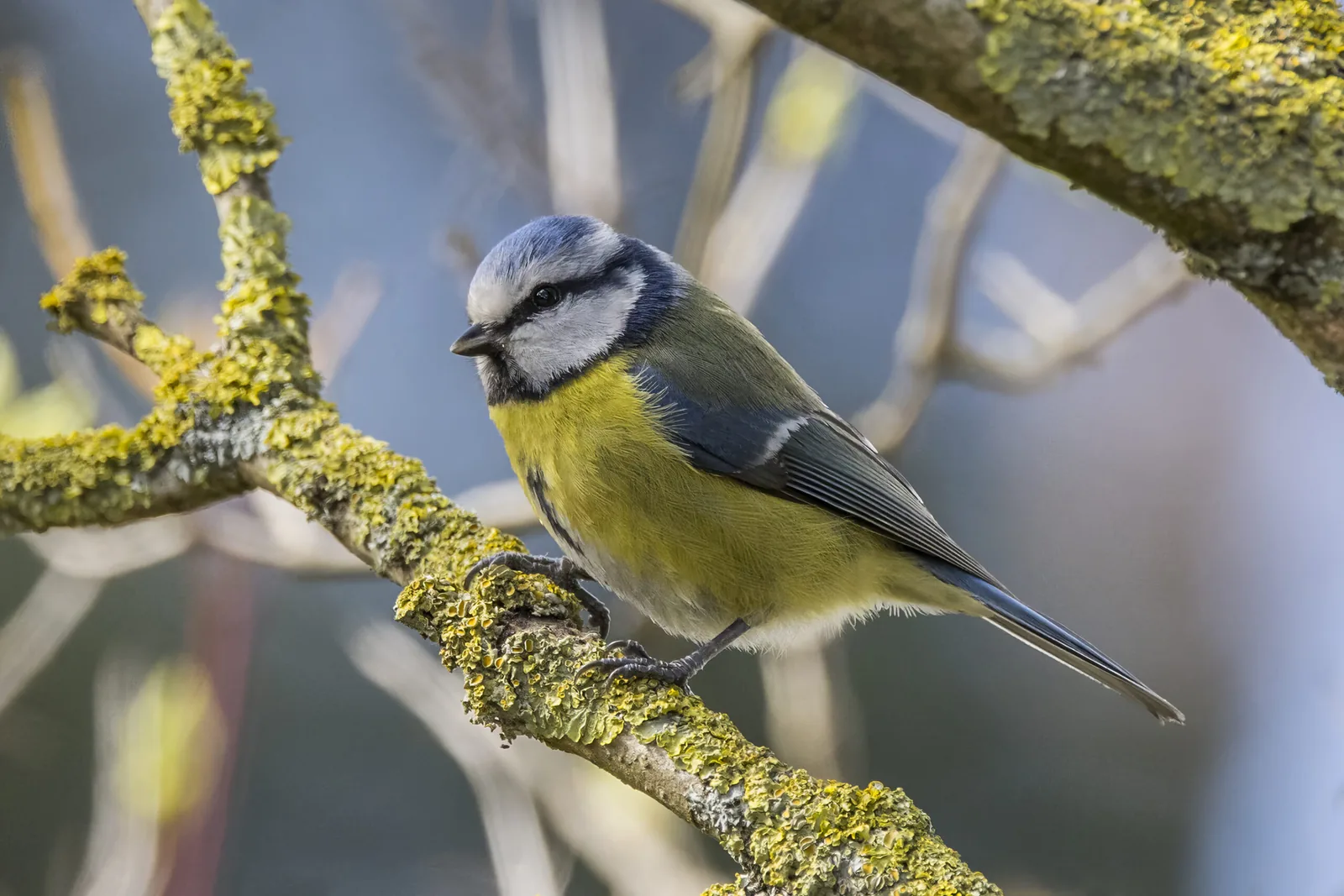
_Biebrzanski.jpg)
The Billy Biter's Invisible Crown
If you wake up in Oxford or Amsterdam to a small blue-and-yellow bird squeaking at your kitchen window, you are being lied to. You think you are looking at one of Europe’s cutest garden regulars. What you are actually looking at is a bird whose most important feature is a colour your eyes literally cannot see.
The Colour You Can’t See
Blue tits see in ultraviolet. We do not. In 1998, a team of biologists at the University of Bristol ran a spectrophotometer across blue tit feathers and found something backyard birders had been missing for centuries. The crown of a male flashes UV light, peaking at around 352 nanometres, well outside the human range. When females were given a choice in the lab, they preferred males with the brightest crests. The paper is titled, with the sort of understated glee academics almost never allow themselves, “Blue tits are ultraviolet tits.”
A year later, a Nature paper went further. Ben Sheldon and colleagues found that the UV brightness of a male’s crown predicted the sex ratio of the chicks his mate produced. Duller UV males, more daughters. Brighter UV males, more sons. A colour we cannot see, tuning the gender balance of the brood.
Billy Biter
For a bird that weighs eleven grams, a little more than a pound coin, the blue tit has an outsized reputation for temper. In parts of rural England it was once called the Billy Biter. The nickname was earned the way most Victorian bird names were earned: by small boys climbing trees to rob the nest. Brooding females do not flee when a hand comes through the hole. They hiss like a snake and clamp down on any finger that reaches them, hard enough to draw blood. In Cotswold villages, the old joke was that you could always tell who had been up a hedge that morning by the neat red semicircle on one knuckle.
A Nursery of Lavender and Mint
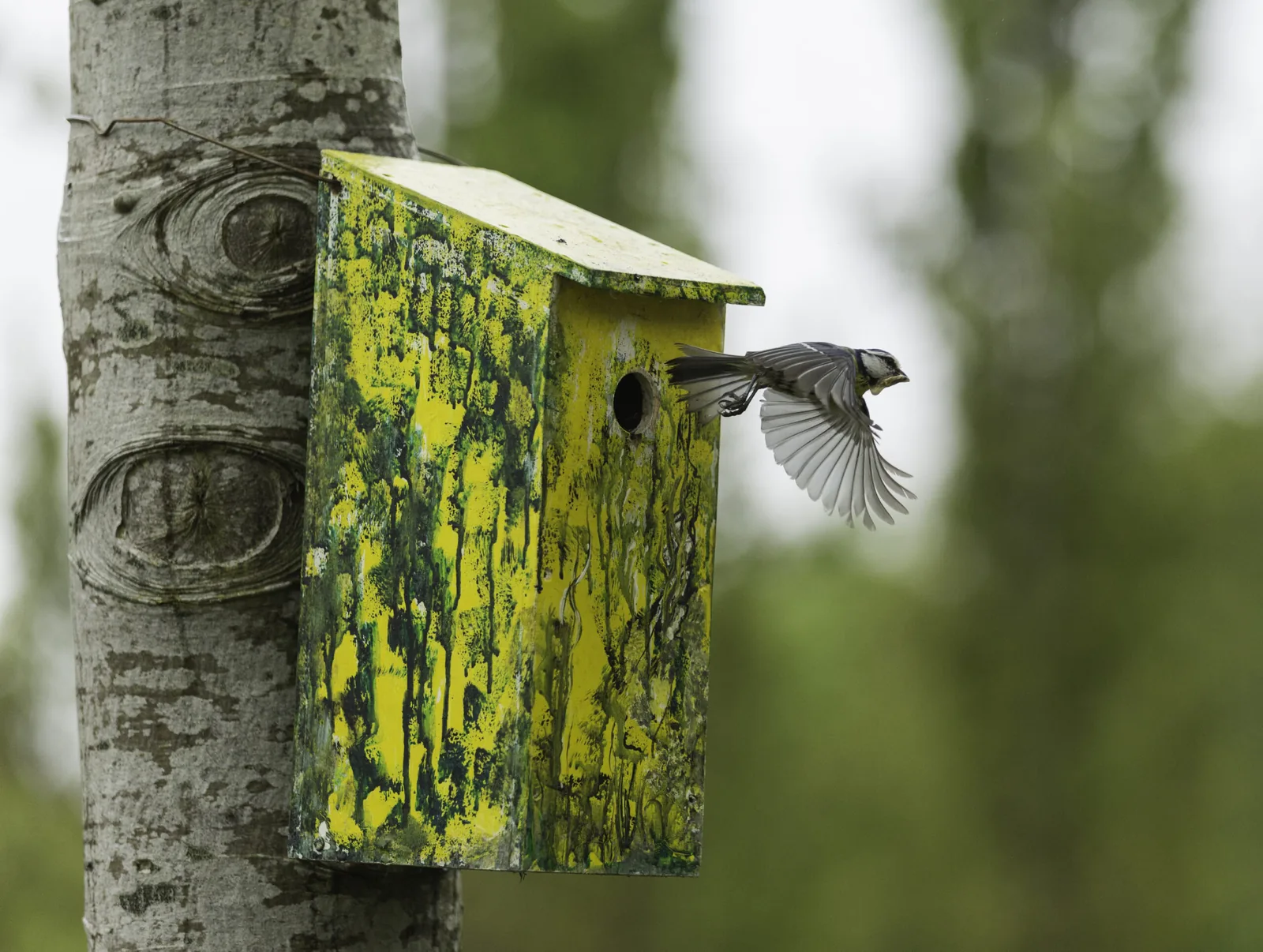
On Corsica, in oak forests above the Mediterranean, female blue tits do something oddly witchy. Before the chicks hatch, they fly out into the scrub and bring back sprigs of lavender, apple mint, curry plant, and yarrow, and they weave the fresh, fragrant fragments into the nest lining. In 2009, Adèle Mennerat and her colleagues showed that the herbs cut bacterial load on the nestlings’ skin and helped the weakest, most parasite-infested chicks grow faster and stronger before they left the nest.
Not every female picks the same herbs. One blue tit will walk past an entire lavender bush to gather mint. Another does the reverse. What looks from the outside like a standard cavity nest is, on inspection, a small tailored apothecary.
So the next garden visitor you dismiss as a tiny decoration is flirting in a colour you cannot see, and raising its babies on fresh lavender. Small bird. A lot going on.
Sources:
- Proceedings of the Royal Society B: Hunt, Bennett, Cuthill & Griffiths, “Blue tits are ultraviolet tits” (1998)
- Nature: Sheldon, Andersson, Griffith, Örnborg & Sendecka, “Ultraviolet colour variation influences blue tit sex ratios” (1999)
- Oecologia: Mennerat et al., “Aromatic plants in nests of the blue tit Cyanistes caeruleus protect chicks from bacteria” (2009)
- Wikipedia: Eurasian blue tit, including the Billy Biter folk name
- BTO BirdFacts: Blue Tit population, call, and nesting
- Online Etymology Dictionary: “tit” as a small bird, from Old Norse titlingr