.jpg)
Linnaeus's Mistake, Belgium's Champion
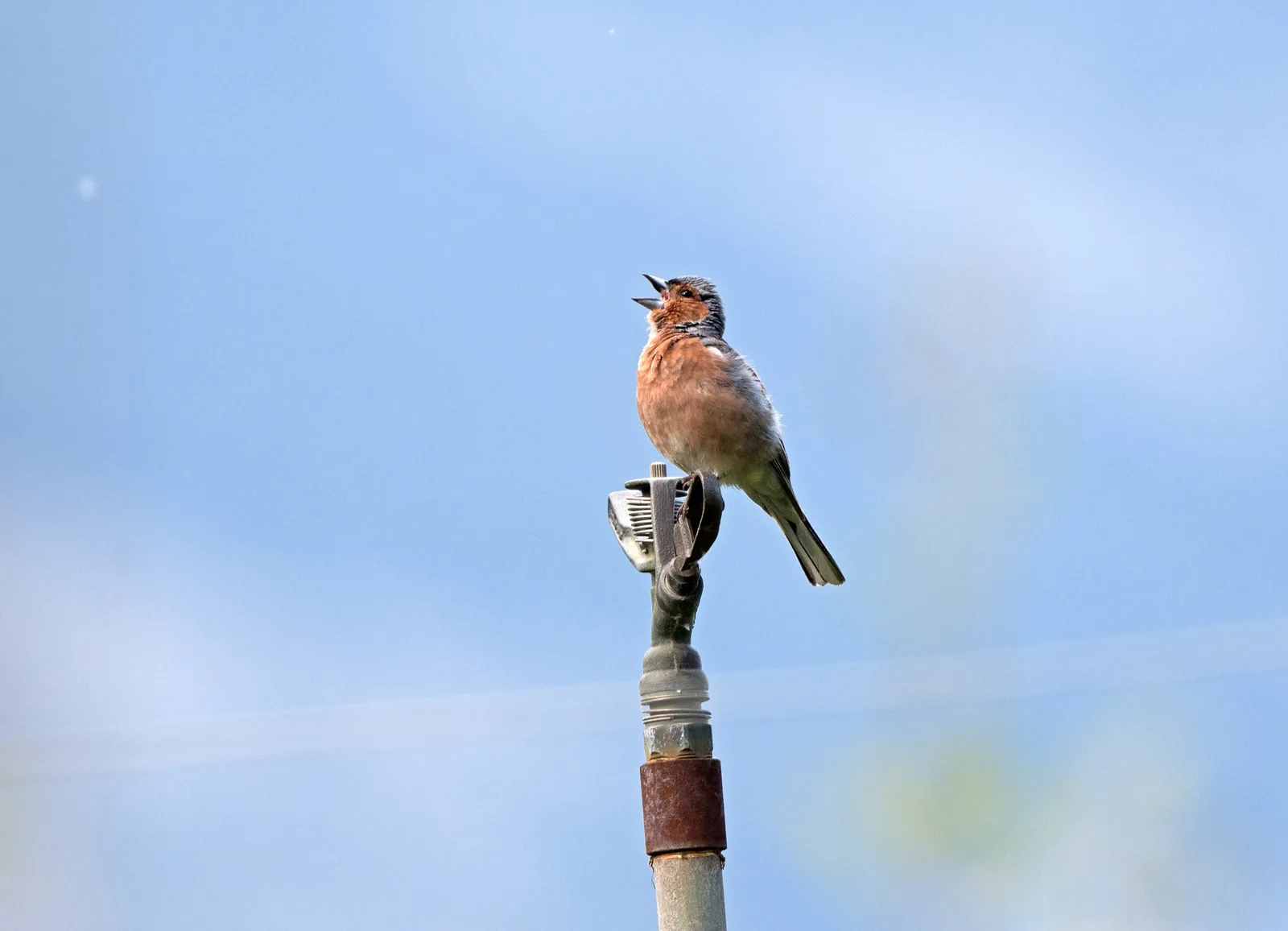
A small brown finch with a slate-blue cap sings from woodland edges and gardens across Europe. In 1758, the Swedish naturalist Carl Linnaeus gave it the wrong name. Two centuries later, a Cambridge biologist used the same species to crack how birds learn to sing. In Flemish villages, men have been counting its calls in chalk since the late sixteenth century.
The Latin Name That Stuck
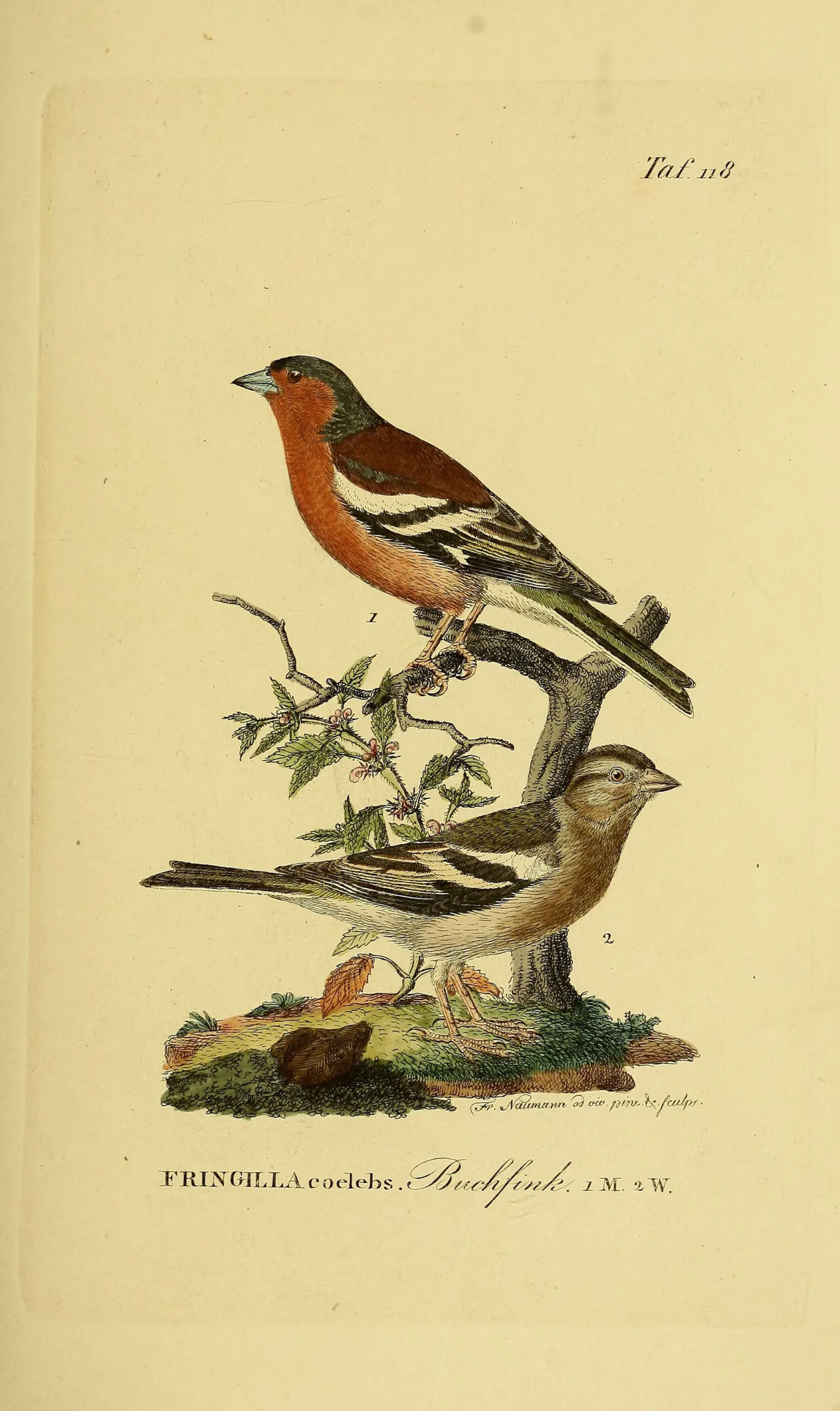
Linnaeus invented the Latin system biologists still use to name species. He named thousands himself. In 1758 he gave this finch the name Fringilla coelebs in the 10th edition of Systema Naturae. Fringilla is Latin for finch. Coelebs means unmarried, the same root as English “celibate.” Linnaeus had been watching winter flocks around his home in Sweden. They were entirely male. That observation went straight into the species name.
The females were not gone. They had migrated further south. Ornithologists call this differential migration: females and younger birds winter further from the breeding grounds than adult males do. Pairs reunite in spring. Chaffinches are mostly monogamous. The bachelor name is a 250-year-old half-truth that nobody is going to rename now.
How a Finch Schooled Science
The misnamed bird became the most-studied songbird in Europe. In 1952 the British biologist Peter Marler published a paper in Ibis. He showed that chaffinches in Britain and France sing different versions of their song, with most variation in the second half. Birds had regional accents.
Six years later, the Cambridge biologist William Thorpe published the experiment that made textbooks. He raised chaffinches in soundproof isolation. Their songs came out simplified, recognisable but lacking the full structure. Other birds heard adult song during a narrow window after hatching. They sang properly. Birds tutored too late never caught up. Thorpe had identified a critical period in birdsong learning. The analogy to human language was immediate. Decades of work on how children pick up speech trace back to a finch in a Cambridge lab.
Belgium’s Birdsong League
In Flanders, vinkensport has tallied chaffinch song since at least 1596. Male chaffinches sit in small wooden cages, six feet apart along a country road. A timekeeper raises a red flag. For one hour the birds sing. Their owners mark a chalk stroke on a wooden stick for every susk-e-wiet. That is the flourish that closes a proper chaffinch song. Longest tally wins.
The current record is 1,278 calls in an hour. The score is contested. The owner was accused of testosterone doping. Another contestant was caught after three contests in a row produced identical scores. A CD player was found hidden in his cage. As of 2007, Flanders had over 13,000 vinkeniers, breeding around 10,000 chaffinches a year. Blinding competing birds with a hot needle was outlawed in 1920, after a campaign by blind World War I veterans.
The same small brown bird sings from a Manchester garden, a Bavarian beech, a Flemish stand. It sings the song its father taught it, in the accent of wherever it hatched.
Sources:
- Wikipedia: Common chaffinch
- Wikipedia: Vinkensport
- Nature Education: The Development of Birdsong (covers Marler and Thorpe’s foundational chaffinch work)
- Brainard & Doupe (2002): Auditory feedback in learning and maintenance of vocal behaviour, Nature Reviews Neuroscience 3: 31-40
- Wikipedia: Bird vocalization (summarises Thorpe 1958 critical-period experiments)
- Internet Archive: Linnaeus, Systema Naturae 10th ed. (1758)
- Wikipedia: 10th edition of Systema Naturae