
The Bird-Brain's Vindication
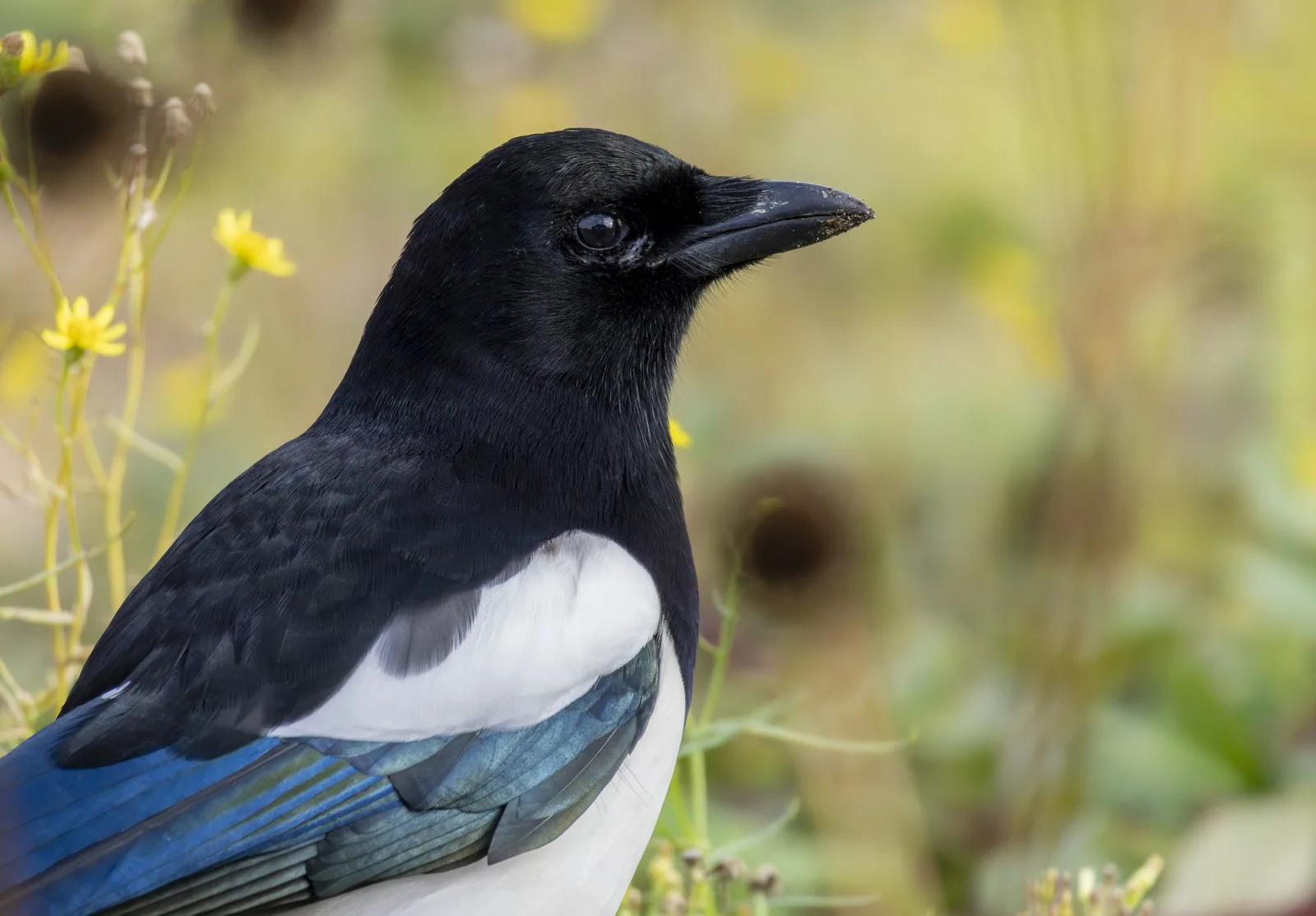
At a distance, the Eurasian magpie (Pica pica) looks like a bird drawn with two crayons: black and white. Up close, the wing primaries flash blue and the long tail catches green or violet depending on the angle. There are two things almost no one outside of birding knows about this bird, and the colour is just the warm-up.
The Mirror at Frankfurt
In 2008, the cognitive psychologist Helmut Prior at Goethe University in Frankfurt put a sticker on the throat of a magpie named Gerti, in a spot she could not see without a mirror. The sticker matched her feathers, so she could not feel it; it only became visible when she looked at her reflection. Gerti pulled at it. So did another magpie called Goldie. They had passed the mark test, the standard psychological measure of mirror self-recognition, which until then had been passed by chimpanzees, dolphins, elephants, and humans. Every species on the list had a neocortex. Magpies do not. Their forebrain runs on a structure called the pallium, built differently and missing the layered cortex that a generation of neuroscientists had pencilled in as the substrate for selfhood. The paper, published in PLoS Biology, ended with a sentence the field is still arguing about: that the neocortex is not a prerequisite for self-recognition.
The Thief That Wasn’t
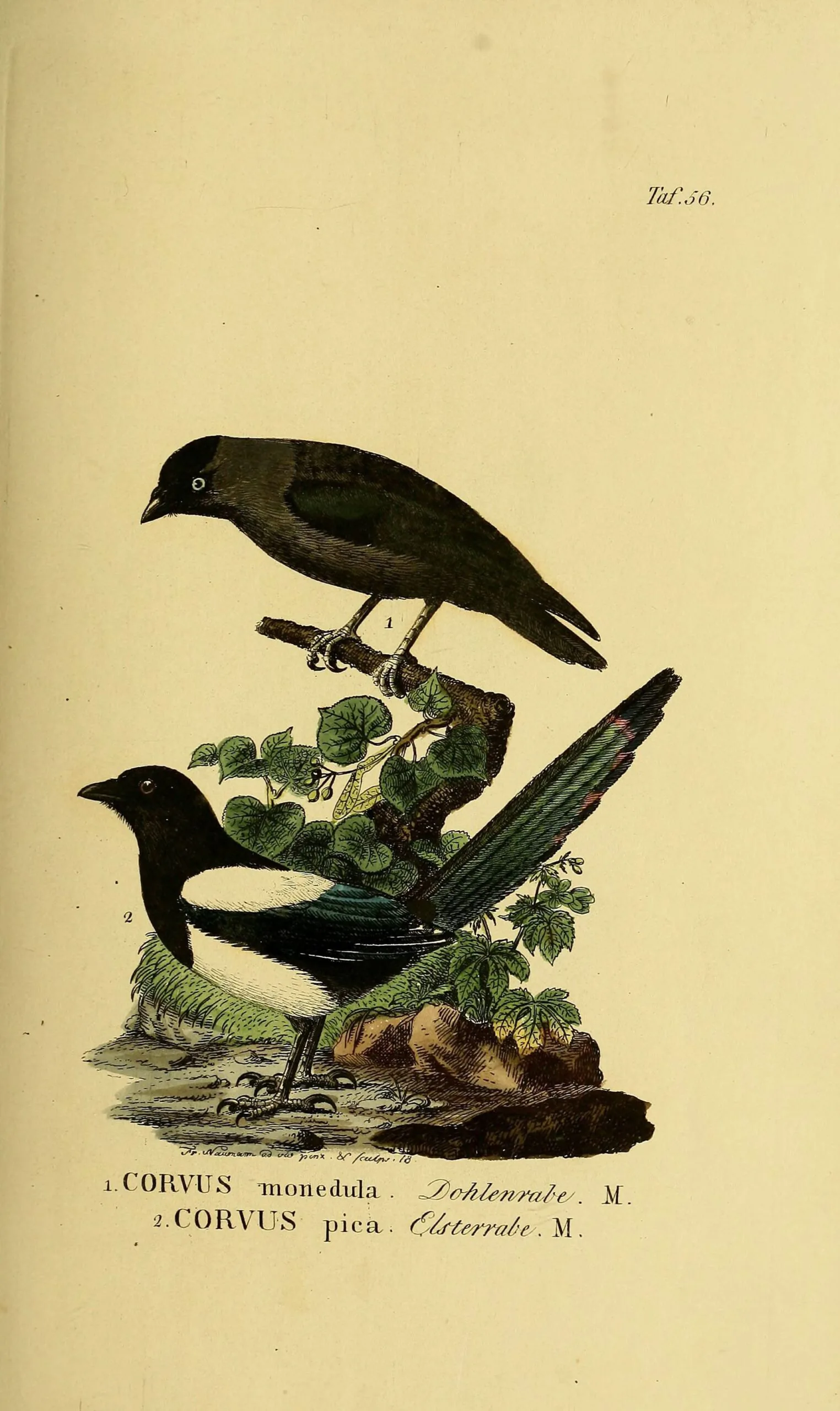
The other thing people know about magpies is that they steal. La Gazza Ladra, Rossini’s 1817 opera, is built on the premise. A servant girl named Ninetta is sentenced to death for taking silver from her employer’s house. The town finds the silver in a magpie’s nest at the last possible moment and Ninetta is reprieved. The opera was a hit; the bird’s reputation never recovered.
In 2014, Toni Shephard and colleagues at the University of Exeter tried to actually measure the attraction. They put shiny metal screws, foil rings, and aluminium next to ordinary nuts on the ground at eight sites where wild magpies foraged. The birds were wary of all of it. Shiny or not, novel objects got a wide berth. The reaction was not interest. It was neophobia, the polite scientific word for fear of new things. The bird whose name became a synonym for theft turns out, when anyone bothers to test it, to be a coward around shiny objects.
The Voice and the Verdict
The voice is the easy part to recognise. A loud, metallic chatter that field guides transcribe as chac-chac, chac-chac-chac, harsh and repetitive. A pair on a Madrid rooftop in March will trade it back and forth at first light.
The thief story is two centuries old. It lasted because no one tested it. When two labs finally did, the bird walked past the shiny objects and pulled at a sticker only the mirror could show.
Sources:
- PLoS Biology: Prior, Schwarz & Güntürkün (2008). Mirror-Induced Behavior in the Magpie (Pica pica): Evidence of Self-Recognition.
- Animal Cognition: Shephard, Lea & Hempel de Ibarra (2014). ‘The thieving magpie’? No evidence for attraction to shiny objects.
- University of Exeter: New study takes the shine off magpie folklore (2014).
- Audubon: Bryce, E. (2014). Do Magpies Really Covet Diamonds?
- Wikipedia: La gazza ladra.
- Wikipedia: Eurasian magpie.