.jpg)
The Treetop's Upside-Down Plasterer
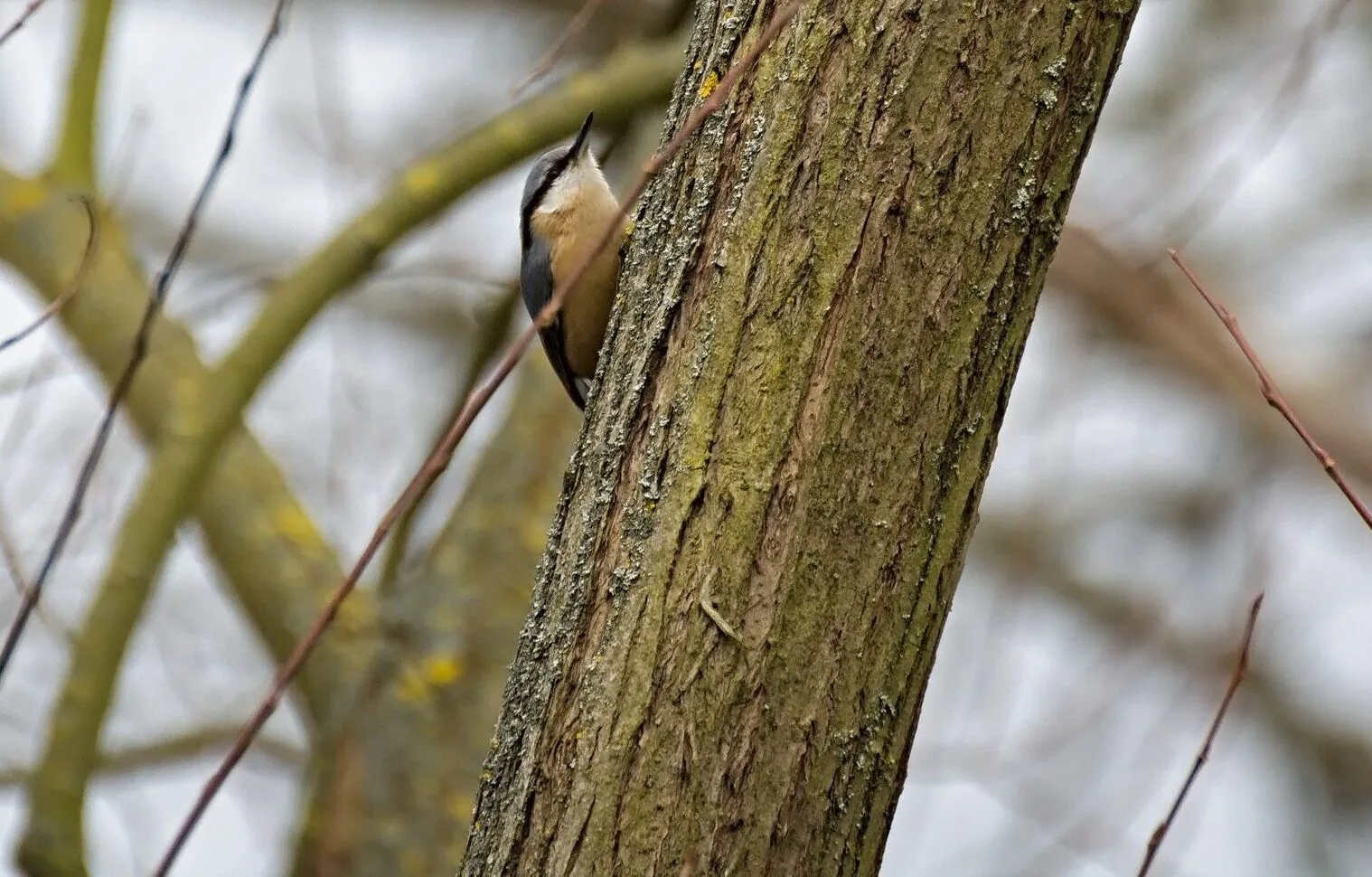
Most small birds that climb tree trunks for a living have one direction in mind: up. The Eurasian Nuthatch is the only British bird that walks the other way, slate-blue back held flat against the bark, head pointing at the ground. It looks ordinary at the feeder. On a beech trunk, it looks impossible.
The Bird That Walks the Other Way
Built like a small dagger with feet, the Eurasian Nuthatch (Sitta europaea) does what no other British bird can: descend a tree trunk head-first. The RSPB says so plainly. Other tree-climbers head up; the nuthatch goes both ways, gripping bark with one foot anchored above and one below.
That upside-down approach is also a foraging trick. Coming down the trunk, the nuthatch sees the upper edges of bark crevices, where insect larvae and seeds get wedged.
Why Germans Call It The Plasterer
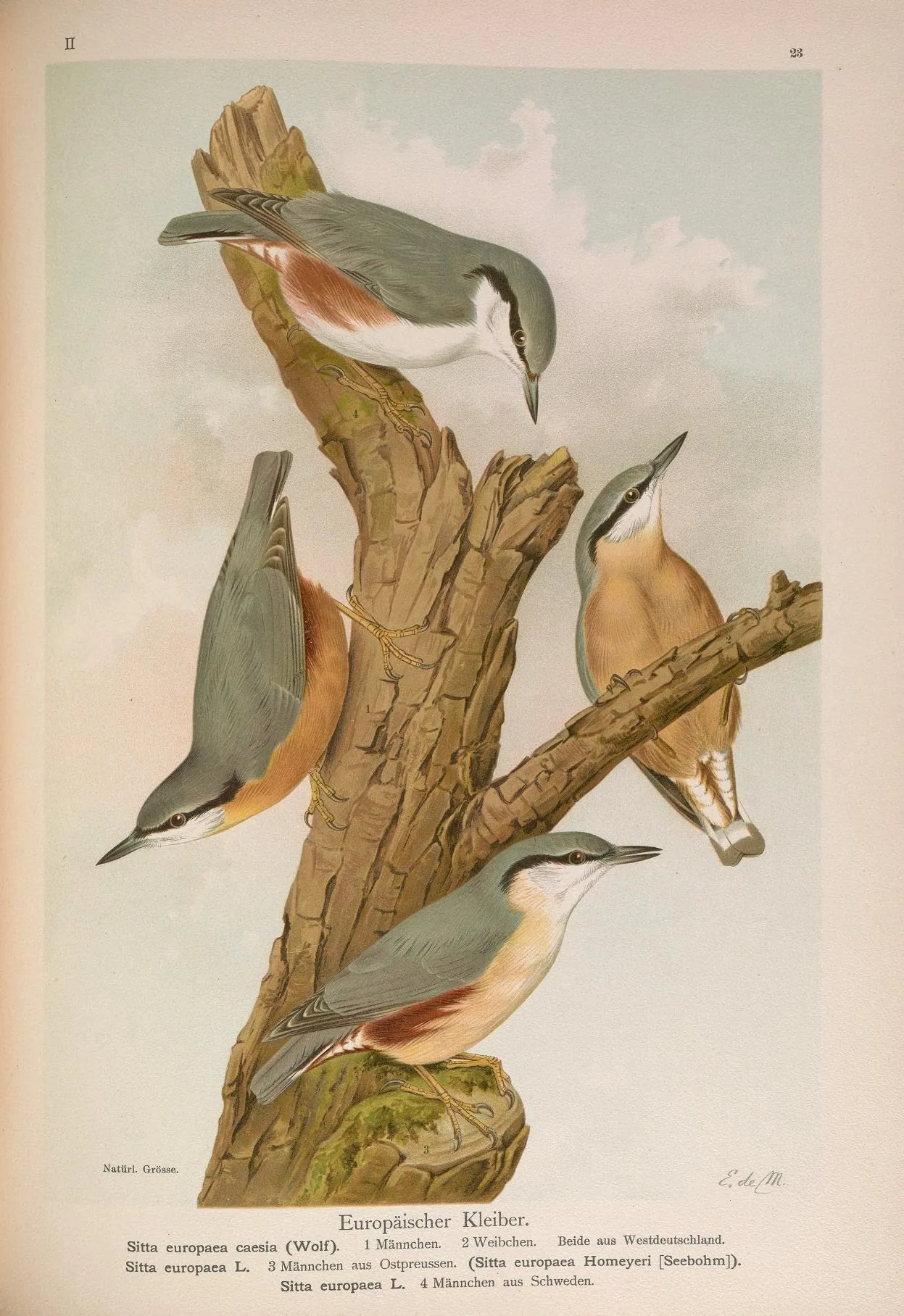
In English the bird is named for what it does to nuts. It wedges a hazelnut into a crack in the bark, then hammers it with that long bill until the shell splits. Middle English captured the action in nutthache and nuthack, both meaning nut-hacker, both surviving as our modern name.
In German the same bird is called the Kleiber. The word comes from kleiben, an old verb meaning to plaster or daub with clay, and it points at a different obsession entirely. When a Eurasian Nuthatch finds a nest hole that is too big, the female does not move on. She fills it in. Working with clay and saliva, she plasters the entrance down to a small flight hole, and often coats the inside of the cavity too. The whole construction can take her up to four weeks. A smaller hole makes it harder for Starlings to take the cavity over. The Germans named the bird for the construction site, not the lunch counter.
The Eurasian Nuthatch hides in plain sight. A grey-blue bullet on the bark, pointed the wrong way, named one thing in English and a different thing in German because each language fixated on a different stunt. If the Bird Rise app cues that sharp dwip tomorrow morning, that is the sound.
Sources:
- RSPB: Nuthatch
- BTO: Nuthatch BirdFacts
- Wikipedia: Eurasian nuthatch (taxonomy, behaviour, calls)
- Wiktionary: nuthatch (Middle English etymology)
- DWDS Wörterbuch: Kleiber etymology (kleiben, to plaster)