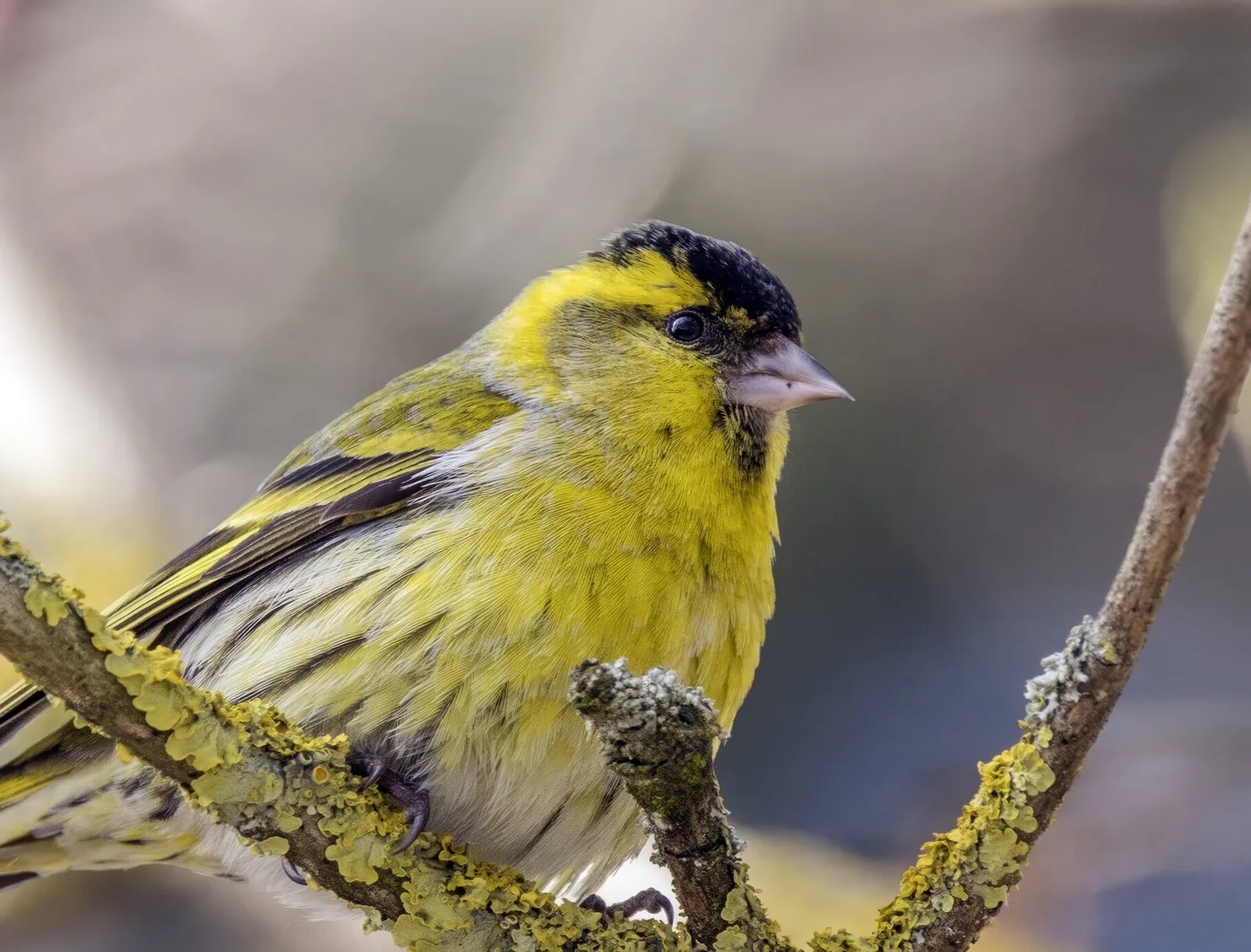
_male_Biebrzanski.jpg)
The Bronze Bird on the Fontanka
On the Fontanka River in Saint Petersburg, near the First Engineer Bridge, there is a bronze bird the size of a coffee cup. It is a Eurasian siskin, eleven centimetres of cast bronze, and it is there because of nineteenth-century law students and a song they used to sing about vodka.
The Schoolboys in Yellow
Duke Peter of Oldenburg founded the Imperial School of Jurisprudence in 1835 to train administrators for the Tsar. Its six buildings sat along the Fontanka Quay until the school was disbanded after the October Revolution of 1917. The uniform was green and yellow with a hat of young reindeer fur. The students looked, in other words, exactly like a male siskin: black cap, yellow throat, olive-green back. Russians call the bird chizh, and the schoolboys were nicknamed chizhiks-pyzhiks. The rhyme followed.
Saint Petersburg’s first festival of satire and humour, Golden Ostap, named for the comic anti-hero of The Twelve Chairs, opened in November 1994. The festival commissioned the Georgian puppet-theatre director Rezo Gabriadze, who came back with eleven centimetres of cast bronze, set on a ledge opposite the old school. It weighs nearly five kilograms. Passersby toss coins, hoping one will land and stay. According to Gabriadze, a coin that stays brings luck in unhappy love affairs and free rides on public transport. The statue has been stolen so many times the city keeps spare copies.
The Pinecone That Wasn’t
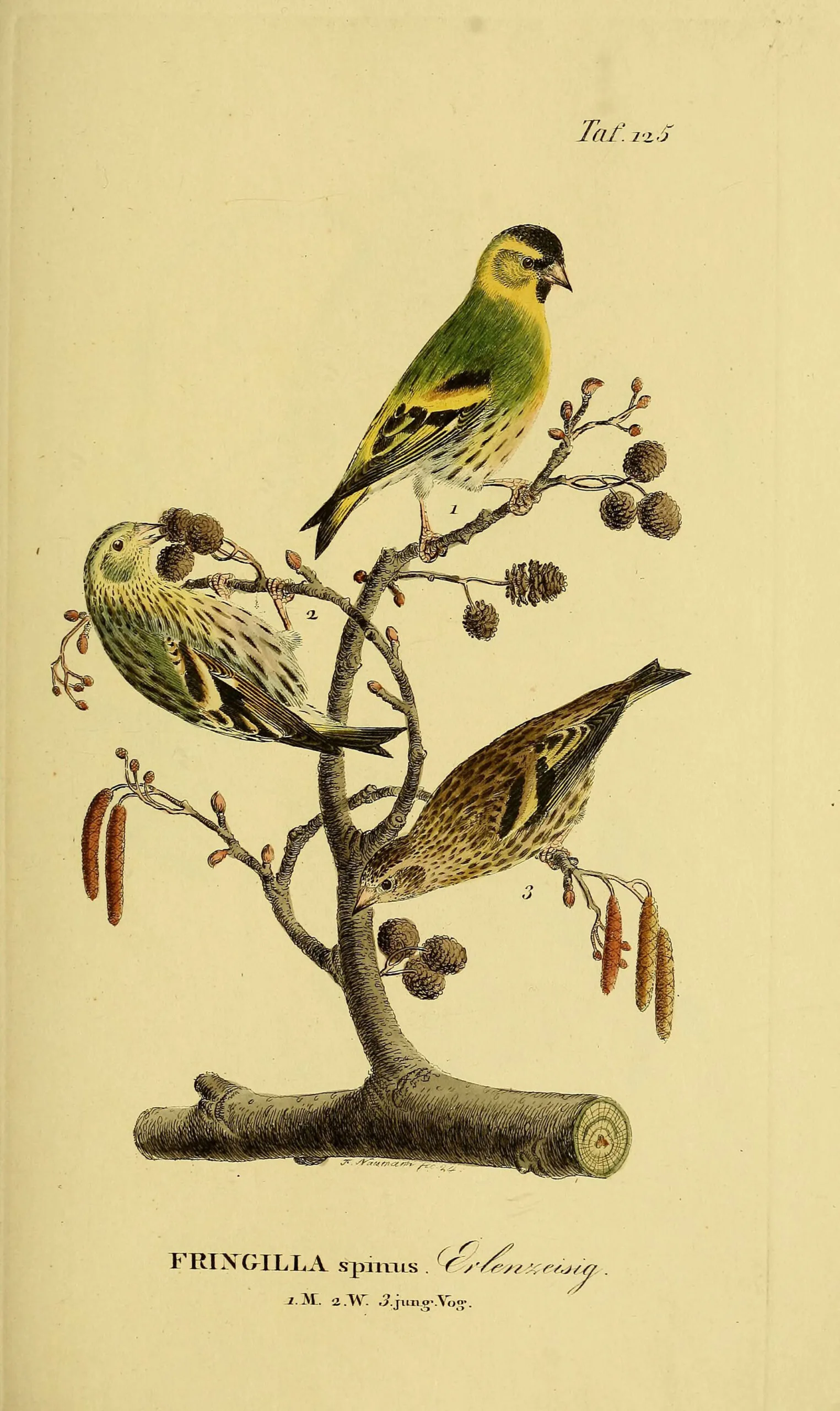
The siskin is a conifer specialist. Its slim, sharp beak slides between the scales of a spruce or alder cone to lift the seeds out. The German name is Erlenzeisig, alder siskin. That habit kept the British siskin in the old conifer forests of the Scottish Highlands for centuries. After 1950 the Forestry Commission’s Sitka spruce plantations matured across Britain, and the breeding range pushed south through Wales and into the New Forest.
In the 1960s, British gardens started filling with hanging mesh nets of peanuts, most dyed bright red. Siskins began picking at the nets the way they pick alder cones. The accepted reading is that the bird recognises the silhouette: a hanging red bundle, the size of an alder catkin, fixed in a tree. Once one bird worked the trick, the rest followed. The UK breeding range has expanded by 166% since the late 1960s.
A Bib and an Upside-Down Lunch
The song is a smooth twitter and trill, sometimes long, sometimes broken by harder syllables. The bird carries two distinct call notes, a falling tilu and a rising tluih, and uses both year-round, often in groups.
In 1984 the Spanish biologist Juan Carlos Senar published a paper in The Condor on allofeeding in Carduelis spinus. In a winter flock, the subordinate birds regurgitate seed and feed it to the dominants. The dominants are the ones with the biggest black bib. In most flocking birds the biggest bib gets you the best food first. In a siskin flock it gets the lunch brought to you.
If the Bird Rise app plays a Eurasian siskin, the recording is a whole flock in winter chorus. They would be hanging upside down on an alder by the Fontanka, or on a peanut feeder in Surrey. They will be small, olive-yellow under black caps, and almost certainly feeding each other.
Sources:
- Wikipedia: Eurasian siskin
- Wikipedia: Chizhik-Pyzhik
- Wikipedia: Imperial School of Jurisprudence
- Atlas Obscura (via Wayback Machine): Chizhik Pyzhik in Saint Petersburg
- The Moscow Times: St. Pete’s Lucky Bird Statue: Chizhik-Pyzhik
- British Trust for Ornithology, BirdFacts: Siskin
- British Garden Birds: Siskin
- Senar, J. C. (1984), The Condor 86, 213 to 214: Allofeeding in Eurasian Siskins (Carduelis spinus)