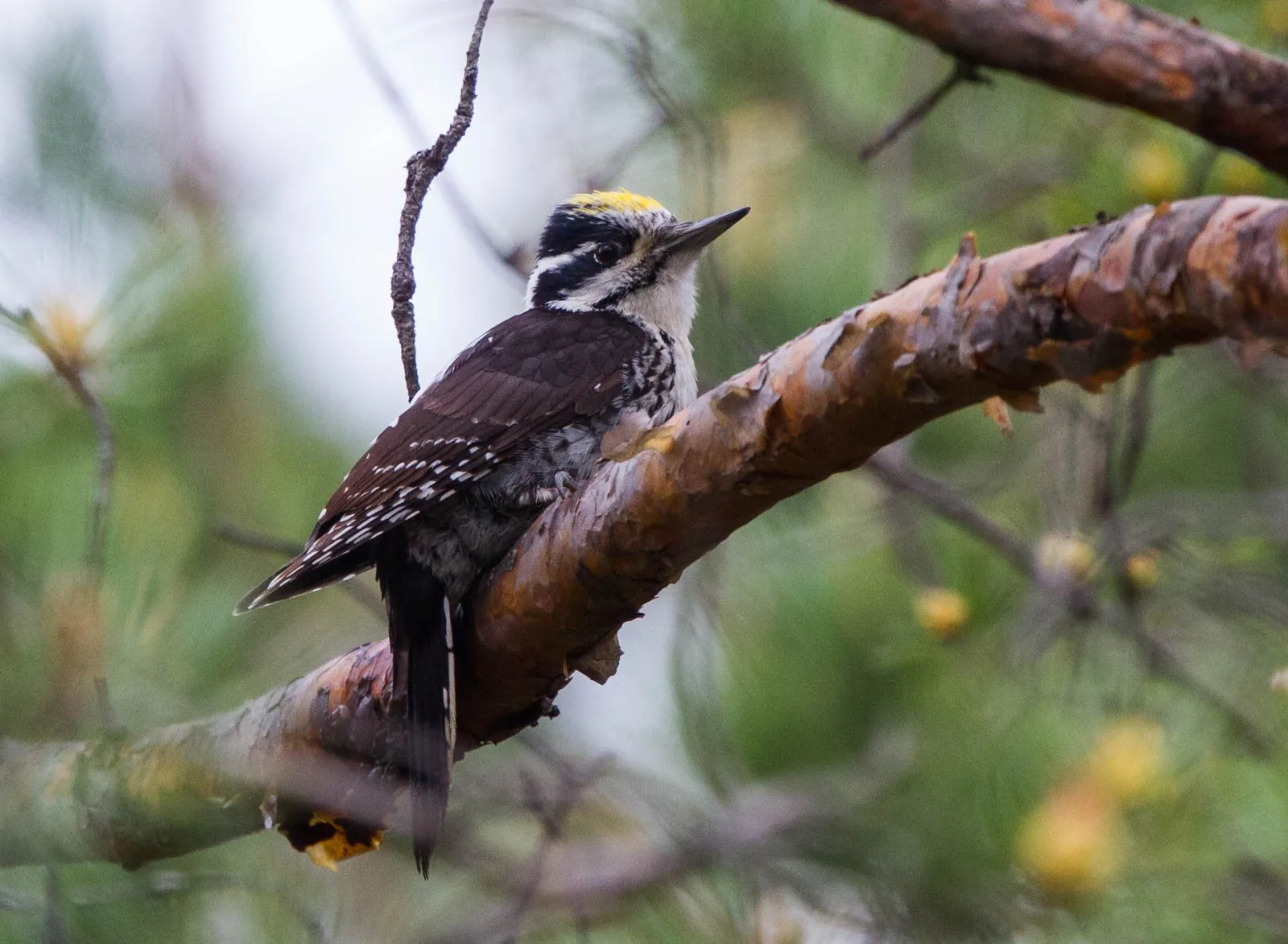

The Woodpecker Missing a Toe
Most woodpeckers have four toes. This one has three, and its name says so twice. The second half of its scientific name, Picoides tridactylus, comes from the Greek for “three-toed.” If you wake up in the spruce forests of northern Europe or Asia, the steady knocking outside may be this bird, since both males and females drum.
It also breaks another woodpecker habit. Where you might expect red on the head, the adult male has a yellow crown instead.
Rows of Small Holes
This woodpecker is easy to overlook, but it leaves evidence behind. Like several other woodpeckers, it drills rows of small holes in tree trunks to reach the nutrient-rich sap that rises at the start of the growing season. The marks can stay visible in the bark for many years. A 2024 study in Sweden, in the journal Ornis Svecica, found that places with more of these woodpeckers also had more sap trees, and suggested that mapping the rows could help find the birds.
Good News in Dead Trees
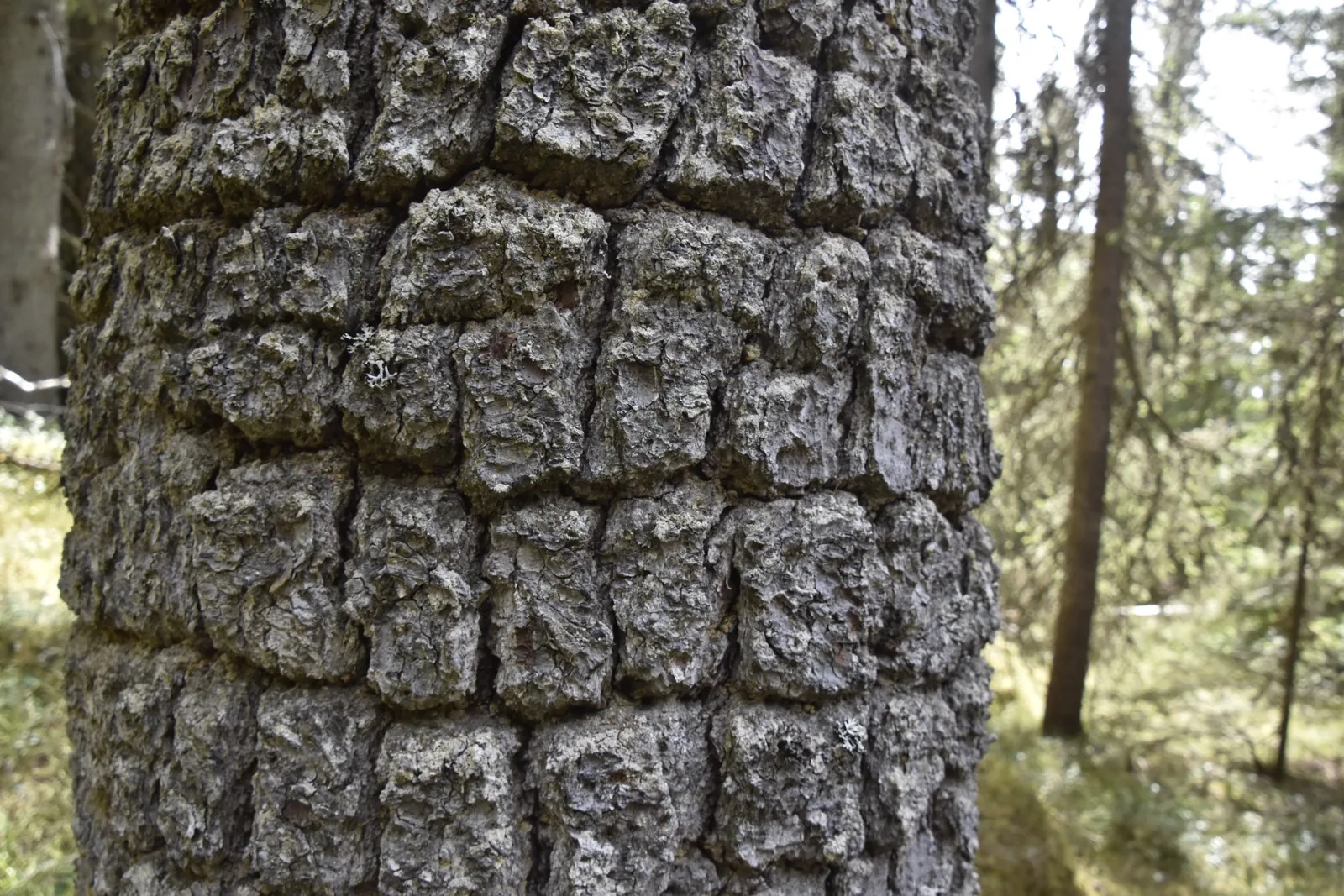
Its main food is beetle larvae, which it looks for especially in decaying spruce, and it often moves into areas full of insect-infested trees after a fire or flood. Peeled spruce trunks are a good sign that this woodpecker has been around.
A long Swiss study, covering 1984 to 2020, looked at what bark beetle outbreaks mean for woodpeckers, this one included. The link to the beetles themselves was weak. The strong link was to standing dead wood, which the outbreaks help create and which woodpeckers use for feeding and nesting.
The pair digs a new nest hole every year. That helps other birds that nest in tree holes but cannot dig their own.
Left Behind by the Ice
Worldwide, this bird is rated Least Concern. The Balkans are a different story. There it survives only in high mountain forests, as what scientists call a glacial relict, a population left behind as the climate warmed. A 2024 modeling study found its range there was greatest during the last ice age, and all of its future models showed less suitable habitat.
So the bird with the missing toe is widespread in the north and hanging on in the Balkan mountains. If you find rows of small holes in a spruce anywhere in its range, this woodpecker may have passed by years before you.
Sources:
- Arctic Centre, University of Lapland: Eurasian Three-toed Woodpecker
- Ornis Svecica: Ferry, Ekenstedt and Green (2024), Densities of Eurasian Three-toed Woodpecker and sap trees correlate across a latitudinal gradient in Sweden
- Journal of Animal Ecology (via PubMed Central): Basile et al. (2025), Large-scale importance of bark beetle outbreaks for standing deadwood and woodpeckers
- Animals (via PubMed Central): Popović et al. (2024), An Assessment of the Climate Change Impacts on the Distribution of the Glacial Relict Woodpecker Three-Toed Woodpecker
- Wikipedia: Eurasian three-toed woodpecker
- Wikipedia: Woodpecker