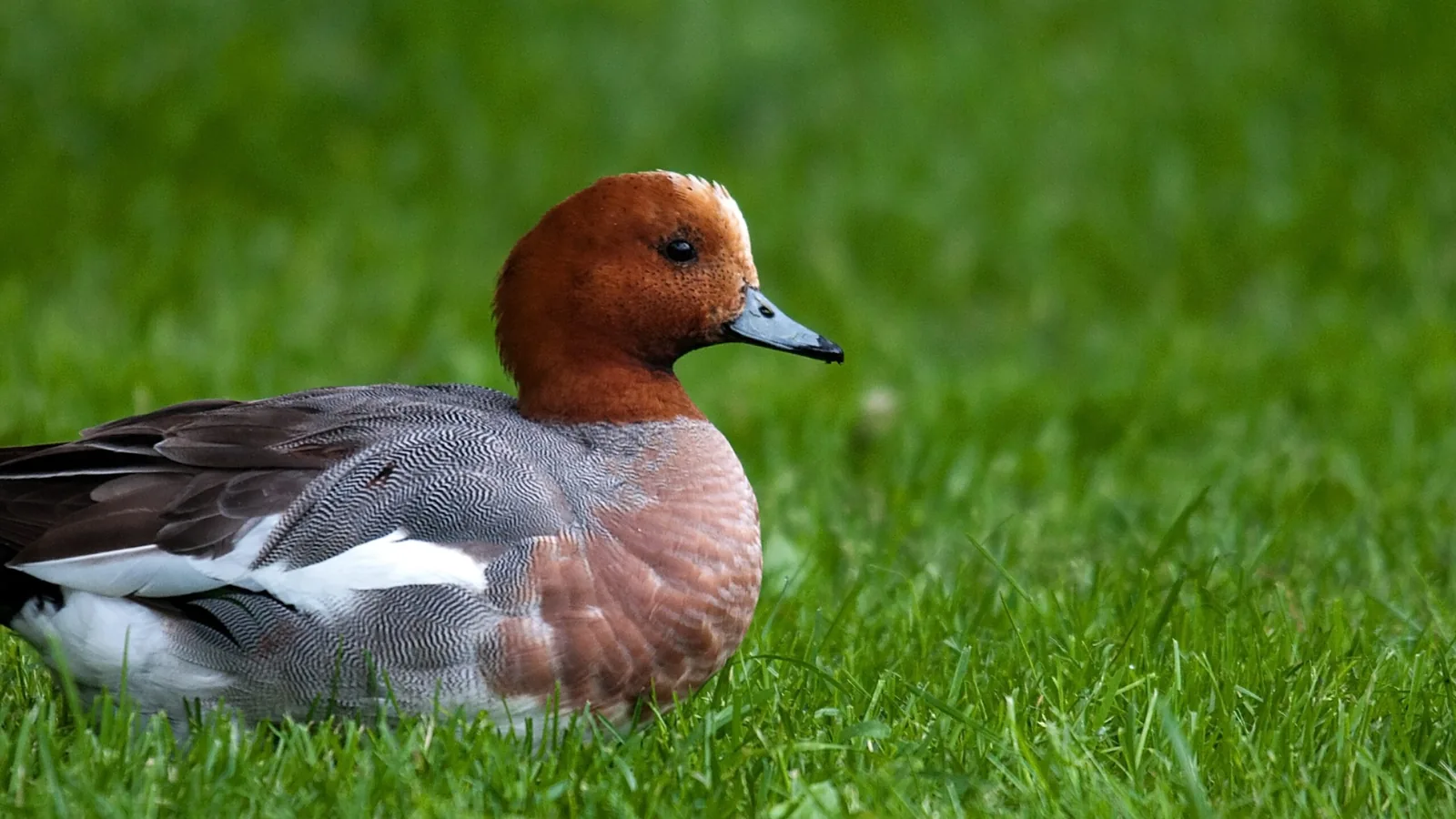

The Duck Named for a Greek Queen
Most ducks quack. The wigeon whistles, and once you have heard it you never mistake it for anything else. The drake’s call is a clear, rising whee-OO, a sound that carries across open water far better than a duck this size has any right to. If you wake near a wetland in winter, anywhere from a Scottish estuary to a lake in northern India or a bay in Japan, that thin whistle drifting in before dawn is very likely a raft of wigeon, sometimes thousands strong, gossiping among themselves in the dark.
A Duck That Whistles, Not Quacks
The whistle belongs to the male. Females answer with a low, grumbling growl, so a winter flock sounds like a crowd of tiny referees backed by a section of unimpressed mutterers. Old wildfowlers knew exactly what to call it. Country people in England knew it as the “whewer” and the “whew,” names that do nothing but copy the sound it makes.
Numbers turn that single note into something bigger. Wigeon are intensely sociable in winter, gathering on estuaries and flooded marshes in flocks that can run into the tens of thousands. When that many birds whistle at once, the marsh seems to breathe. For most of Europe, that wash of sound drifting off the water is the plain announcement that winter has arrived.
The Queen Hiding in the Name
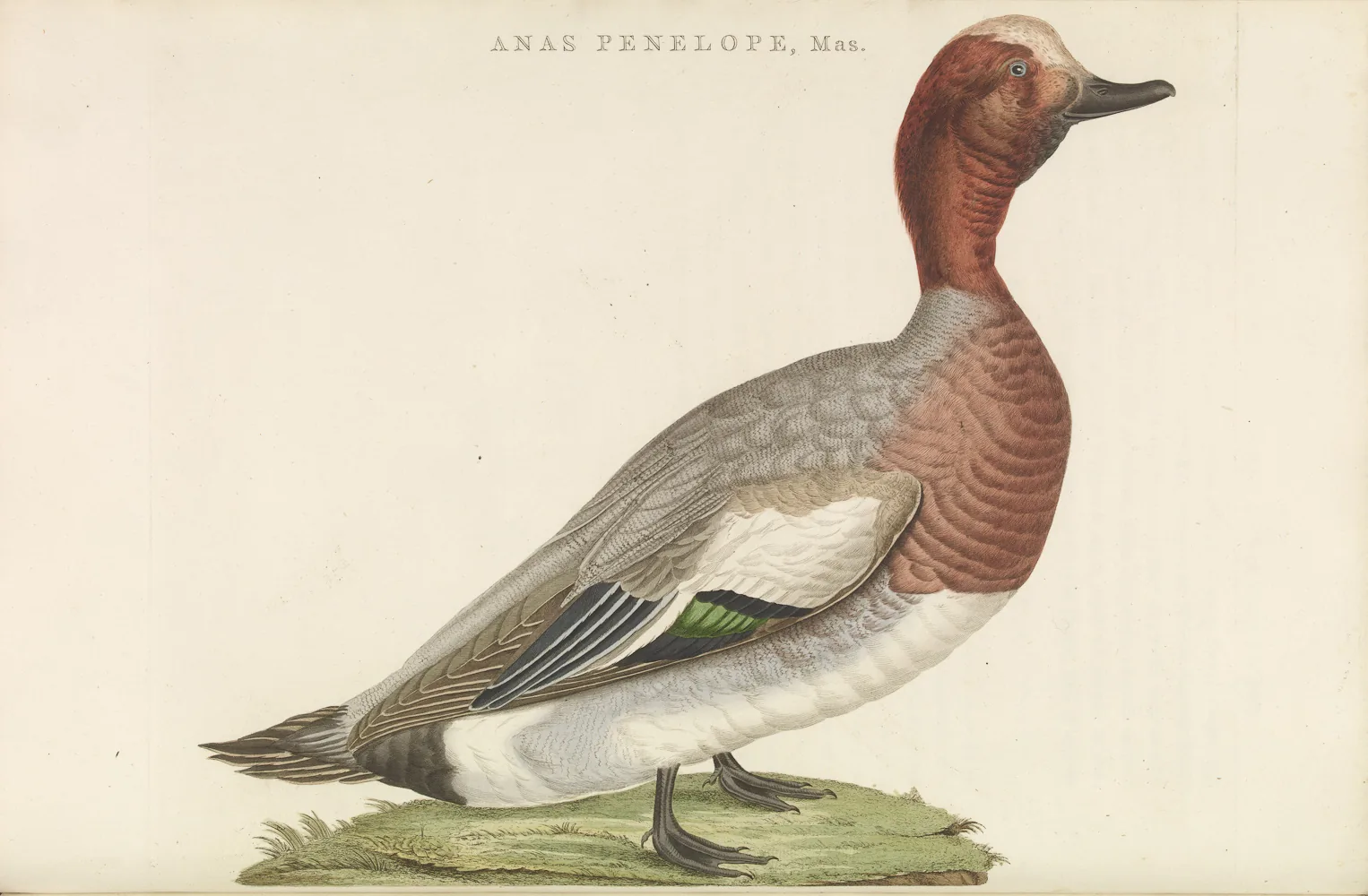
Its scientific name carries a small piece of mythology. When the Swedish naturalist Carl Linnaeus catalogued the bird in 1758, he called it Anas penelope. Anas is simply Latin for “duck.” Penelope points back to the Greek queen of that name, wife of the wandering king Odysseus. In one telling she was thrown into the sea as a girl and saved by a flock of ducks, and the bird has been tied to her story ever since.
The first half of its name was later swapped to Mareca, from a Portuguese word for a small duck, so the books now file it as Mareca penelope: half Portuguese, half Homeric epic. Not bad for a bird most people walk straight past on a winter reservoir.
The Grazer That Robs the Divers
Here is the part that surprises people. The wigeon barely behaves like a duck at all. It is the great grazer of the waterfowl world, waddling out onto wet grass and saltmarsh to crop short turf like a miniature goose, and stripping eelgrass off the mud in tight, shuffling flocks. A short, goose-like bill does the mowing.
When the good food sits too deep to reach, the wigeon turns opportunist. It will sometimes hang around flocks of diving ducks and snatch a beakful the moment a neighbour surfaces with one. Why dive when someone else will fetch lunch for you?
For a bird that whistles like a lost referee and freeloads off its neighbours, the wigeon manages to be one of the most quietly beautiful sights of the cold months: the drake’s chestnut head and pale crown stripe, lit low by a winter sun.
Sources:
- Wikipedia: Eurasian wigeon
- 1911 Encyclopædia Britannica: Wigeon
- RSPB: Wigeon
- Bird Aware Solent: Wigeon
- Ornis Svecica (Källander 2013): Commensal use of Mute Swans by Common Coot and of Canada Geese by European Wigeon
- Wiktionary: wigeon