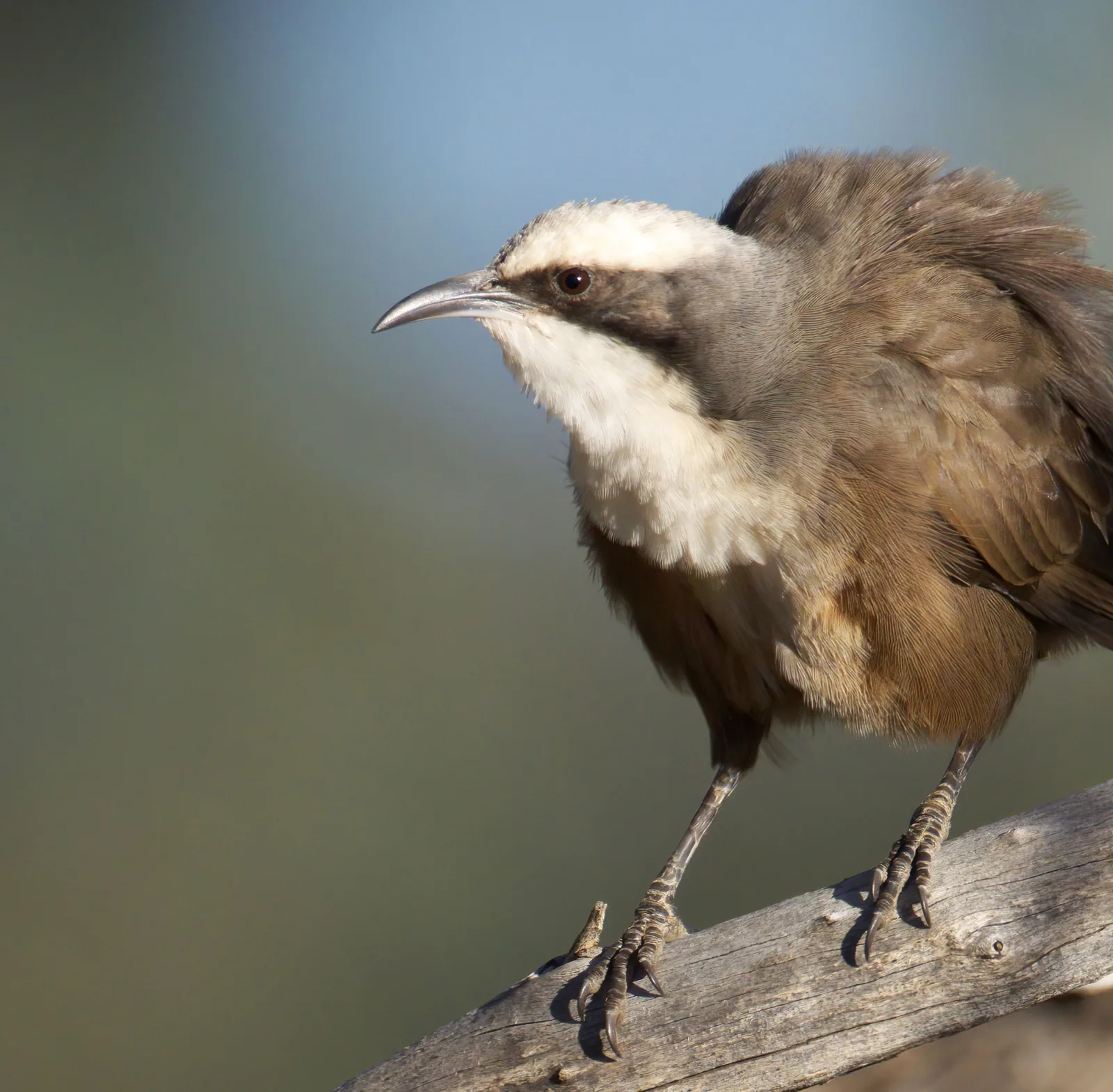

The Yahoo's Family Dormitory
This bird is sometimes called the Yahoo, after one of its calls. If you wake up in inland eastern or northern Australia, you may hear a whole family of them before you see one, moving noisily through open woodland. Its other names include Happy-jack, Barker and Dog-bird. The Yuwaalaraay people of northern New South Wales call it dhadhalurraa.
A Bedroom for Everyone
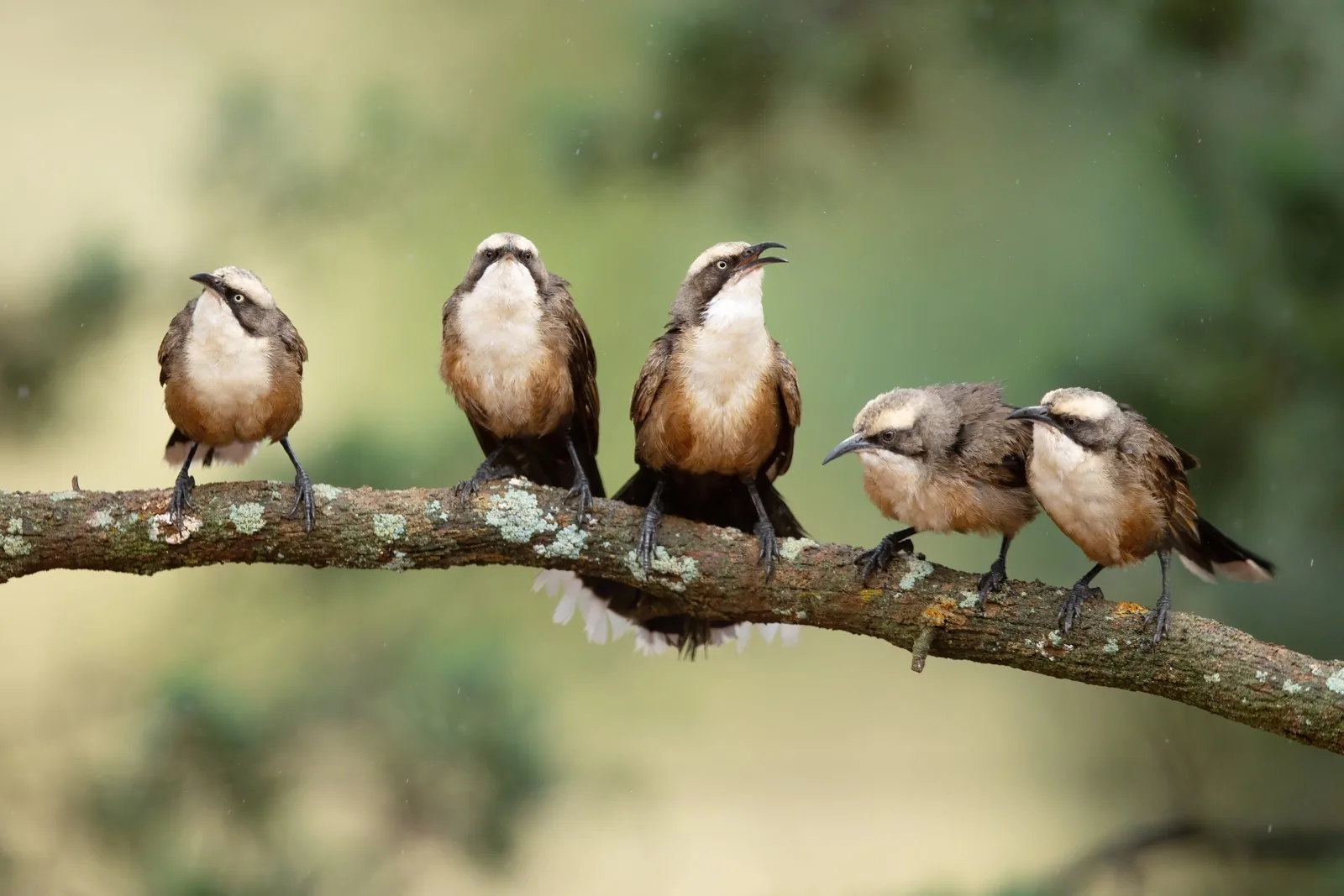
Grey-crowned Babblers live in territorial groups, usually of four to twelve birds, and they build two kinds of nest. A brood nest is for the breeding female. A roost nest is usually larger, and the whole group uses it.
Both are big domes made of thick sticks, placed in a tree fork about 4 to 7 meters up. The sticks project to form a hood and a landing platform at the entrance tunnel, and the chamber inside is lined with soft grass, bark, wool and feathers. Most of the group helps to build, and old sites are often repaired and used again the following year.
The Grown Children Stay Home
A group normally centers on one breeding pair, and the others pitch in. They feed the brooding female and help feed the nestlings.
A 2007 study in the Journal of Zoology found that most breeding pairs were assisted by their own grown offspring, although a pair could succeed without them. The surprise was who made the difference. Pairs with male helpers raised more chicks, while female helpers made no difference. Helpers also mattered more in the second year of the study, when more nests failed, which suggests they help most when times are hard.
A Family Needs Its Neighborhood
The main threat is fragmentation. Land clearing has broken up the woodland these birds need, and they are poor at crossing unsuitable country. As a patch gets more isolated, breeding success and group size fall. Once a patch has lost its babblers, they rarely come back on their own.
The species is listed as endangered in Victoria, where small populations survive in odd corners. In southeast Melbourne, that includes golf courses.
These birds favor open woodland with fallen timber and leaf litter. Where a family still has that, it is hard to miss.
Sources:
- Birds in Backyards: Grey-crowned Babbler
- Journal of Zoology (via ANU): Reproductive success and helper effects in the cooperatively breeding grey-crowned babbler
- Wikipedia: Grey-crowned babbler