
The Pelican's Pickpocket
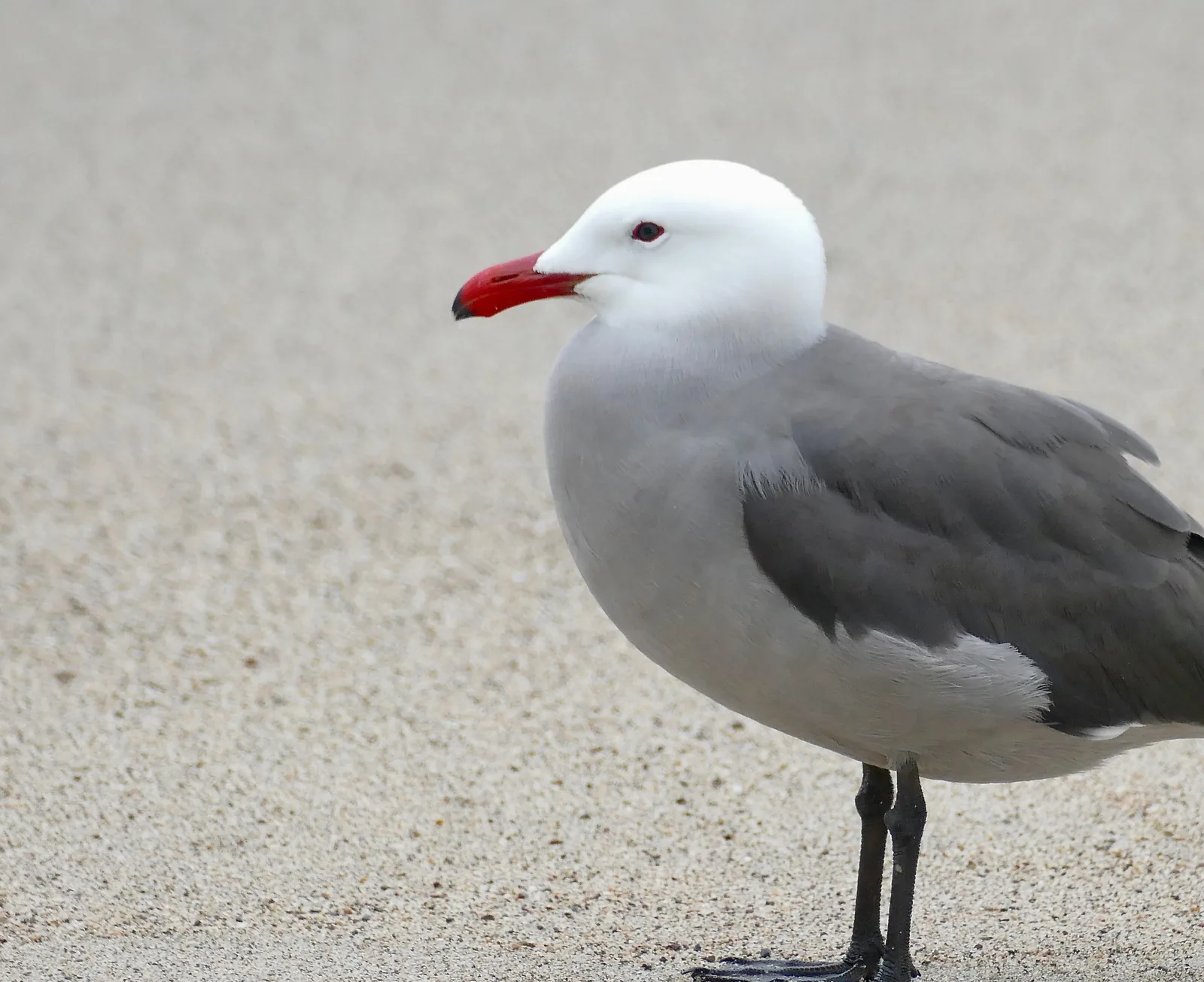
Heermann’s Gull has what the Cornell Lab of Ornithology calls an unusual “backwards” migration. It breeds mostly south of the United States, then heads north once nesting is over in July, reaching as far as southern Canada before turning back by December. If you wake up on the Pacific coast in late summer or fall, the gray gull with the bright red bill may have just flown in from Mexico.
Almost Everyone on One Island
Most of the species nests in one place. Estimates range from 90 to 95 percent on Isla Rasa, an island in Mexico’s Gulf of California that measures less than a quarter of a square mile. Thousands of eggs were once harvested there every year, until the island became a protected bird sanctuary in 1964.
Having so many birds in one spot is a risk. Monterey Audubon reports near total nesting failure on Isla Rasa in recent years, because there was too little food nearby.
The bird’s name honors Adolphus Lewis Heermann, an American doctor and naturalist who traveled through western North America in the 1850s as a surgeon on the Pacific Railroad Survey.
Mugging a Pelican
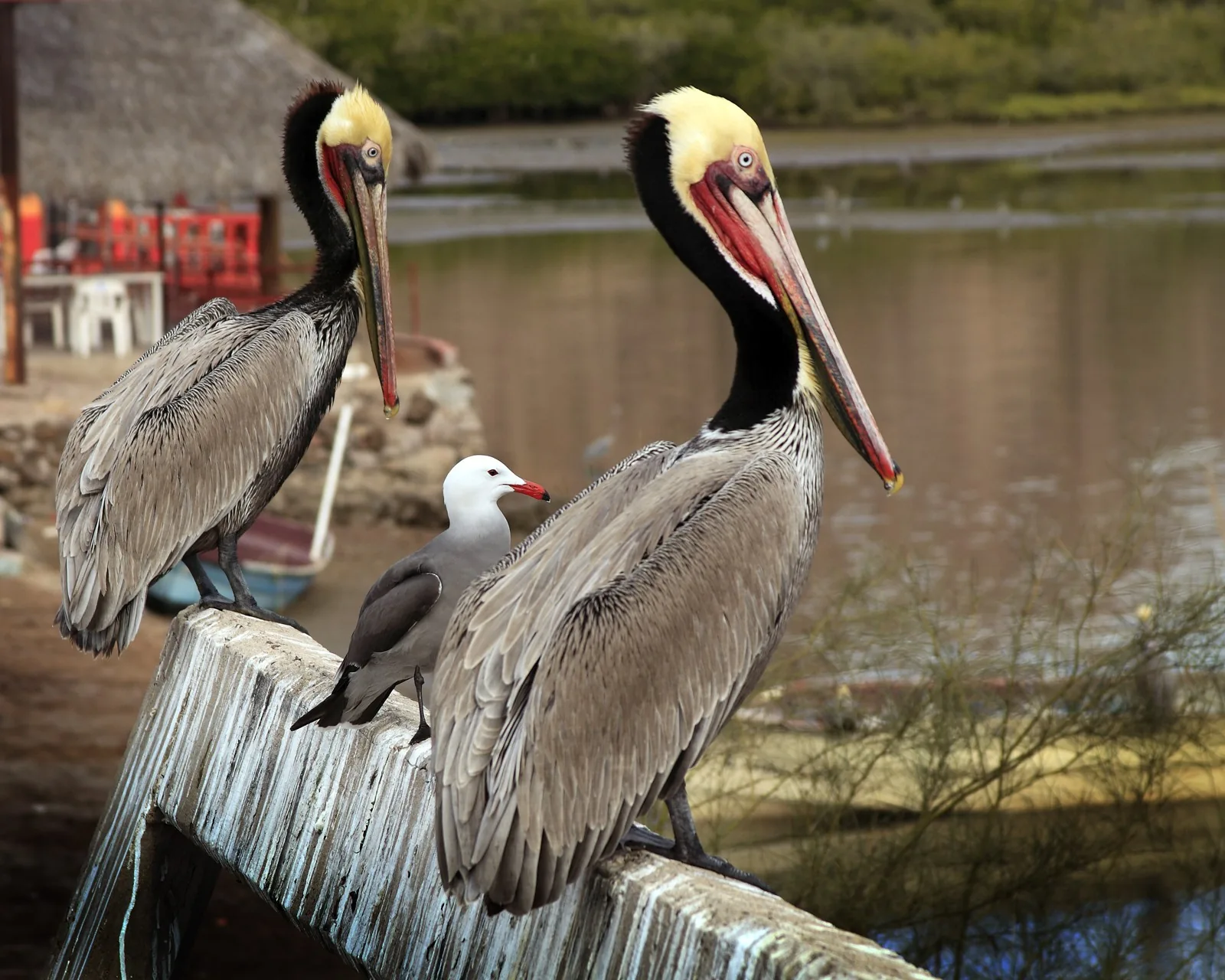
Anchovies and sardines are its main food, and it does not always catch them itself. Several gulls will mob a Brown Pelican with a pouch full of fish, sometimes forcing it to lose some of its catch, which they quickly grab. Adults most often target adult pelicans, while young gulls are more likely to pick on young pelicans. The scientific term for this is kleptoparasitism, which is a formal way of saying stealing.
The Rooftop Colony
The only known breeding colony in the United States is in Seaside, California, where the gulls have nested since 1999. It has not been an easy run. Their artificial islands in Roberts Lake fell apart, so they moved to rooftops. One of those was a McDonald’s. In 2018, a driver crashed into that building and it burned down during nesting season.
Monterey Audubon put a floating nesting island on the lake in 2019, using decoys and sounds to try to tempt the birds back. For now, the rooftops of Seaside remain essential. Businesses along Broadway live with the smell, and one brewery there even sold a Heermann’s Lager.
So a bird that depends on one tiny Mexican island also has a small foothold above a California main street.
Sources:
- Cornell Lab of Ornithology: Heermann’s Gull overview, All About Birds
- Cornell Lab of Ornithology: Heermann’s Gull life history, All About Birds
- Monterey Audubon Society: Seaside Heermann’s Gulls
- Monterey County Now: A near-threatened bird continues to set up shop on Seaside roofs
- Wikipedia: Heermann’s gull