
From Solomon's Throne to Rotting Meat
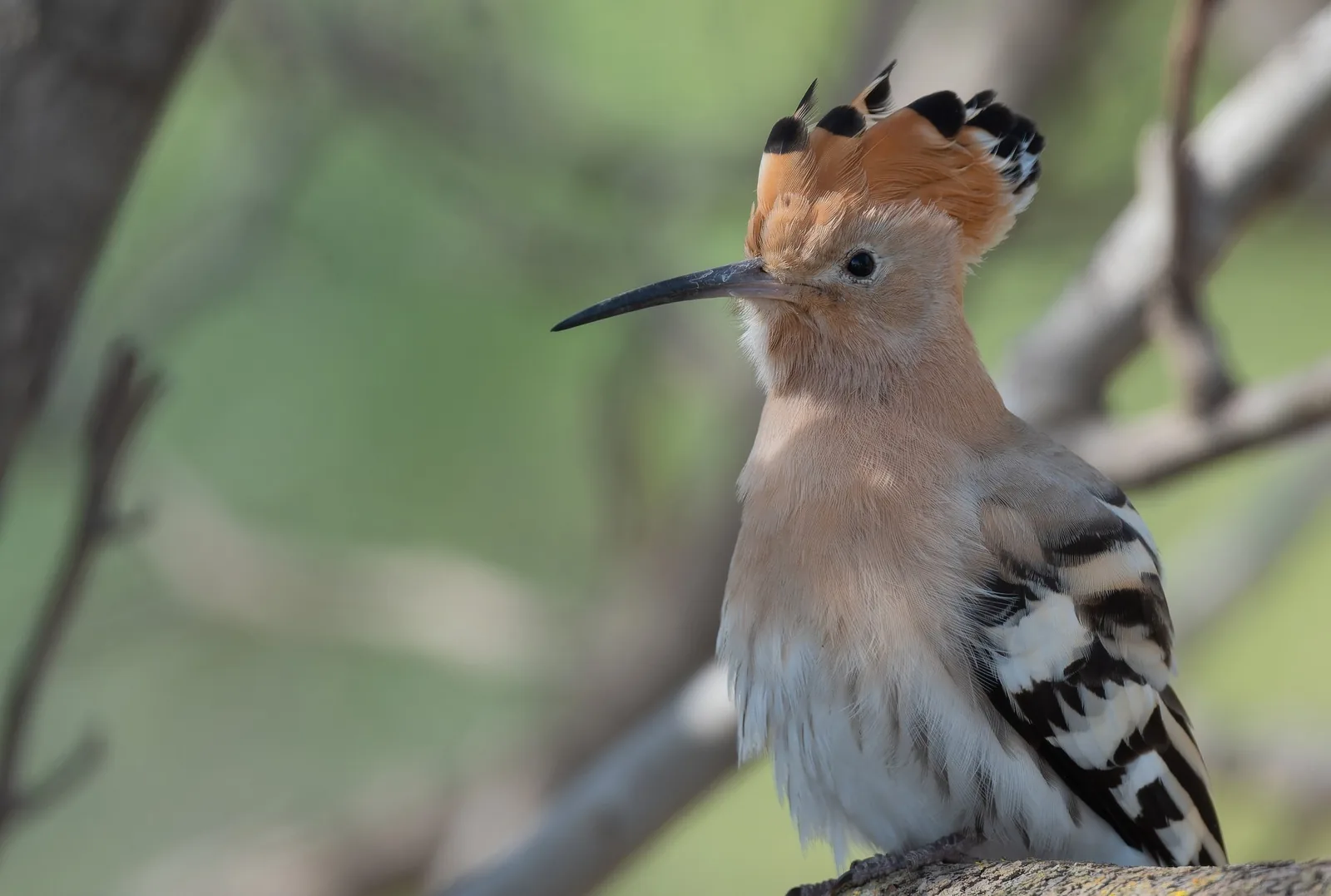
Few birds arrive with a better reputation. The hoopoe wears a fold-out orange crown, answers to a name copied straight from its own voice, and has spent three thousand years collecting famous admirers, King Solomon among them. If you wake somewhere across southern Europe, Africa, or southern Asia, that soft “poo-poo-poo” from the fields could be a hoopoe announcing itself. Here is the part the poetry leaves out. The crown comes with a stench.
A Bird That Says Its Own Name
The hoopoe more or less chose its own name. Listen to a male in spring and you get a low, hollow “oop-oop-oop,” soft as someone blowing across a bottle. Three civilisations heard that and gave up trying to improve on it: the English “hoopoe,” the Latin upupa, and the Ancient Greek epops are all the call written down. When Carl Linnaeus, the Swedish naturalist who named so much of the living world, catalogued the bird in 1758, he kept the joke running and called it Upupa epops. The scientific name works out to something close to “hoopoe hoopoe.”
The Crown Comes With a Stench
Find a hoopoe nest in early summer and your nose notices before your eyes do. While she incubates, the female’s preen gland, the oil gland that normally waterproofs her feathers, switches to making a dark liquid that smells like rotting meat. The chicks make it too, hissing like snakes at intruders and firing streams of faeces at anything that leans into the nest. For centuries this fed a filthy reputation: across much of Europe the bird was the “dung bird,” and the Slovene name smrdokavra still carries the word for “stink.” In 2010 a team led by the Spanish biologist Manuel Martín-Vivaldi explained the smell. The chemicals in that secretion are not made by the bird at all. They come from symbiotic bacteria, mostly a strain of Enterococcus, that live inside the gland. To prove it, the researchers dosed nestlings with antibiotics to kill those bacteria, and most of the smelly compounds disappeared with them. In a normal nest those compounds kill off a range of microbes, including the kind that degrades feathers. So the hoopoe is not dirty. It runs a tiny pharmacy in its preen gland, and the rotting-meat smell is just the bacterial bodyguard at work.
The Bird of Kings and Prophets
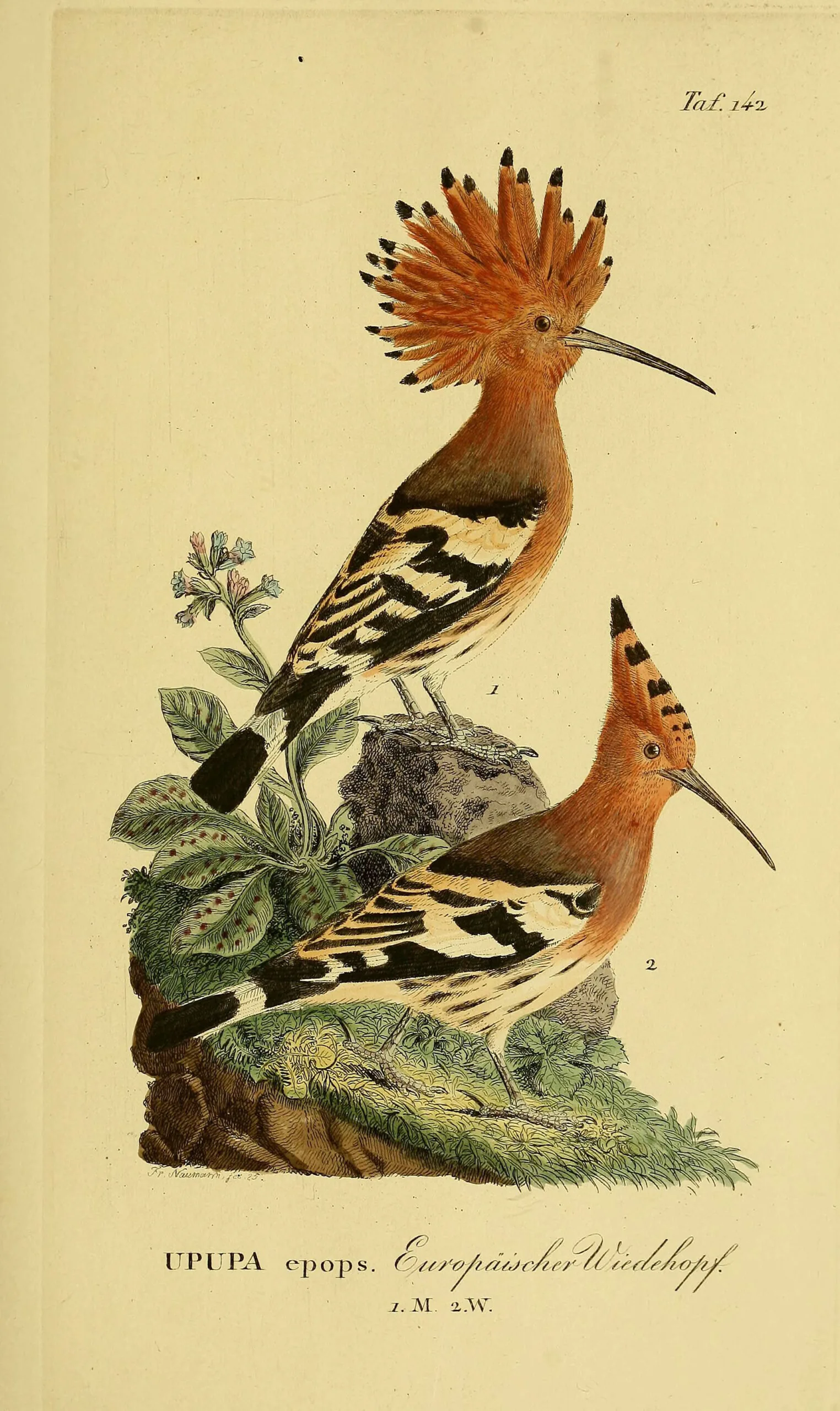
The long guest list makes more sense once you notice the crown. In the Quran the hoopoe is King Solomon’s scout, reporting back, “I have just come to you from Sheba with sure news.” Persian readers met it again in The Conference of the Birds, the great 12th-century poem by the Sufi writer Attar of Nishapur, where it is the wisest of the birds and leads the rest toward the divine. Even the Greeks crowned it: in The Birds, staged in Athens in 414 BC by the comic playwright Aristophanes, the disgraced king Tereus has been turned into a hoopoe, the crest standing in for his lost throne. In 2008 more than 150,000 people voted it the national bird of Israel. Not everyone was charmed, though. In Estonian folklore the hoopoe’s song was said to foreshadow death among people or cattle, and the Munich Manual of Demonic Magic, a German spellbook, called for sacrificing one to summon demons.
It is a lot to carry in one small body. The hoopoe says its own name, wears a crown, and in Persian verse led a whole flock toward the divine. It also raises its young in a cloud of bacterial stink. Both things are true, and the bird wears them with equal composure.
Sources:
- Wikipedia: Hoopoe
- Proceedings of the Royal Society B (2010): Antimicrobial chemicals in hoopoe preen secretions are produced by symbiotic bacteria
- Wiktionary: upupa (Latin etymology)
- Quran.com: Surah An-Naml 27:22
- Wikipedia: The Conference of the Birds
- Wikipedia: The Birds (Aristophanes)
- Xeno-canto: Upupa epops recordings