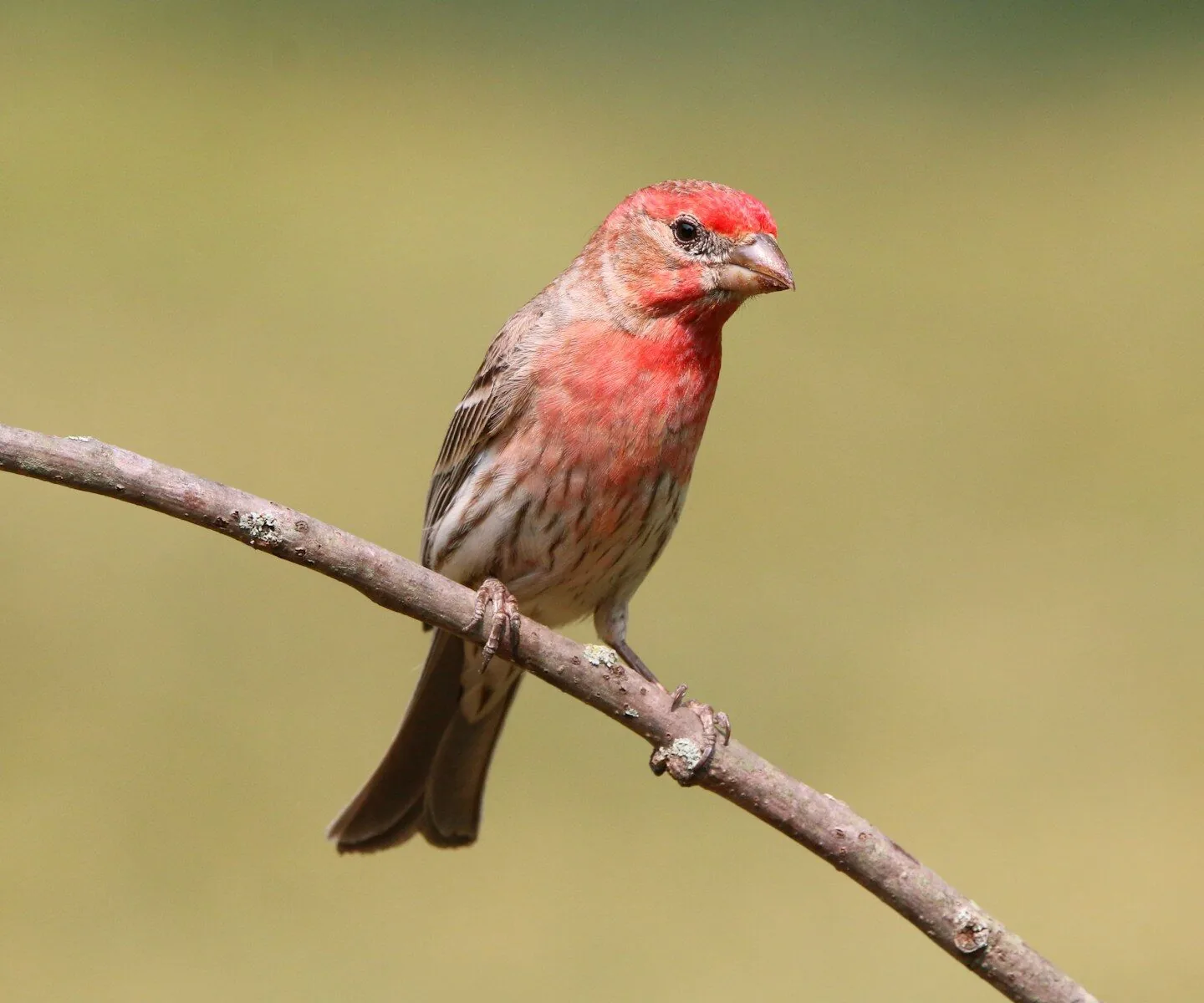
If you wake up in a suburban sprawl in New Jersey or a desert canyon in Arizona, the bird chirping from the power lines might sound like a local resident, but its lineage is that of a master opportunist. To the untrained ear, the House Finch produces a cheerful, jumbled warble, but its history is far grittier than its “backyard staple” reputation suggests. This is the story of a desert warrior that survived a 1940s criminal investigation to become one of the most successful avian colonizers in North American history.
The “Hollywood Finch” and the Great Escape
The presence of the House Finch across the eastern United States isn’t a natural migration; it’s the result of a botched 1940s pet trade scam. Unscrupulous dealers in California began shipping tens of thousands of these birds to New York, rebranding them as “Hollywood Finches” to make them sound exotic to East Coast buyers.
When federal agents prepared to crack down on the illegal trade under the Migratory Bird Treaty Act, pet shop owners in Brooklyn and Queens didn’t want to be caught with the contraband. They simply opened their cages and let the “evidence” fly out the window. From those original “Long Island fugitives,” the population exploded, eventually marching westward across the continent to meet their original ancestors in the Great Plains.
From Aztec Warriors to Nicotine Nests
Long before it moved into New York City high-rises, the Mexica (Aztec) people knew this bird as the Cuachichil, which translates to “chili-red-headed.” In pre-Hispanic Mexico, these songbirds were believed to be the reincarnated spirits of fallen princes and warriors returning to sing for the living. Its scientific name, Haemorhous mexicanus, reflects this “bloody” aesthetic, deriving from the Greek haimo (blood) and orrhos (rump).
In modern urban environments like Mexico City, these finches have traded ancient mysticism for gritty survival tactics. Researchers discovered that House Finches often line their nests with discarded cigarette butts. While it looks like a pollution problem, it is actually a form of chemical warfare: the residual nicotine in the filters acts as a potent pesticide, warding off the blood-sucking mites that plague bird nurseries.
The Honest Male and the “Upward Zing”
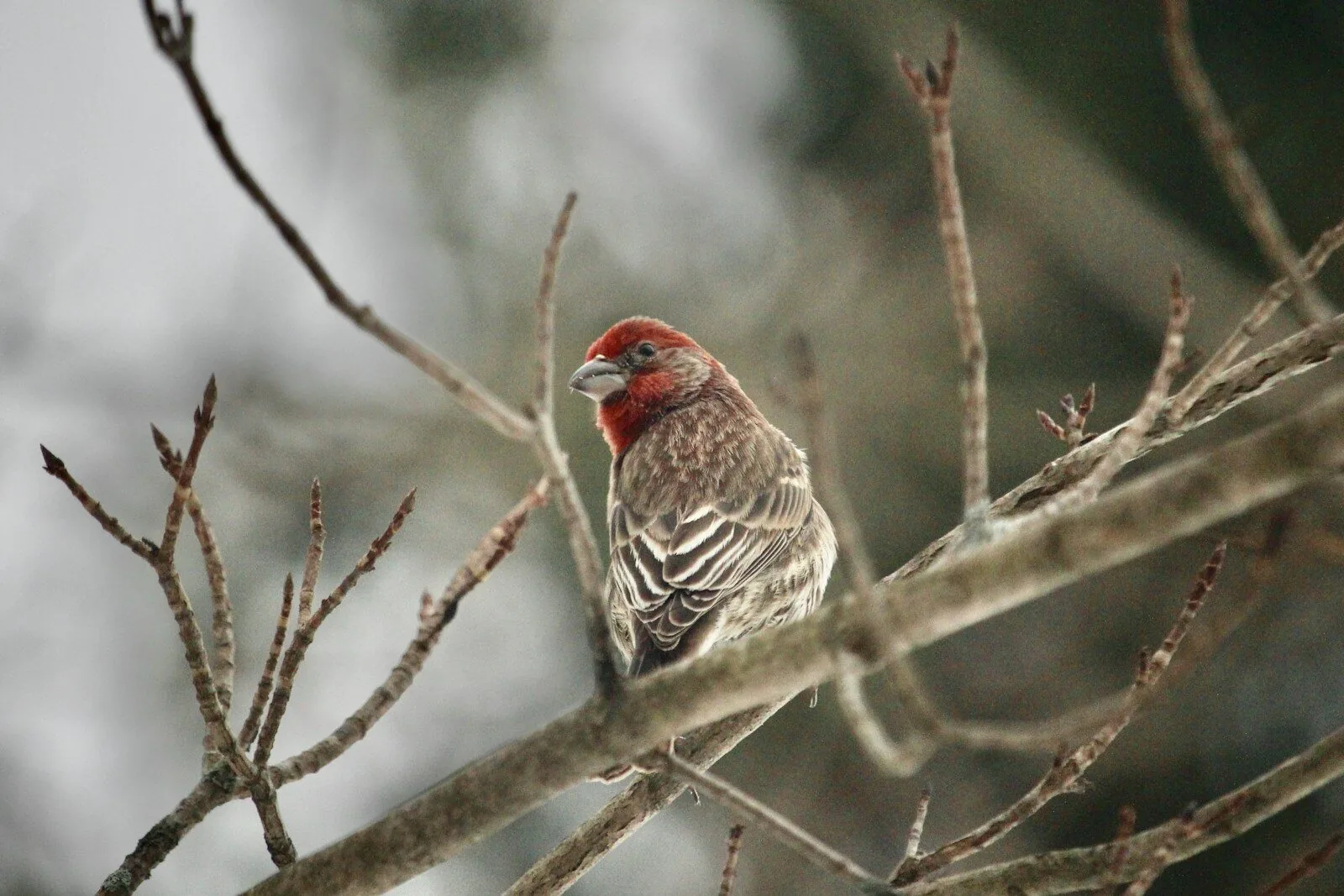
The House Finch is a vegetarian purist. Even when they have hungry chicks to feed, they rarely provide the typical protein-rich grubs, opting instead for a slurry of regurgitated seeds. This strict diet is what makes the male’s appearance so “honest.” He cannot synthesize the red pigment in his feathers; he must find it in carotenoid-rich berries and fruits. A male with a deep crimson face is effectively screaming to every female in the neighborhood that he is a superior forager with a top-tier immune system.
If you are listening for one, wait for the finish. The song is a fast-paced, twittering argument that almost always ends with a sharp, rising slur—an “upward zing” or a buzzy “zeee.” It is the acoustic signature of a survivor that successfully rebranded itself from a desert warrior to a Hollywood star.