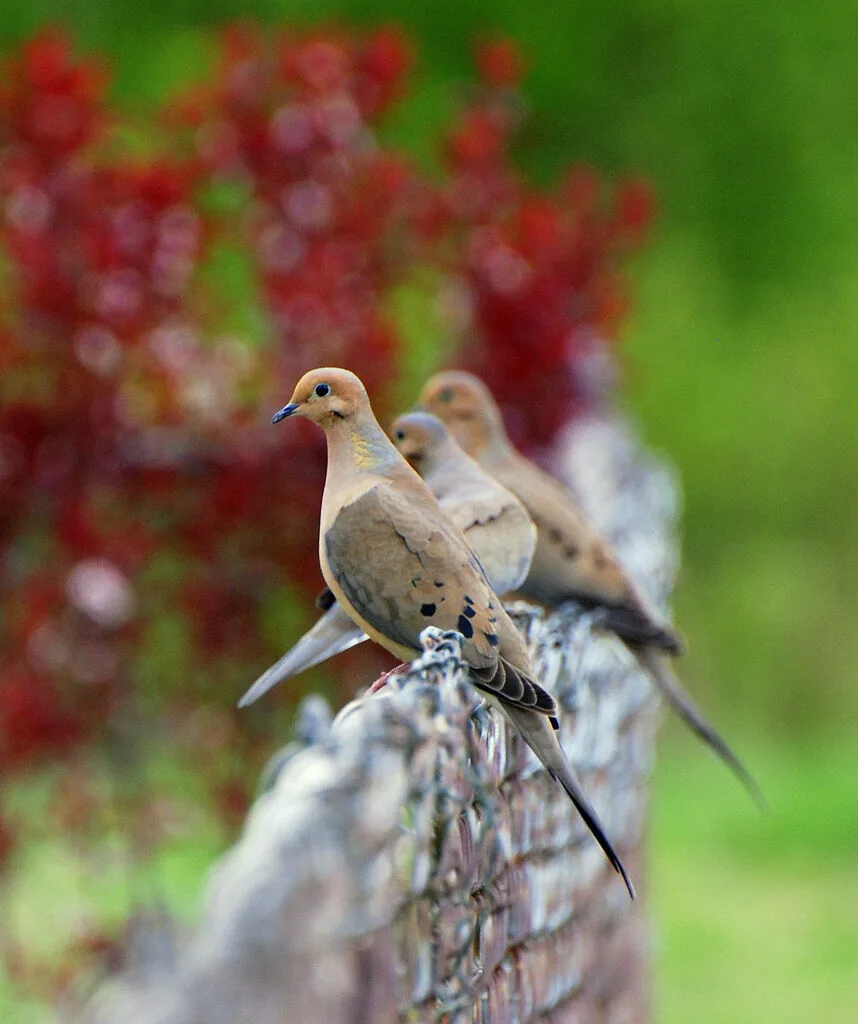
Despite its name and the “coo-OO-oo-oo” call that sounds like a rhythmic lament, the Mourning Dove is less a tragic figure and more of a thriving generalist that has turned its peculiar habits into a population of nearly half a billion.
Napoleonic Romance and the Acorn Crier
The Mourning Dove’s scientific identity is a strange mix of high-society romance and ancient Greek clinical naming. The genus Zenaida was coined by Charles Lucien Bonaparte, Napoleon’s nephew and a pioneer of American ornithology. He named the bird after his wife and first cousin, Princess Zénaïde, perhaps inspired by the species’ famously monogamous pair bonds. The specific name macroura is far more literal, translating from Greek as “long tail,” which is the bird’s primary diagnostic feature in the field.
Cultural interpretations of its voice are equally varied. In the native range of the Cherokee, the bird is gule disgoni, or “He Who Cries for Acorns,” because the cooing phonetically mirrors the Cherokee word for the nut. For the Aztecs, the dove was a powerful mother figure associated with the goddess Xochiquetzal. Folklore suggests that after a great flood, the world’s children were born silent until a dove descended from the “Tree of Heaven” to bestow each one with a unique language and voice.
The High-Speed “Derp” with a Secret Milk
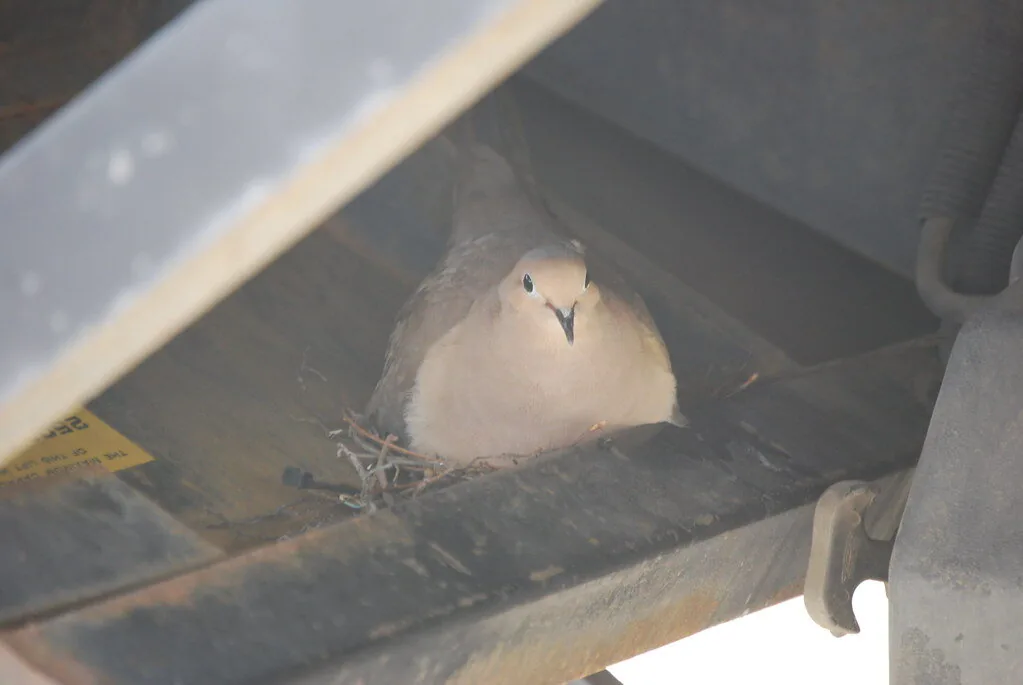
In its native range, the Mourning Dove is an evolutionary overachiever with a bafflingly low-effort approach to architecture. It is known for building “stupid nests”—minimalist platforms of a few twigs often placed in precarious spots like hanging flower pots or building ledges. This “derpy” reputation has fueled entire internet subcultures on platforms like Reddit, where users celebrate the bird’s vacant stares and bumbling domesticity.
However, this “derpiness” hides sophisticated biology. The Mourning Dove is one of the few birds that produces “crop milk,” a cottage cheese-like secretion high in protein and fat. Both parents fast for days before their chicks hatch to ensure the milk is pure and then slough off their own esophageal lining to feed their young. Additionally, the high-pitched whistle you hear when they take off isn’t a vocalization; it’s a mechanical alarm produced by vibrating flight feathers, alerting the entire neighborhood of a predator’s approach.
Whether it’s viewed as a sacred figure in ancient oral traditions or a wide-eyed “borb” on a suburban balcony, it remains a resilient, fast-flying master of the anthropocene. It has successfully “derped” its way into becoming a permanent—and surprisingly charming—fixture of the modern landscape.
Sources:
- Eastside Audubon: Mourning Dove Species Profile
- Wikipedia: Mourning Dove Overview
- Audubon: 10 Fun Facts About the Mourning Dove
- The Cherokee Natural World: Mourning Dove in Cherokee Culture
- Native Languages: Native American Dove Mythology
- BirdWatchers General Store: The Mourning Dove’s Wing Whistle
- Latino Heritage Intern Program: Xochiquetzal and the Dove as Responsibility
- Reddit: r/mourningderps Community
- Willy’s Wilderness: Why Mourning Doves Sound Like Owls