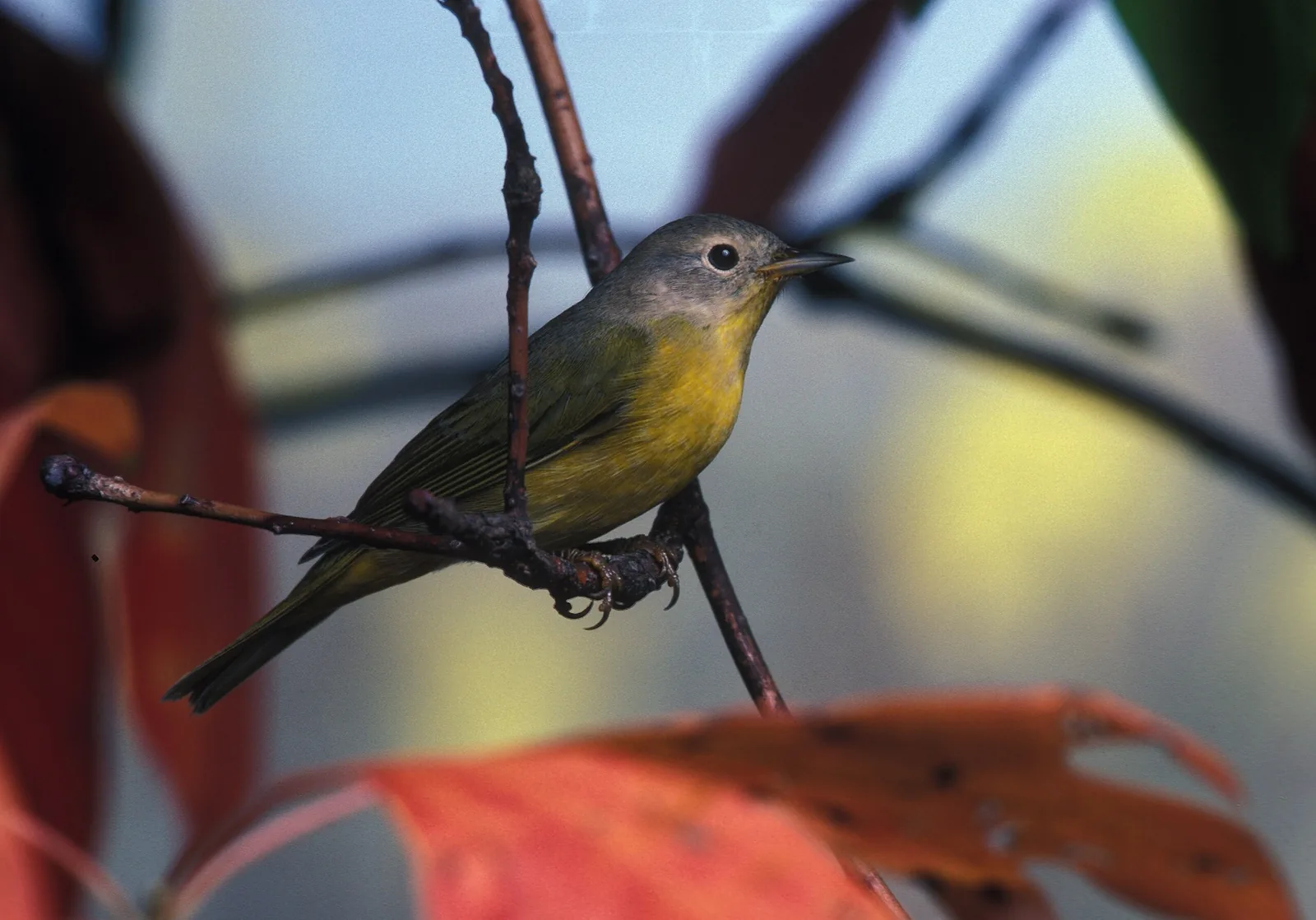

The Bird Named for a Town It Skips
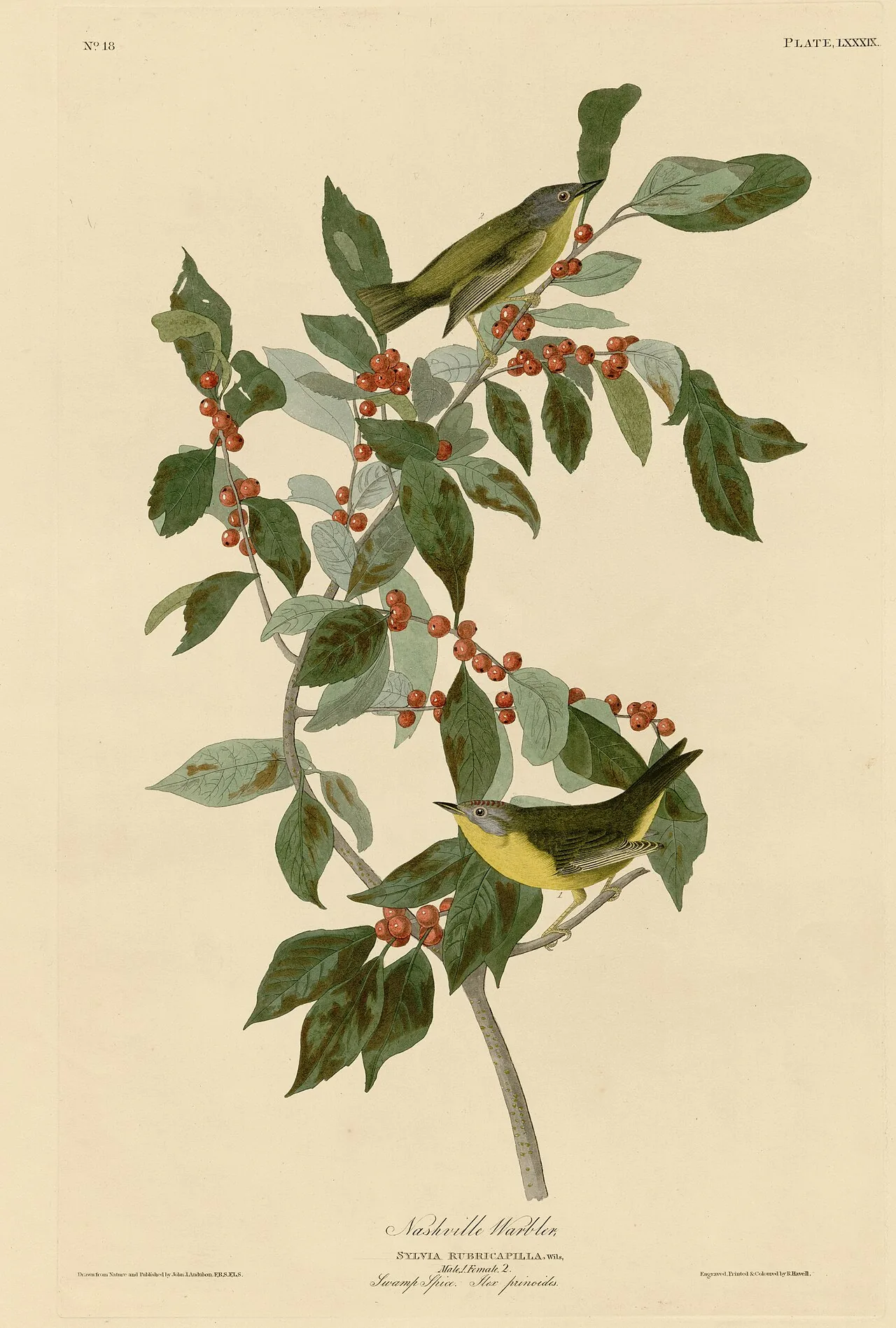
Alexander Wilson, the self-taught Scottish weaver who became the father of American ornithology, shot a small yellow bird on the banks of the Cumberland River in 1811 and named it after the city. The Nashville Warbler doesn’t breed in Tennessee. It never has. Wilson had collected a tourist.
A Naming Mistake That Stuck for Two Centuries
Wilson saw the bird on migration. Tennessee is a corridor for Nashville Warblers, not a home. The species breeds across New England and eastern Canada, west through the boreal forest to central Alberta, and in a separate pocket in the mountains of the Pacific Northwest. It then winters from southern Texas and California down through Mexico into Guatemala and El Salvador. The specimen Wilson collected on the Cumberland was an exhausted migrant taking a few days off in a place it would never see in summer. Tennessee’s own wildlife agency now spells out the irony in plain English: the Nashville Warbler “does not now and never has bred in Tennessee.”
The naming mistake then doubled. The Nashville Warbler actually breeds in two populations, one in eastern North America and one in the Pacific Northwest mountains, and 19th-century ornithologists named the western birds the Calaveras Warbler, after Calaveras County in California. Calaveras is Spanish for “skulls.” The county got its name from a Spanish expedition led by Gabriel Moraga in the early 1800s, who found a riverbed strewn with Indigenous remains. So this small yellow songbird ended up stamped with two place-names, both given by passing strangers, neither one its actual breeding ground. Modern taxonomy treats both populations as one species, but the older western name lingers.
A Ground Nest Lined With Porcupine Quills
Most warblers build their cup nests up in tree branches. The Nashville Warbler doesn’t. The female builds her open cup directly on the ground, in a depression made among club mosses, grass, and ferns under a scrubby bush or sapling. Audubon’s field guide describes the cup as “coarse grass, ferns, and strips of bark, rimmed with moss; lined with fine grass, animal hair, or pine needles.” Bird Watcher’s Digest adds one weirder detail: she will use porcupine quills if she can find them.
The Two-Part Song You Can Actually Learn
The song is the easy part. Wikipedia describes it as a rapid seewit-seewit-seewit-ti-ti-ti. Audubon writes the same song as teebit-teebit-teebit, chipper-chipper-chipper-chipper. Either mnemonic works. The two-part structure, sung from an exposed perch, is what gives the bird away.
If you wake up in Wisconsin in May, that’s likely what you’re hearing through the window. If you wake up in Mumbai or Madrid, you won’t, ever. The Bird Rise app plays the song wherever you are, which is the closest most of the world will get to it.
Wilson’s bird has been dead for two centuries. Every spring, descendants of that one passing migrant still pour through Nashville without stopping. The name stuck. The bird never did.
Sources:
- Tennessee Wildlife Resources Agency: Nashville Warbler species page
- Wikipedia: Nashville warbler
- Audubon Society: Nashville Warbler Field Guide
- Animal Diversity Web (Univ. of Michigan): Vermivora ruficapilla species account
- Bird Watcher’s Digest: Nashville Warbler life history and nesting
- Wikipedia: Calaveras County, California (name etymology)
- Wikipedia: Alexander Wilson (ornithologist)