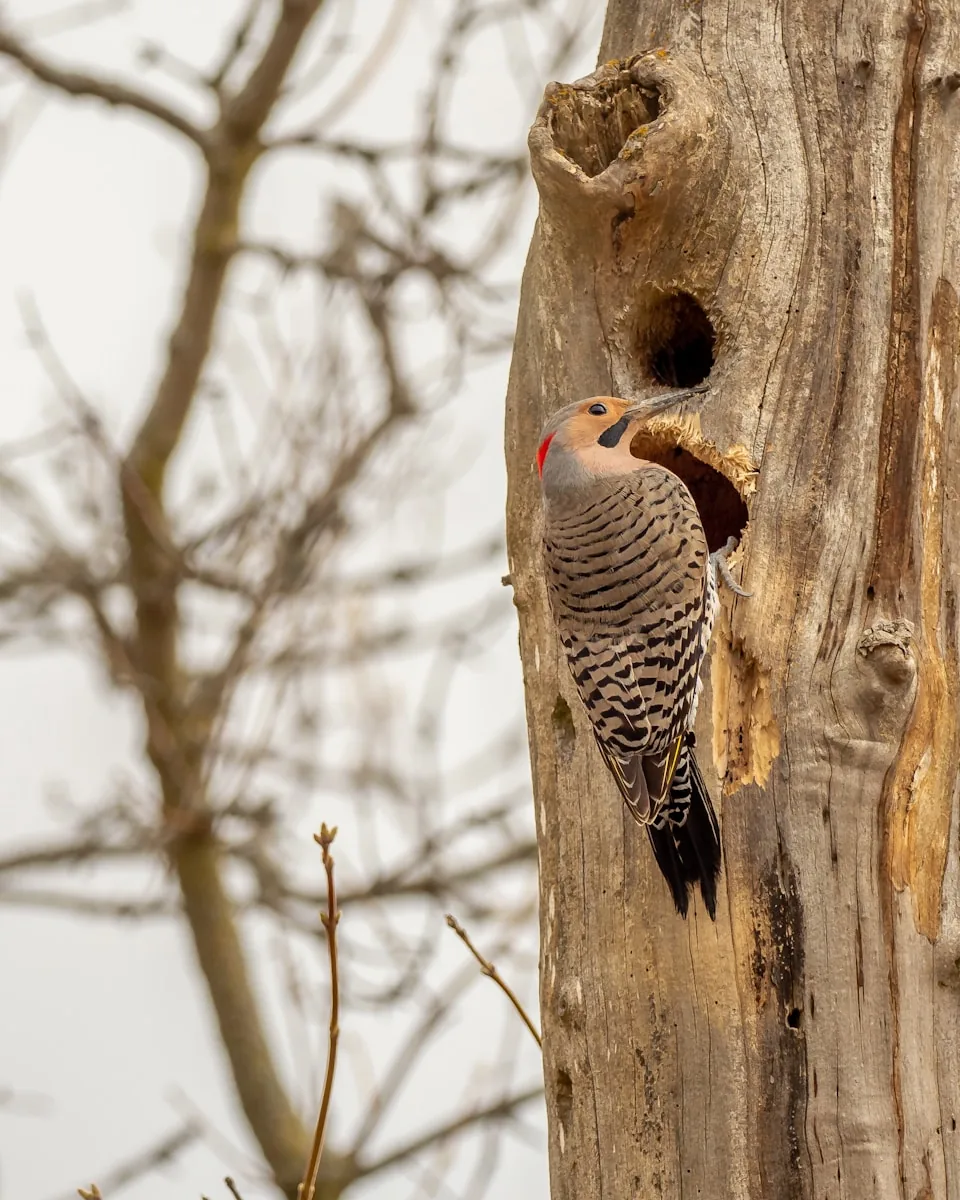
If you wake up to the sound of a flicker, you might just think someone is laughing or a jackhammer is rattling in the distance. The Northern Flicker’s voice is loud and unmistakable once you know it. One call is a rapid staccato “wicka-wicka-wicka” that rises and falls in volume .
Another is a sharp, clear “klee-yer!” that can sound like a hawk’s cry. In fact, people in different regions came up with all sorts of nicknames based on these calls. Early farmers dubbed the bird “Harry-wicket,” “Wake-up,” “Yarrup,” and even “Heigh-ho,” trying to put words to its laugh-like chatter . All told, the flicker wears an alias list longer than a con artist’s – over 100 local names by some counts .
Visually, it’s equally distinctive. No other woodpecker is polka-dotted with black spots and barred like a checkerboard on the back, then flashes neon yellow or red in flight. Birdwatchers often spot a flicker when it flees from the ground, showing that white rump and color blaze.
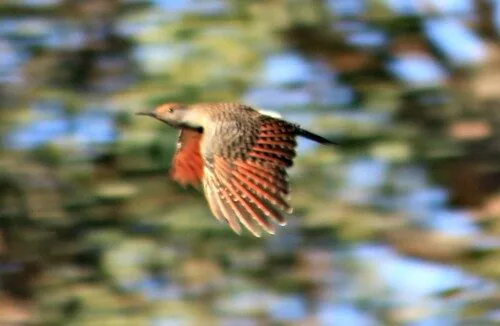
As poet Jacqueline Osherow writes in her poem Sightings: northern flicker, a flicker taking off is like “a day-time meteor” shooting away in an orange flash.
Whether you notice its dazzling wing flash or its loud call, this bird refuses to be a background character.
Northern Flickers may not drum on your gutters at 5 AM like their woodpecker cousins, but they will certainly make their presence known. They straddle two worlds – comfortable probing the earth for ants, yet capable of strong, undulating flight and ringing calls from the treetops.
It’s a bird that wears many hats: ant-eater, healer, noise-maker, and even state symbol. The next time you catch that wild “wicka-wicka” call or see a brown, speckled bird hopping in the grass, you might think twice before dismissing it as just another woodpecker. It’s the Northern Flicker, one of a kind – and it’s got the folklore and flair to prove it.