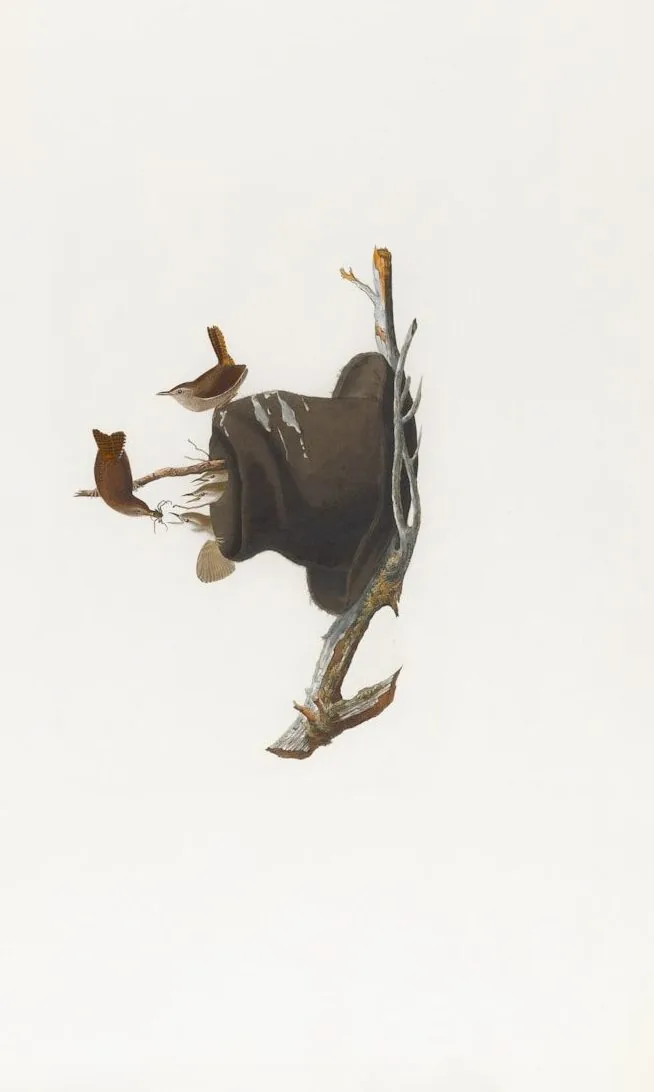
If you wake up in a leafy suburb of Ohio, a quiet orchard in British Columbia, or even a patio in Argentina, you might hear a sound that mimics a cassette tape rewinding at high speed. It’s an exuberant, bubbling rush of notes that seems far too loud for a bird that weighs less than a standard AAA battery.
This is the House Wren (Troglodytes aedon). To the casual observer, it looks like a plain brown cotton ball. In reality, it is a feathered warlord—a creature that balances a royal mythological pedigree with a streak of neighborhood “crime” that would make a mob boss blush.
The Tragedy Behind the Name
The scientific community gave this bird a backstory worthy of a Greek tragedy. Its genus name, Troglodytes, stems from the Ancient Greek for “hole-dweller,” referencing the bird’s mouse-like habit of vanishing into dark crevices or hollow logs.
The species name, aedon, links the bird to Aëdon, the Queen of Thebes. In Greek mythology, Aëdon accidentally killed her own son while attempting to murder the child of a rival. To end her suffering, Zeus transformed her into a bird—usually a nightingale—condemned to sing a song of perpetual, frantic lament. While the House Wren isn’t the nightingale of legend, early naturalists felt its complex, tireless song earned it the royal title.
In Latin America, its reputation is just as legendary:
- Mexico: It is called Chivirín saltapared (“wall-jumper”).
- Brazil: Known as Garrincha, a name synonymous with agility. This was the nickname given to Manuel Francisco dos Santos, one of the greatest soccer players in history, because his movement mirrored the bird’s unpredictable hops.
A Neighborhood Menace with a Real Estate Obsession
The House Wren is a “secondary cavity nester,” meaning it cannot carve its own holes and must conquer existing real estate. To ensure a win, the male becomes an obsessive—and slightly deceptive—property developer.
When he arrives in the spring, he fills every available cavity in his territory with dry sticks. These “dummy nests” serve a dual purpose: they showcase his “handyman” skills to potential mates and physically block competitors like bluebirds or chickadees from moving in.
But their strategy goes beyond simple blockades. The House Wren is notorious for “interference competition.” If they find a neighbor’s nest, they use their needle-sharp bills to systematically pierce every egg in the clutch. They don’t eat the eggs; they simply clear the neighborhood to ensure their own offspring have zero competition for the local insect population.
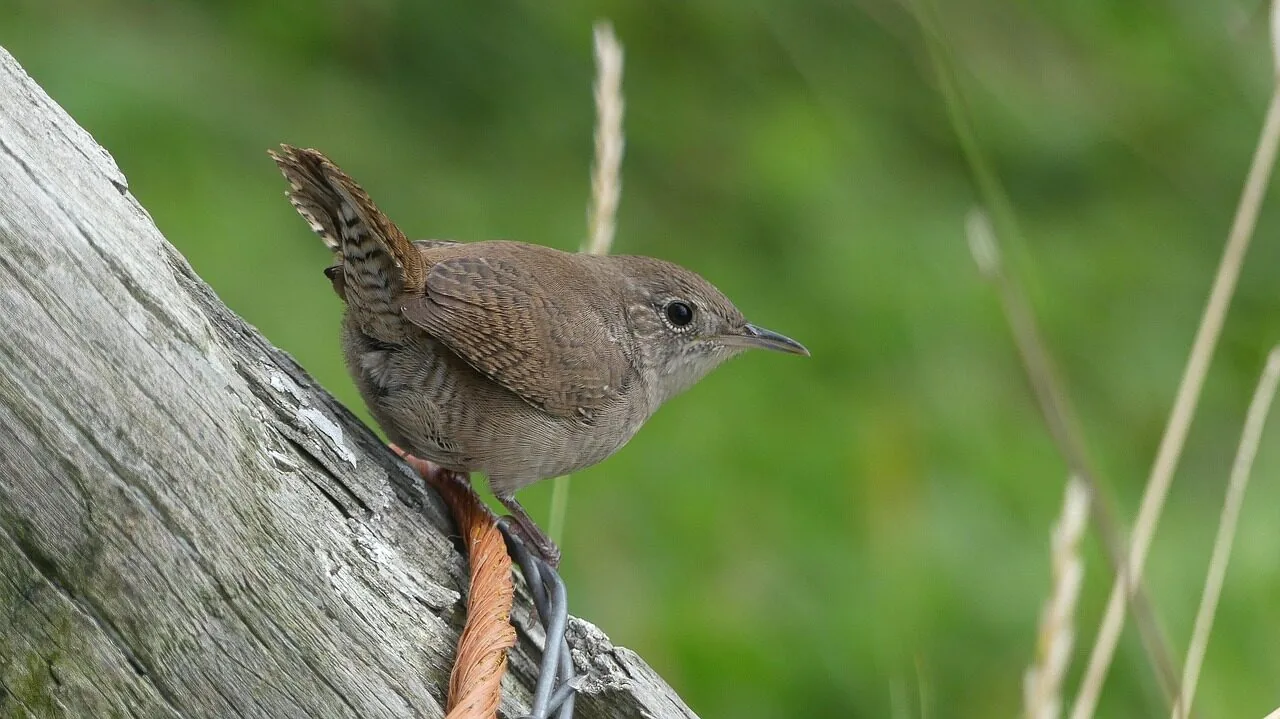
The Spider “Security” Theory
One of the most fascinating (though scientifically debated) claims about wrens is their use of “biological innovators.” Wrens often weave live spider egg sacs into their nest lining.
- The Theory: When the spiders hatch, they act as a personal pest-control crew, devouring parasitic mites that would otherwise harm the wren chicks.
- The Caveat: While wrens definitely use spider silk for structural support, scientists are still researching whether the “pest control” is a deliberate strategy or a very lucky side effect of their building materials.
The Sacred News-Bringer
Long before naturalists were labeling them “criminals,” Indigenous cultures saw them as vital community observers. In Cherokee (Tsalagi) lore, the wren is the primary “news-bringer” among the bird tribes.
Because wrens live so close to humans and move with constant, inquisitive energy, it is believed they observe every detail of community life. Specifically, when a baby is born, it is the wren’s sacred duty to fly to the bird council and announce whether the new arrival is a boy or a girl so the entire bird kingdom can welcome the news.
Whether you view them as the “spirit of impudence” or a vital communal messenger, the Northern House Wren remains a master of survival—a small, brown reminder that nature doesn’t need bright colors to be absolutely fierce.