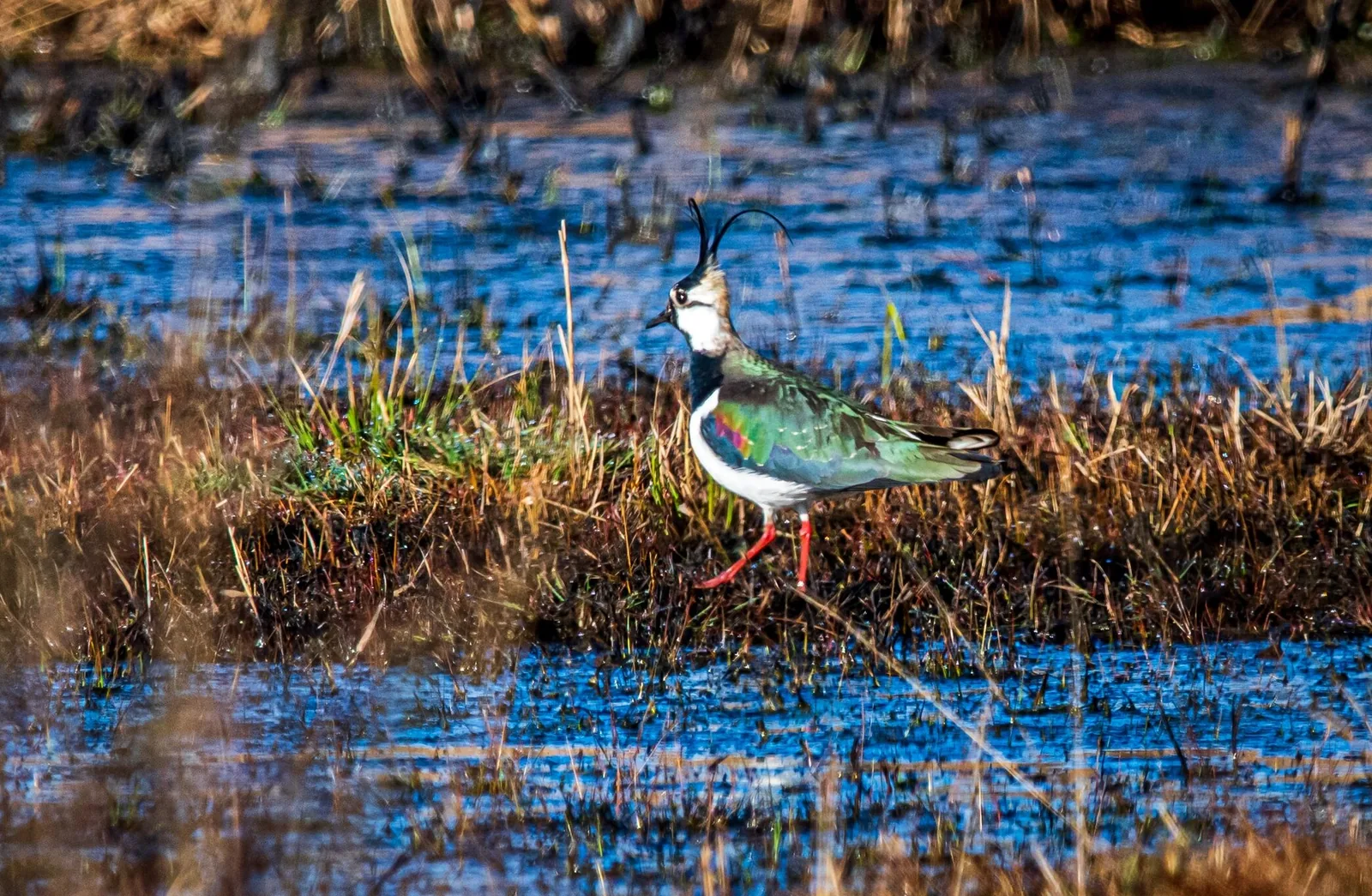
_-_Naturschutzgebiet_Elmpter_Schwalmbruch.jpg)
A Deceit of Crested Tumblers
In Britain it answers to peewit, a flat copy of its wheezy call. In Ireland it is the pilibín, “little Philip,” named after Philip II of Spain (king of Ireland 1554-58) because the king wore a feather in his cap that looked exactly like the lapwing’s crest. The Latin Vanellus vanellus translates as “little fan, little fan.” Every culture that has met this bird reached for a different metaphor, and the bird itself just tumbles sideways across wet fields, deceiving everything that gets near.
What Twelve Cultures Heard
The English word lapwing comes from Old English hleapewince, which the Oxford English Dictionary translates as “leaper-winker.” That verb describes how the bird flies. Vanellus is the diminutive of vannus, the Latin word for a winnowing fan. (A winnowing fan was the wide flat basket farmers tossed grain in to let the chaff blow away.) Some Roman naturalist heard the lapwing’s wingbeats and decided they sounded like grain getting tossed. A medieval English courtesy book gave the species its collective noun: “a deceit of lapwings.” What follows explains why.
The Long Con
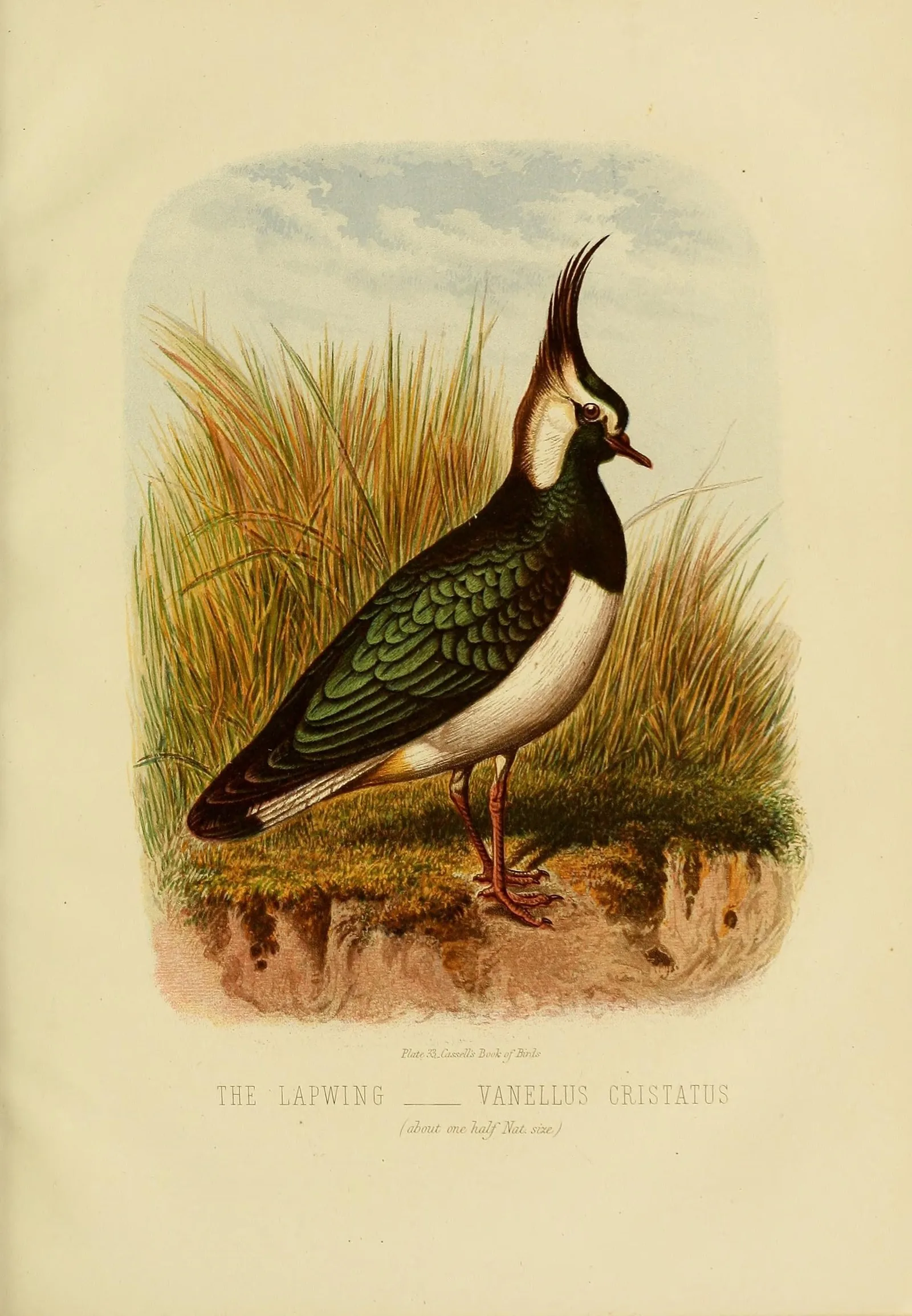
The deception starts on foot. A lapwing forages by patting the ground with one leg, mimicking rainfall, until earthworms come up to investigate; ornithologists call this worm-charming. When a fox or hawk gets near the nest, the parent flops away across the grass dragging one wing as if it were broken, and the predator follows it for fifty meters before the bird lifts off uninjured. The signature trick is the courtship flight. Males roll and dive over wet meadows in spring, wings making a wet hollow throb, while the bird repeats a wheezy “pee-wit, wit wit, eeze wit” overhead. That call gave the species at least four English nicknames: peewit, pewit, tewit, pyewipe.
Eaten by Empire
Shakespeare made the lapwing a punchline. In Hamlet, when the courtier Osric scurries off after a flowery exchange, Horatio (Hamlet’s friend) snorts, “This lapwing runs away with the shell on his head.” The joke is that lapwing chicks are precocial, walking within hours of hatching, sometimes before the eggshell has fully fallen off. The bird also ended up on the Victorian dinner table. Plover’s eggs, mostly lapwing eggs, were a luxury picnic dish through the early twentieth century; they appear in Evelyn Waugh’s 1945 novel Brideshead Revisited as shorthand for old-money Oxford luxury.
The UK protected wild bird eggs in 1954 but kept a lapwing-egg exemption running until 1969. By then the population was already collapsing. The UK breeding population has fallen 63% since 1967, per the British Trust for Ornithology. The species sits on the IUCN Near Threatened list and Britain’s Red List.
A lapwing on a cold Norfolk field does not look like an endangered bird. It looks like a small black-and-white sergeant with a Philip II crest, patting the mud for worms. That is the trick the species has always pulled, for as long as anyone has been writing it down.
Sources:
- Wikipedia: Northern lapwing
- Wikipedia: Vanellus
- Wikipedia: Plover’s eggs
- Wikipedia: Lapwing
- Etymology Online: lapwing
- Folger Shakespeare Library: Hamlet, Act 5 Scene 2
- British Trust for Ornithology: Lapwing, BirdFacts