
All Legs, All Noise
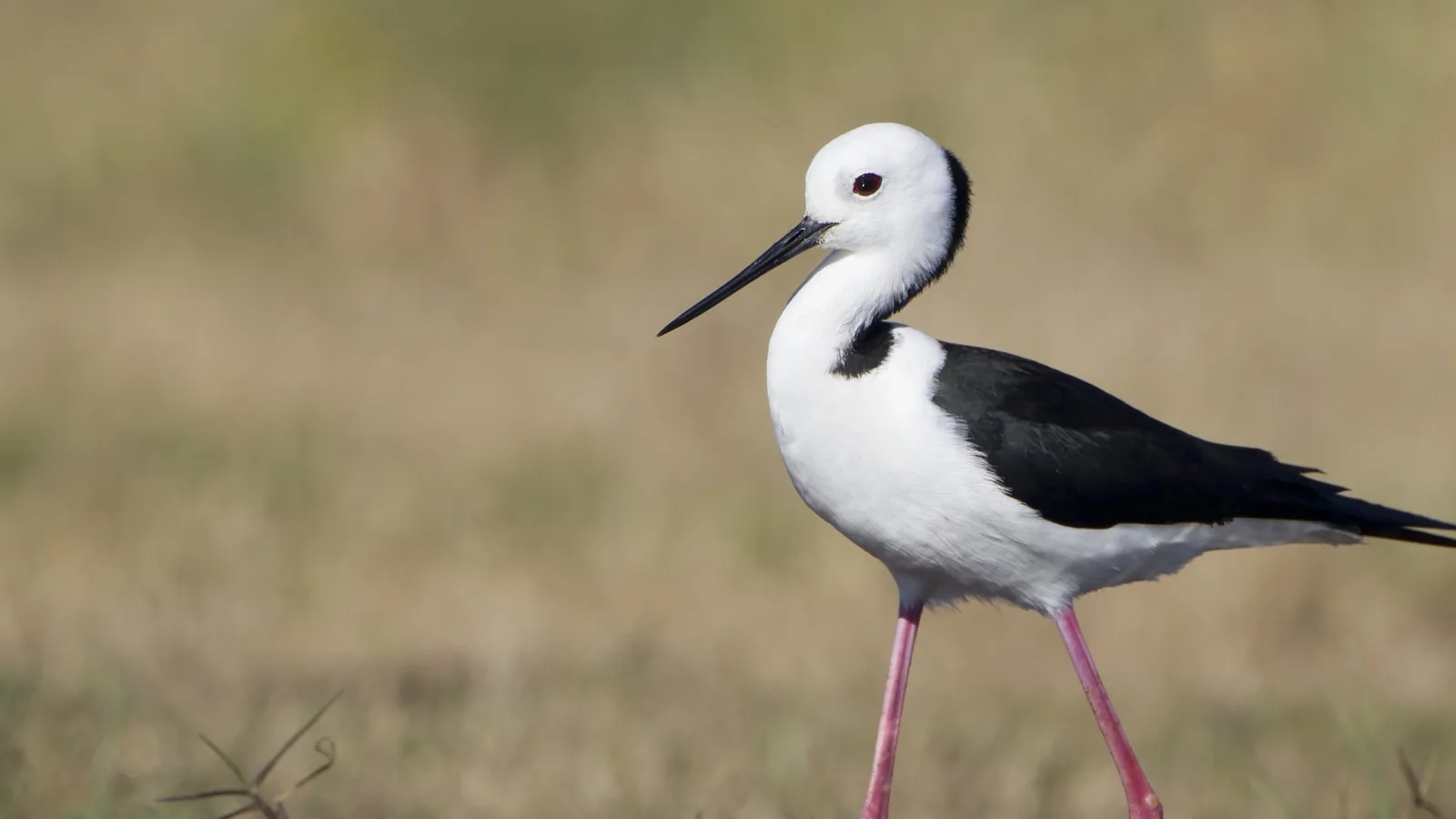
Picture a bird built almost entirely out of legs. The Pied Stilt stands on impossibly thin pink stalks, wading through shallow water on limbs that look borrowed from something twice its size. If you wake up near a wetland anywhere from Australia to New Zealand, you may know it by ear before you ever spot it: a sharp, yapping racket that carries clean across the open water.
Strap-Foot on Pink Legs
Its scientific name is Himantopus leucocephalus, and the first half is wonderfully literal. Himantopus comes from the Greek for “strap-foot” or “thong-foot,” a nod to legs so long and thin they look like leather straps. Leucocephalus simply means “white-headed.” John Gould, a 19th-century English ornithologist, described the Australian bird in 1837. In te reo Māori it carries a shorter, stranger name: poaka, a word it happens to share with the pig.
Those legs are not just for show. The stilt wades deeper than most waders dare, picking through the mud with a fine black bill for insects and molluscs that shorter-legged birds cannot reach.
The Crasher and the Rarest Stilt
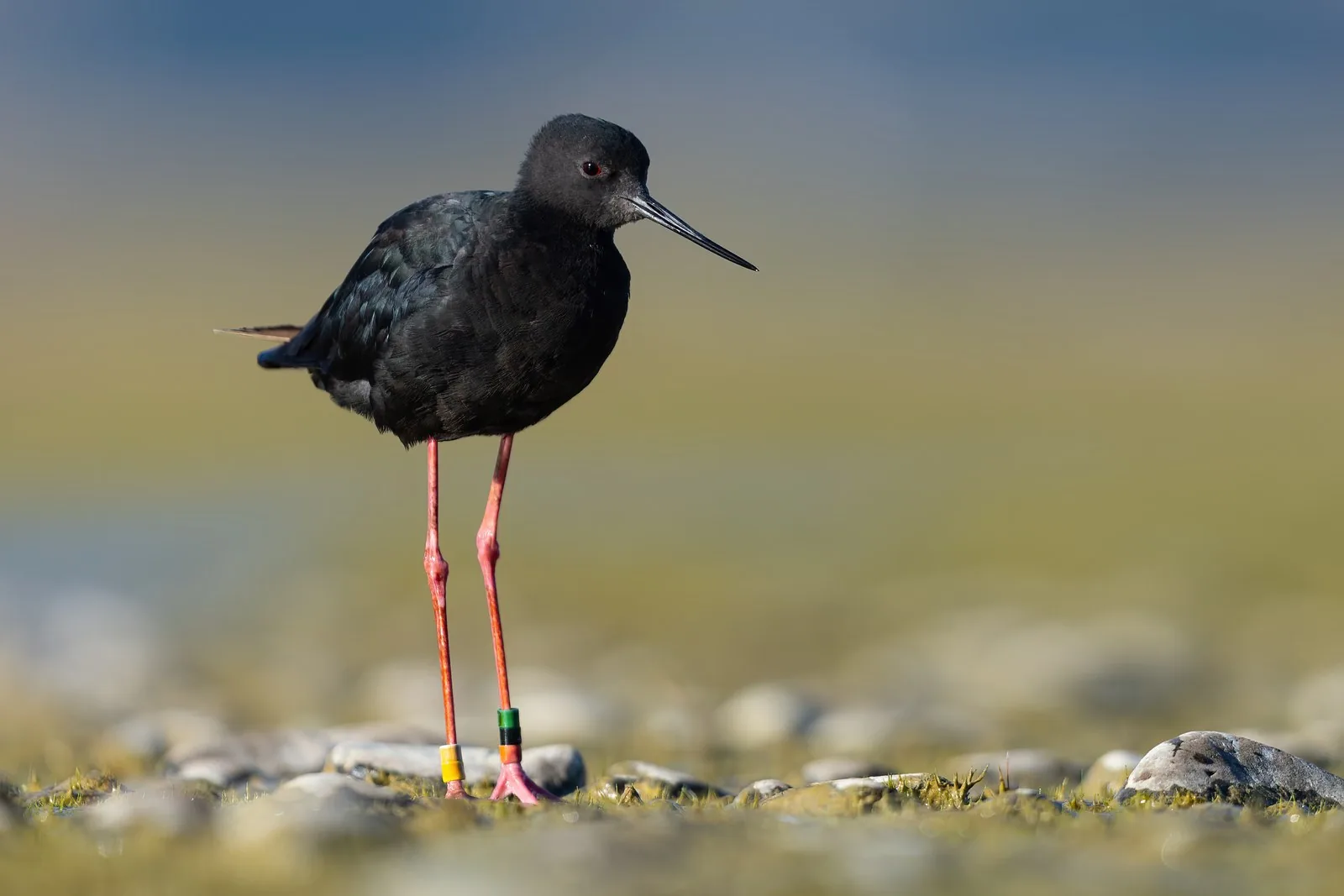
The Pied Stilt is a newcomer to New Zealand. It crossed the Tasman Sea on its own, and its numbers took off between about 1870 and 1940 as forests were cleared into pasture and the shallow, muddy habitat it loves spread across the country. That success brought it face to face with one of the rarest birds on Earth: the kakī, or black stilt, a sooty-black cousin found nowhere else.
By 1981 the kakī had crashed to just 23 birds. With so few partners to choose from, lonely kakī started pairing up with the abundant Pied Stilt instead, raising hybrids that risked diluting the rare species away. Yet when scientists read the DNA in 2010, they found something hopeful. The crossbreeding had been “extensive and bidirectional,” but the kakī genome had stayed almost entirely its own. The rare bird had not dissolved into a hybrid swarm after all. Intensive management has since lifted the wild population back to about 169 adults, many of them wearing coloured leg bands so conservationists can tell exactly who is who.
A Yap Like a Toy Poodle
For all its elegance on those pink stilts, the Pied Stilt does not sound elegant. Its voice is a sharp, repeated yapping, so dog-like that birdwatchers compare it to a toy poodle or an irritated terrier. Approach a colony and the whole flock lifts off in a chorus of complaint, yelping as it goes. The same notes drift down from birds passing overhead at night, a thin contact call keeping the flock together in the dark. No one would mistake it for a song. It is, however, hard to sleep through, which makes it an honest sort of alarm.
There is something fitting about a bird that is all legs and all noise being the one that thrived while its quieter cousin nearly vanished. The Pied Stilt asks for little more than a muddy margin and a bit of shallow water. Give it that, and it will tell the whole neighbourhood about it.
Sources:
- Wikipedia: Pied stilt
- New Zealand Birds Online: Pied stilt | Poaka
- NZ Department of Conservation: Black stilt / kakī
- Molecular Ecology (Steeves et al., 2010): Genetic analyses reveal hybridization but no hybrid swarm in one of the world’s rarest birds
- Wikipedia: Black-winged stilt (Himantopus etymology)
- Te Aka Māori Dictionary: poaka