
A Love Story on Montrose Beach
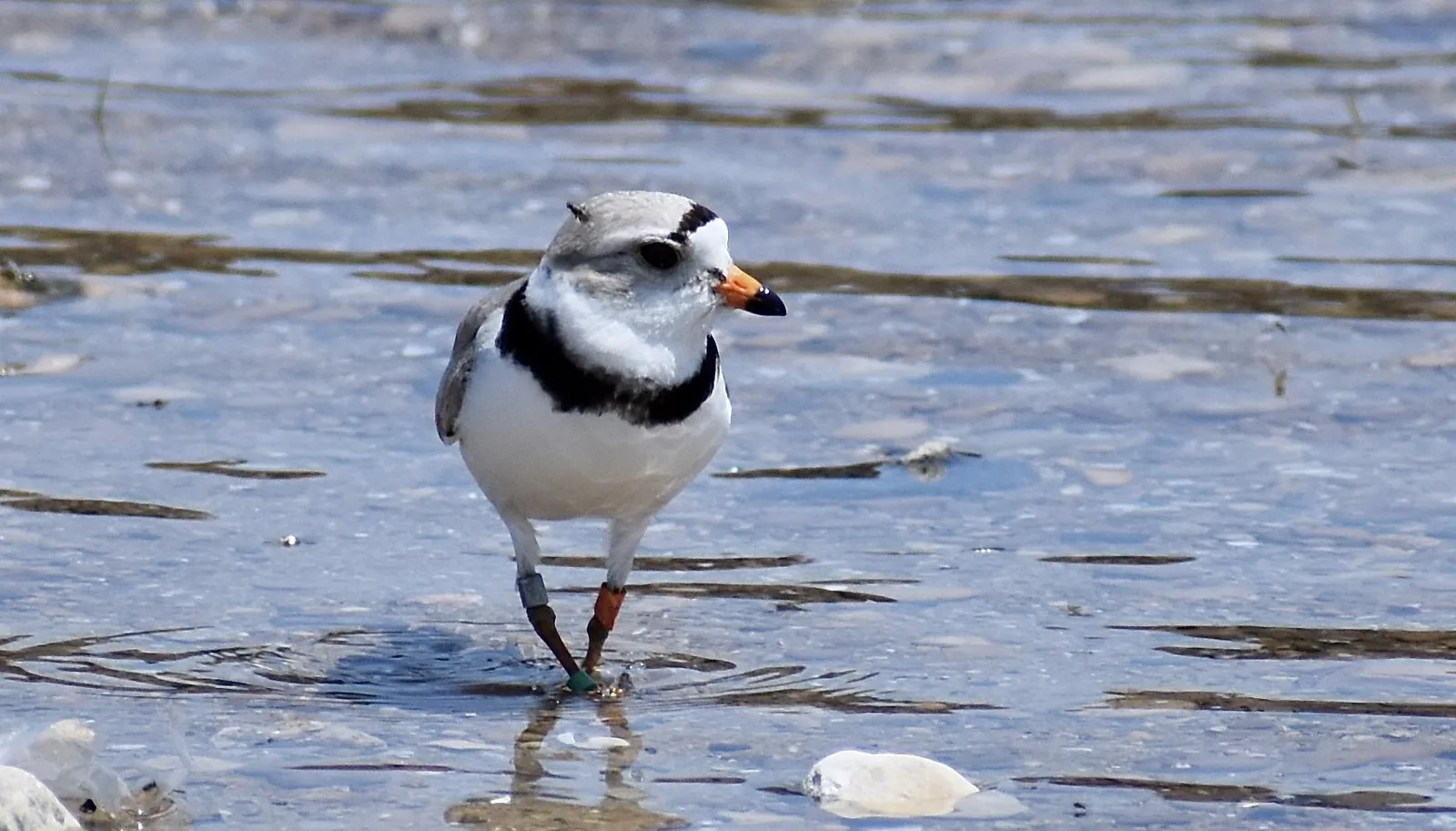
The Piping Plover is the color of dry sand, with a black collar, an orange bill and bright orange legs. When it stops running, it can crouch in a footprint and seem to disappear. If you wake up near a sandy beach on the Atlantic coast, the Great Lakes or the northern Great Plains in summer, you may hear its soft, whistled call before you spot the bird itself.
A Love Story on Montrose Beach
In 2019, a pair of these plovers settled on Montrose Beach in Chicago. Fans named them Monty and Rose. They were the first Piping Plovers to nest in Chicago since 1955, and more than 150 volunteers took turns watching over their nest.
The pair came back for three summers and raised chicks each year. One of their 2020 chicks, Nish, later nested in Ohio, the first successful Piping Plover nest there in 83 years. Monty returned to Montrose in May 2022 but fell ill and died the same day, and Rose was never seen again. Illinois now marks November 18 as Piping Plover Day in their honor.
Their story did not end there. In 2023, their son Imani came back to Montrose. The next year he paired with Sea Rocket, a female who had been raised in captivity and released on the same beach, and together they raised a chick.
A Nest Made of Sand
Piping Plovers barely build a nest at all. The male scrapes several shallow hollows in loose sand above the high tide line. The pair can take 5 to 10 days to choose one, then line it with small pebbles or bits of shell. The chicks hatch with their eyes open and can walk within hours.
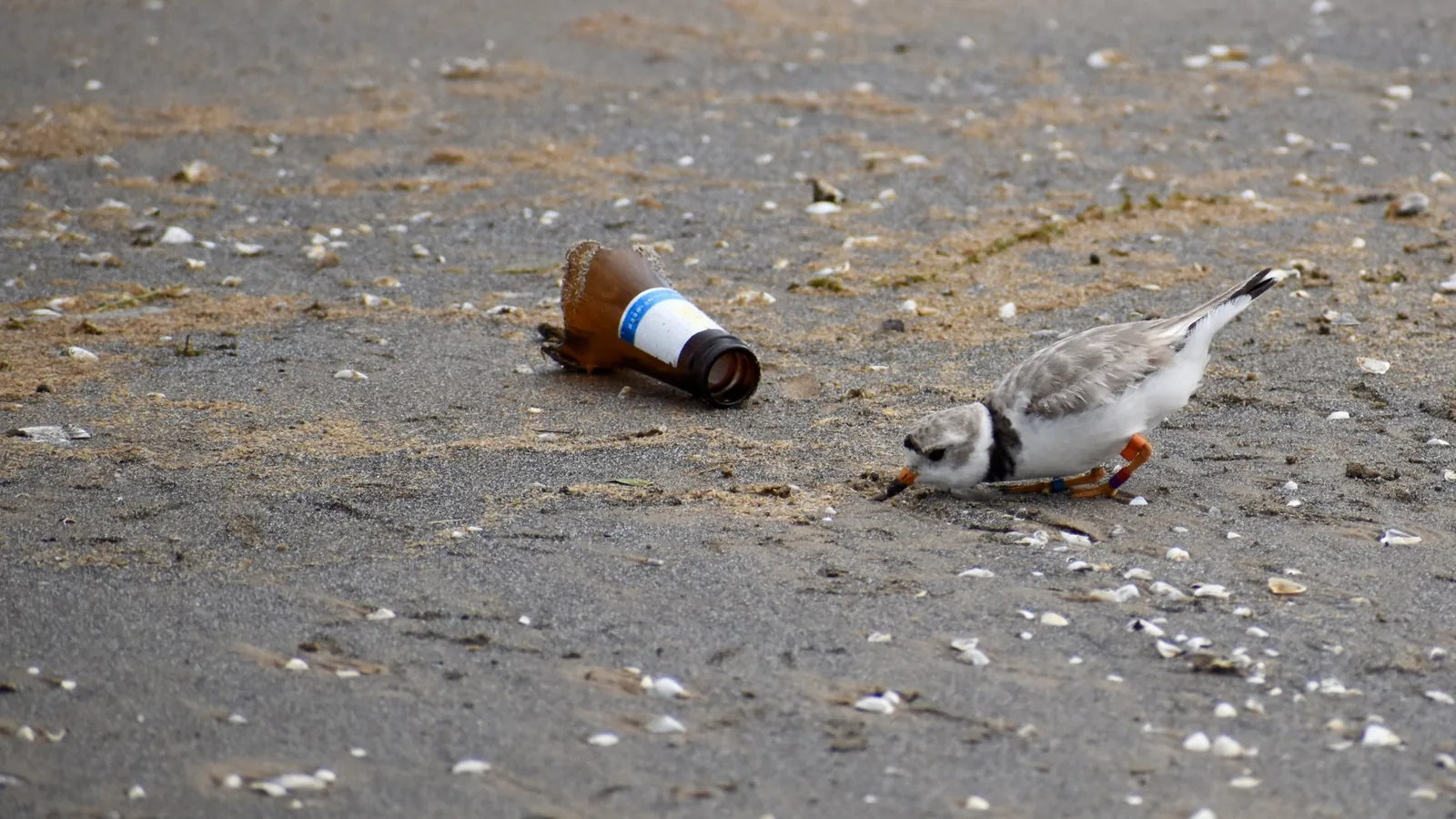
Adults feed along the water’s edge, running, stopping and pecking at worms and tiny crustaceans. They sometimes hold one foot out and vibrate it in the wet sand as a wave passes, possibly to bring prey to the surface.
Back From a Dozen Pairs
The Great Lakes once had an estimated 500 to 800 nesting pairs. By the late 1980s, only about 13 pairs were left, all in Michigan. In 2026, the U.S. Fish and Wildlife Service counted 99 pairs in the region, a record, and 184 chicks that learned to fly, including 24 raised in captivity.
The birds that nest on the Atlantic coast have their own surprise. Researchers found that more than a third of them spend the winter in the Bahamas.
So a small bird that once nearly vanished from the Great Lakes now has its own day in Illinois, and a protected stretch of sand in the middle of Chicago.
Sources:
- Cornell Lab of Ornithology: Piping Plover overview, All About Birds
- Cornell Lab of Ornithology: Piping Plover life history, All About Birds
- Audubon: Piping Plovers Nest in Chicago for the First Time in Over Half a Century
- Spectrum News: Piping plover population increases in the Great Lakes
- ABC7 Chicago: Rare Montrose Beach piping plovers to be ‘grandplovers’ as chick Nish finds mate, nests in Ohio
- Wikipedia: Monty and Rose