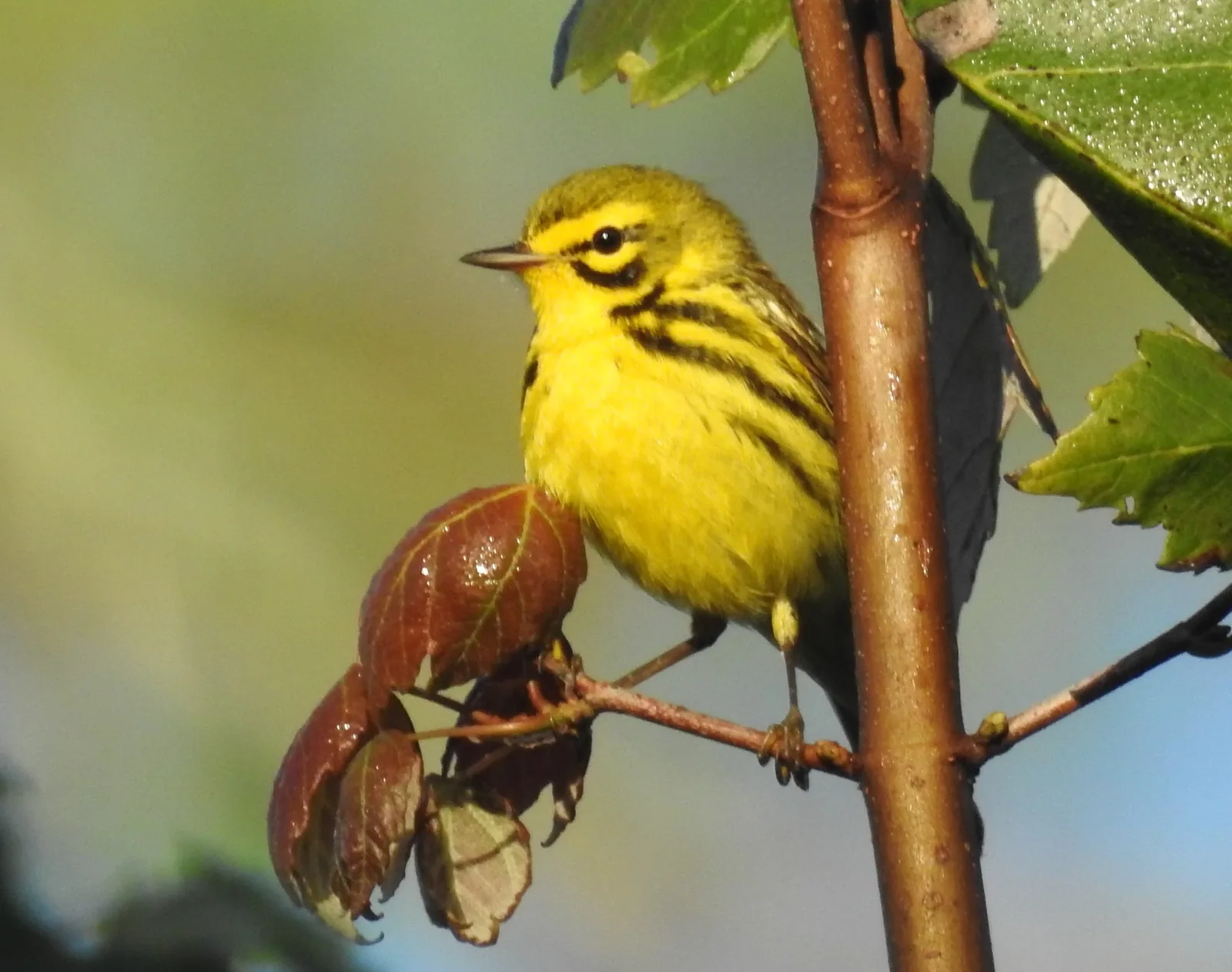

The Prairie Bird of Christmas Tree Farms
If you go looking for a Prairie Warbler on an open prairie, you may be out there a long time. The Cornell Lab of Ornithology describes it as a resident “not of prairies, but of scrubby second-growth forests and young stands of pine.” If you wake up in the eastern United States in spring, you are more likely to hear one from a brushy forest edge, singing a string of buzzy notes that climb as they go.
A Name From Kentucky
The name comes from Alexander Wilson, a Scottish-American naturalist, who saw the bird in 1810 in prairie country in southwestern Kentucky. It stuck, even though the bird generally prefers shrubs and small trees to open grassland. Wilson was describing where he happened to find it, and the rest of us have been slightly misled ever since.
Helped by the Axe
The Prairie Warbler likely benefited from the mass clearing of eastern forests after European colonization, and that it has declined in some areas as those forests have grown back.
So it has found some unexpected substitutes. Christmas tree farms and the soil ridges left by strip mines now attract it.
Two Songs, Two Audiences
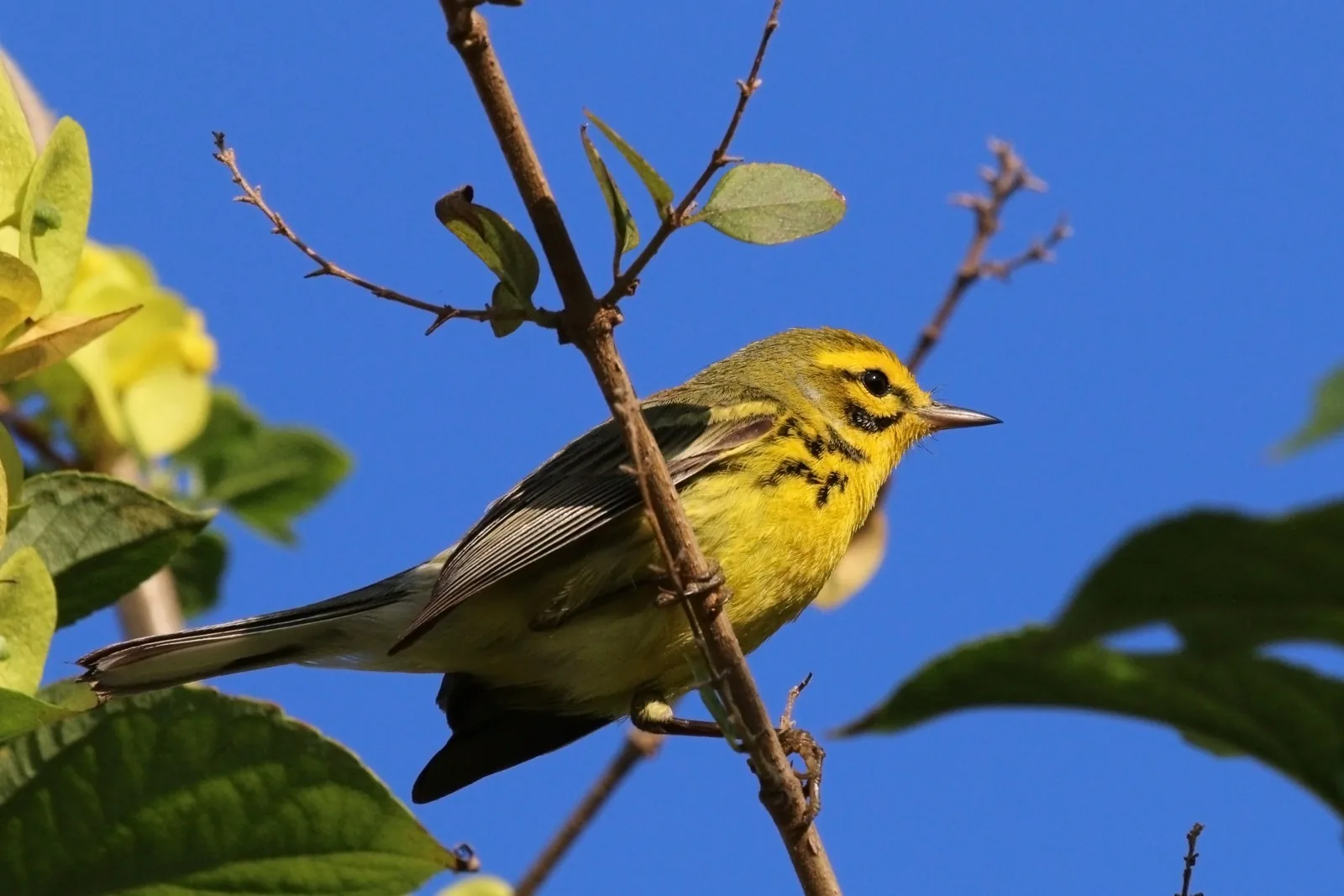
The male has two song types. The faster “A Song” is aimed at the female, and the “B Song” is sung at territorial boundaries to warn off other males.
Timing is part of the code. When males first arrive on the breeding grounds, they sing A songs throughout the day. Once paired, they begin singing B songs in the dawn chorus. The A songs come later in the day, typically near their mate or the nest. So a paired male singing at first light is mostly talking to the neighbors.
For a bird with such a misleading name, it makes good use of places nobody planned for it. A patch of young pines or a row of future Christmas trees can do the job.
Sources:
- Cornell Lab of Ornithology: Prairie Warbler overview, All About Birds
- Cornell Lab of Ornithology: Prairie Warbler life history, All About Birds
- Wikipedia: Prairie warbler