_(14186569846).jpg)
The Warbler That Made a President
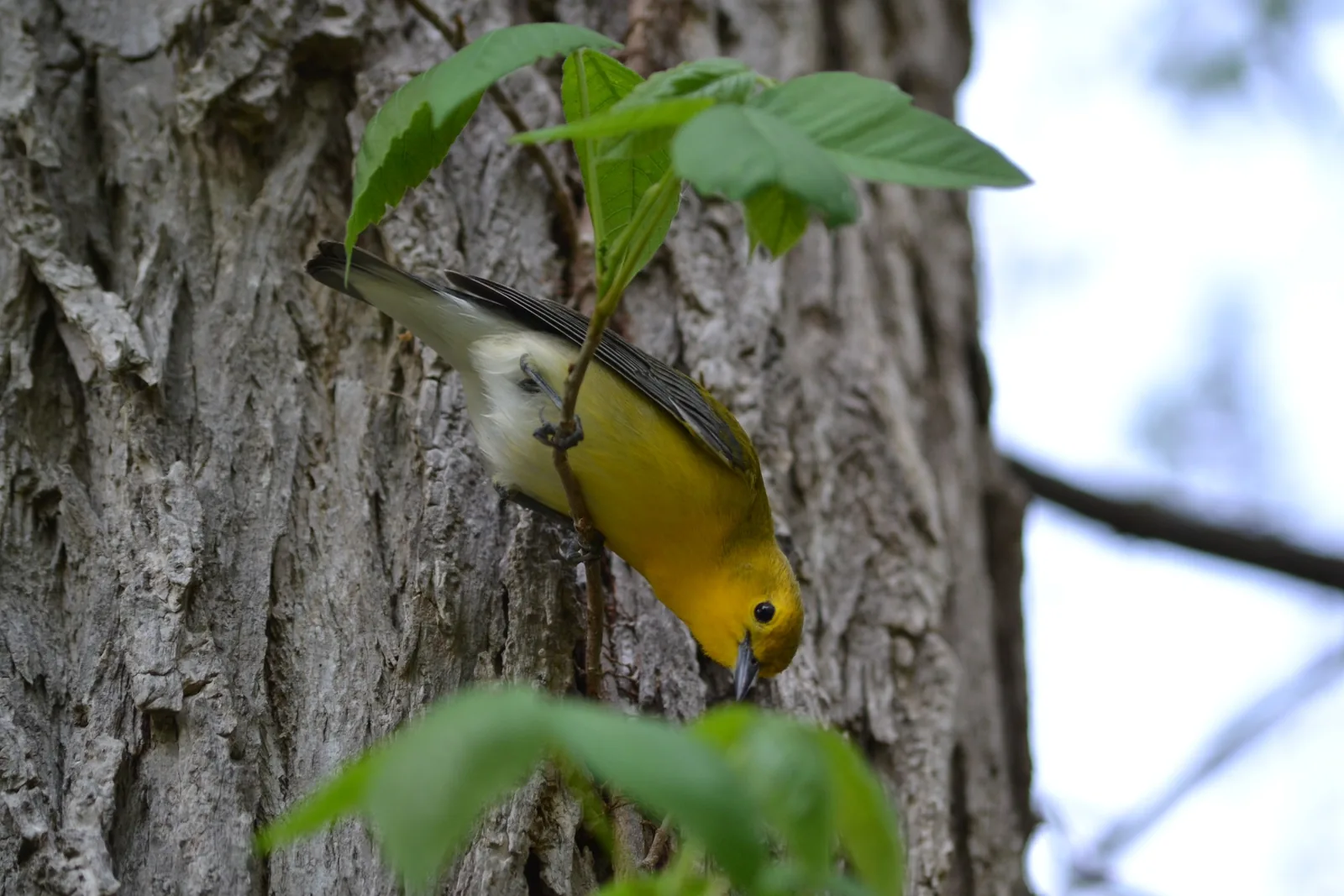
The prothonotary warbler is the size of a thumb and the color of a lemon. It lives in flooded southern swamps. In 1948 it also became the most consequential bird sighting in American political history.
A Bird Named for a Yellow Robe
A French naturalist named Buffon got the first scientific look in 1779, working from a specimen shipped out of Louisiana. Pieter Boddaert gave the bird its binomial four years later: Motacilla citrea, with citrea the Latin for citrine yellow. The American ornithologist Spencer Baird moved it into its own genus, Protonotaria, in 1858.
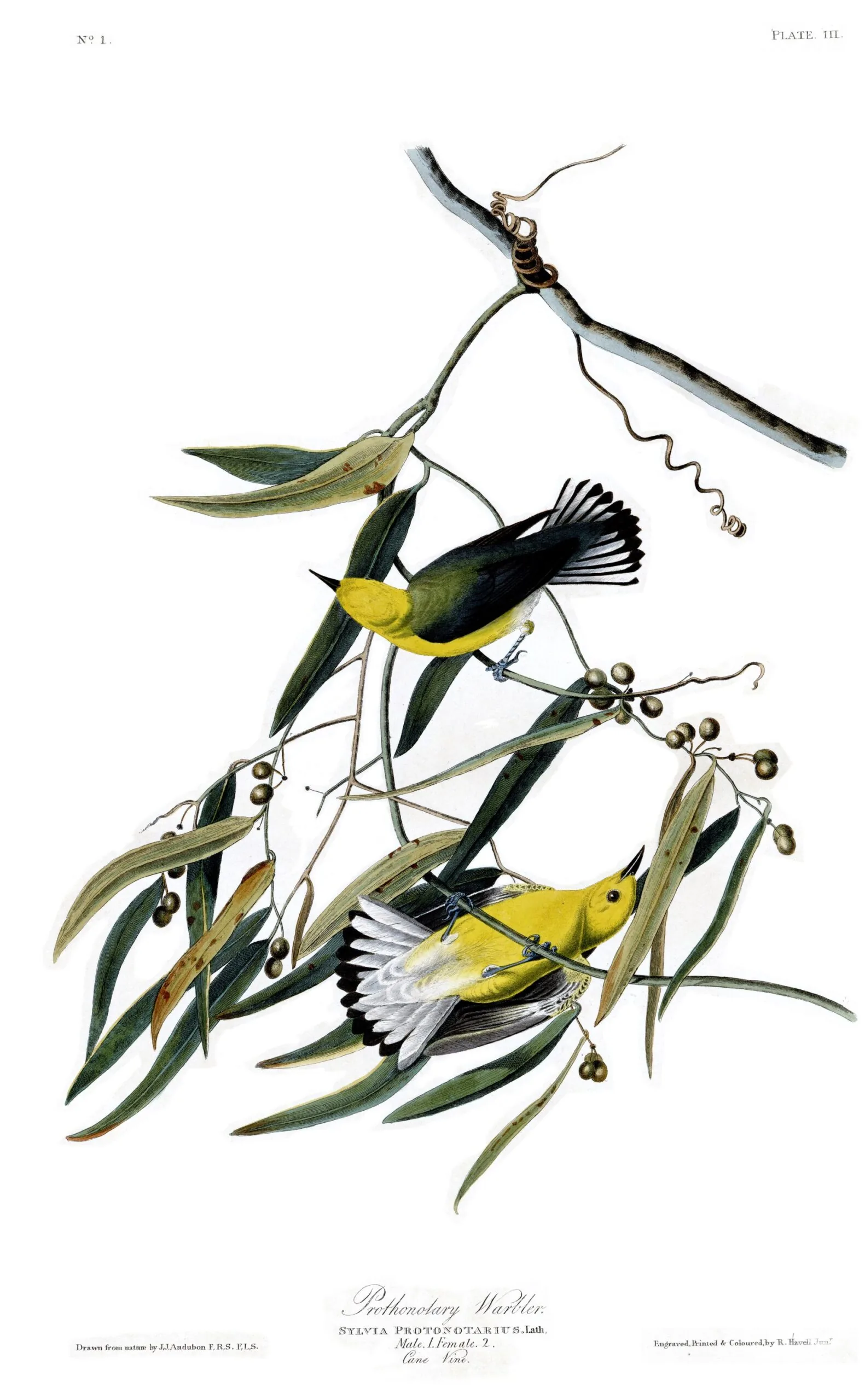
That genus name is what should make you smile. A protonotarius was the chief notary of late Roman and Byzantine courts, the head clerk whose office wore golden-yellow robes. The Catholic Church inherited the title and kept it for centuries as Protonotary Apostolic, the senior monsignors who handled papal documents. Naturalists looking at a tiny yellow bird in the cypress swamps decided it wore the robe. Audubon liked the joke enough to make the species the third plate of Birds of America, hand-painted in 1827.
The Bird in the Hearing Room
In August 1948 the House Un-American Activities Committee was trying to work out whether Alger Hiss, a senior State Department official, had ever known Whittaker Chambers, the ex-communist editor accusing him of espionage. Chambers said yes. They had been close, he claimed, and his proof was an oddly specific detail: Hiss was an amateur birder and had once bragged to him about seeing a prothonotary warbler along the Potomac. Days later a freshman congressman named Richard Nixon asked Hiss what hobbies he had. Hiss said tennis and amateur ornithology. John McDowell, sitting beside Nixon, then asked, “Did you ever see a prothonotary warbler?” Hiss answered, “I have… right here on the Potomac.”
The committee read that as confirmation that Chambers really had known Hiss. Hiss was convicted of perjury two years later. Nixon came out of the case a national figure, and the rise that carried him to the White House began with the warbler.
A Jewel in the Dead Wood
Eastern North America has dozens of wood-warbler species. The prothonotary is the only one that raises its young inside a tree, almost always in an abandoned downy woodpecker hole in a dead trunk standing in standing water. The conservationist Aldo Leopold called it “the real jewel of my disease-ridden woodlot” in A Sand County Almanac, writing that “the flash of his gold-and-blue plumage amid the dank decay of the June woods is in itself proof that dead trees are transmuted into living animals, and vice versa.”
The song is a loud ringing sweet sweet sweet sweet sweet, weirdly powerful for a bird that weighs about half an ounce, carrying through the cypress and tupelo of South Carolina’s Beidler Forest where more than two thousand pairs nest each spring. It is the sound of a swamp insisting that something dead can still glow.
Sources:
- Wikipedia: Prothonotary warbler
- Wikipedia: Prothonotary
- Audubon: Prothonotary Warbler, Birds of America Plate 3
- Audubon Field Guide: Prothonotary Warbler
- The Alger Hiss Story: The Prothonotary Warbler
- St. Croix 360: Creature Feature: Prothonotary warbler
- Cornell Lab Land Trust: Prothonotary Warbler conservation profile
- Audubon South Carolina: Beidler Forest
- Internet Archive: A Sand County Almanac, by Aldo Leopold