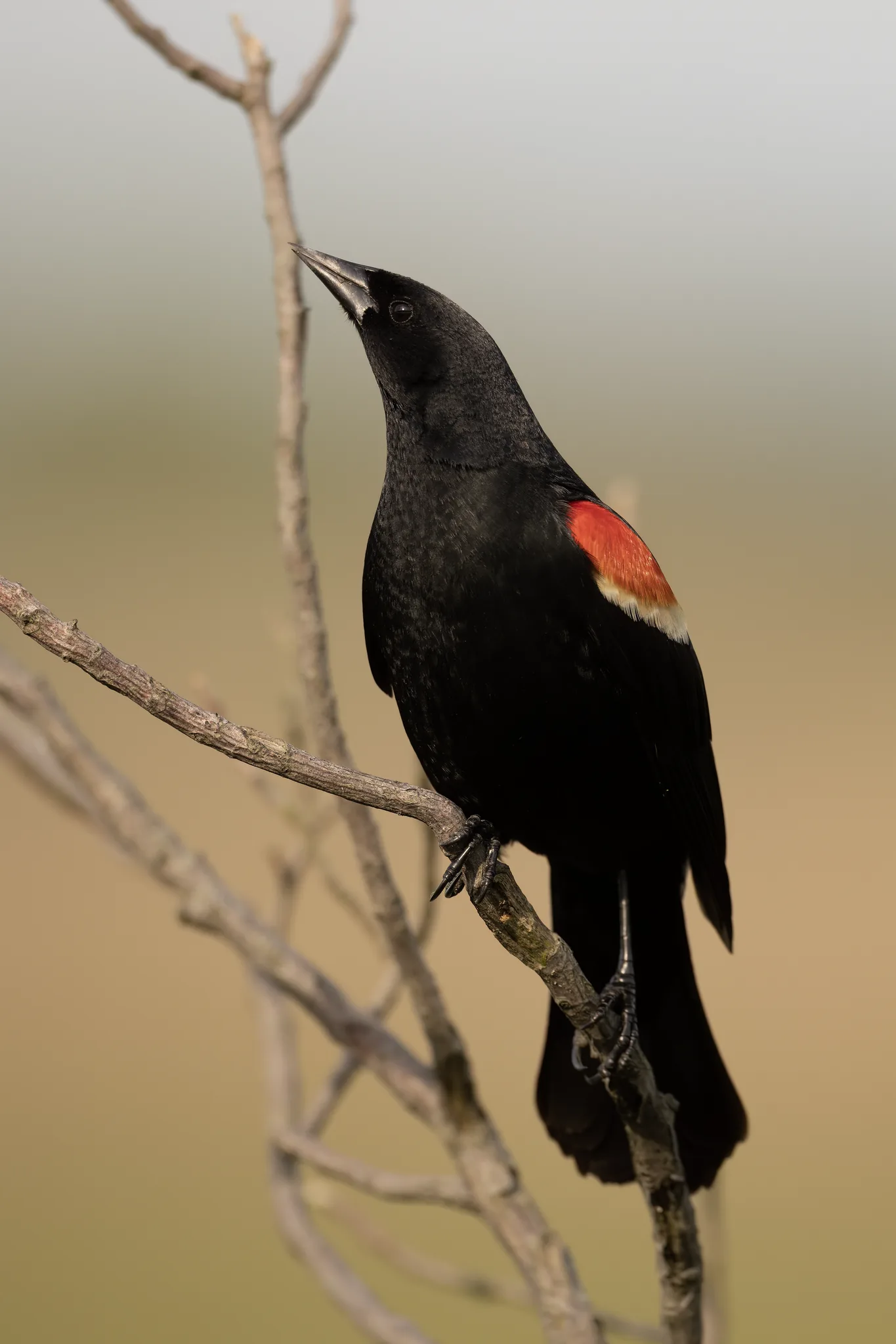
The Red-winged Blackbird is not rare, shy, or subtle. It is one of the most abundant birds in North America, with population estimates in the hundreds of millions. That scale matters because it explains everything else. This is a bird that evolved to compete loudly, reproduce aggressively, and occupy space without apology.
In spring, males return early and claim wetlands, ditches, reed beds, and roadside marshes. They don’t wait to be discovered. Their song is a territorial announcement, often rendered as “conk-la-REE!” or “okaleee!”, delivered while leaning forward and flashing red shoulder patches called epaulets. Silence costs them territory. When a male stops singing, rivals move in quickly. The sound is not atmosphere. It is enforcement.
The harem system
Abundance also shapes how they reproduce. The Red-winged Blackbird practices polygyny, meaning one male may control a territory that supports many females. In good habitat, a single male can have ten or more females nesting within his range. Pair bonding is not the organizing principle here. Territory quality is.
Even that system is less stable than it looks. Genetic studies show that many chicks in those nests are not fathered by the territory male. Females frequently mate with neighbors. The marsh may sound orderly, but biologically it isn’t. The bird’s reputation for dominance hides a quieter truth: control is partial, and reproduction is opportunistic.
“Extra-pair fertilizations are common in Red-winged Blackbirds,”
— Cornell Lab of Ornithology
Why the wings are red
Its name reflects how humans have tried to interpret this visibility. Agelaius phoeniceus combines a Greek root meaning “gregarious” with a term associated with crimson or fire. In Spanish, it’s often called “Sargento alirrojo”, the red-winged sergeant, a nod to those military-looking shoulder patches.
Some Native American traditions push the meaning further. In one Great Plains legend, a blackbird earns its red shoulder marks after warning others of an approaching fire, scorching its wings in the process. The color remains as proof of vigilance. Whether symbolic or not, the story fits the bird’s real behavior: early, loud, and unwilling to stay unnoticed.
What it means to hear one
This is not a bird you gradually become aware of. It announces itself by numbers, volume, and confrontation. If a Red-winged Blackbird wakes you up, it isn’t offering mood or calm. It is reminding you that common does not mean simple.
Sources:
- Cornell Lab of Ornithology – Species account
- Audubon – Red-winged Blackbird overview
- Behavioral and breeding research (Cornell summaries)
- Encyclopaedia Britannica – taxonomy and range