A Silent Crown in the Shallows
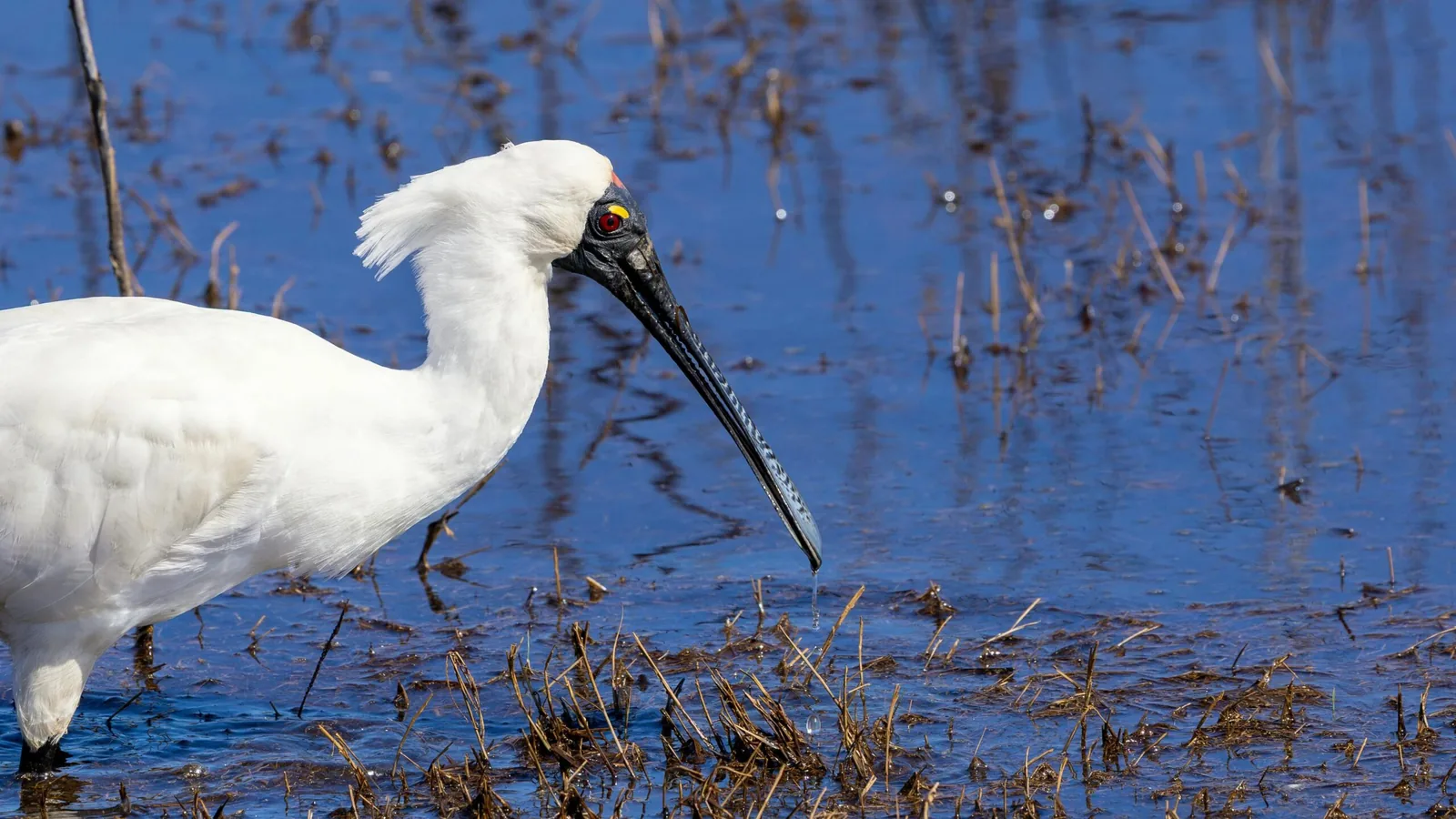
Picture a tall white bird working a shallow lagoon at first light, with a long black spoon for a face and a spray of loose plumes trailing off its head like a crown knocked askew. If you wake up near a wetland in Australia or New Zealand, this is the Royal Spoonbill. It looks regal and faintly ridiculous at once. The strangest thing about it is what it does next: it finds breakfast without ever looking at it.
The Board-Billed Cousin of a Sacred Bird
The name suits the look. Its scientific name is Platalea regia, from the old Latin for a spoonbill and regia for “royal,” and the English naturalist John Gould named it in 1838. In New Zealand the Māori name is more literal and lovelier: kōtuku ngutupapa, the “board-billed kōtuku.” The kōtuku is the white heron, a bird so rare and revered that an honoured guest was greeted with the proverb “he kōtuku rerenga tahi,” the heron of a single flight. The spoonbill, sweeping the same estuaries, was folded in as the heron’s broad-mouthed relative. Spoonbills only started breeding in New Zealand in 1949, beside the famous white heron colony at Ōkārito, and have since grown from a few dozen birds to several thousand.
How It Hunts Without Looking
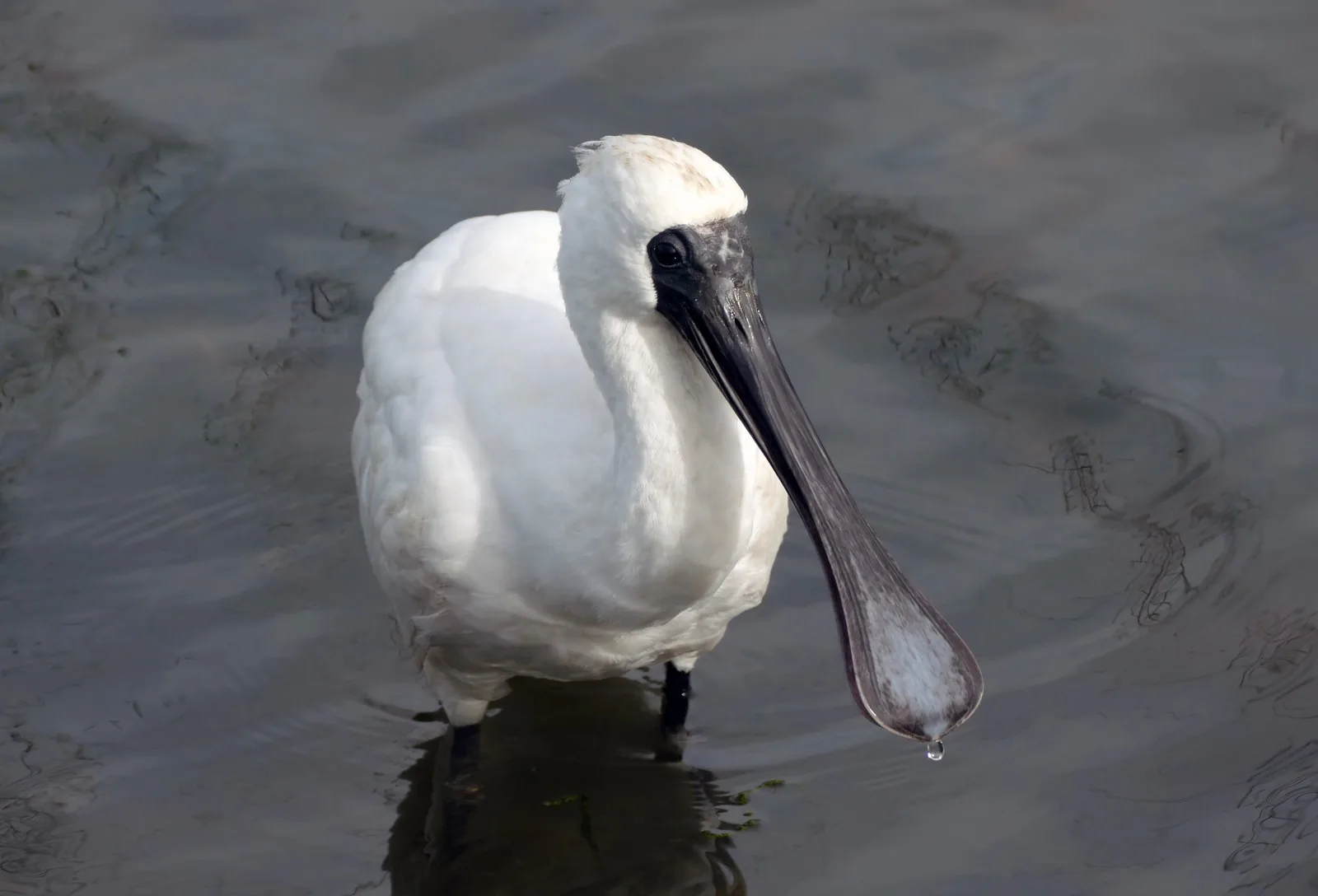
Here is the part that should surprise you. The spoonbill does not hunt by sight. It wades forward with the bill held slightly open under the surface and sweeps it from side to side in a wide arc of about a hundred degrees, feeling for prey. Its tip is packed with vibration sensors, and a 2013 study found that spoonbills share these “bill-tip organs,” clusters of touch receptors set into pits near the end of the bill, with only two other groups of probing birds: the sandpipers and the kiwi. That sensitivity lets it work muddy water and total darkness, snapping shut the instant something brushes the tip. The sweeping helps as well, stirring up a vortex that lifts sediment and the creatures hiding in it.
A Crown, and Barely a Sound
For a bird called royal, the courtship is gloriously over the top and almost entirely silent. In breeding season the males grow those nape plumes up to twenty centimetres long and raise them to flash the pink skin beneath, while a yellow patch sets above each eye and a red one on the forehead. Pairs bow and clap their bills. Then they fly looping figure-of-eight circuits above the colony. What you will not hear is a song. Spoonbills are close to mute, limited to soft grunts and the dry clatter of bill against bill.
There is something fitting about a bird that wears a crown it cannot announce. The Royal Spoonbill gets by on touch and gesture, reading the mud with its fingertips and saying almost nothing. Watch one feed and the spoon stops looking absurd. It looks like the most sensible tool on the marsh.
Sources:
- Wikipedia: Royal spoonbill
- New Zealand Birds Online: Royal spoonbill | Kōtuku ngutupapa
- PLOS ONE: Cunningham et al. (2013), The Anatomy of the Bill Tip of Kiwi and Associated Somatosensory Regions of the Brain
- Te Aka Māori Dictionary: kōtuku-ngutupapa
- Abel Tasman: Kōtuku, the White Heron