
One of the Oldest Voices in the Bird World
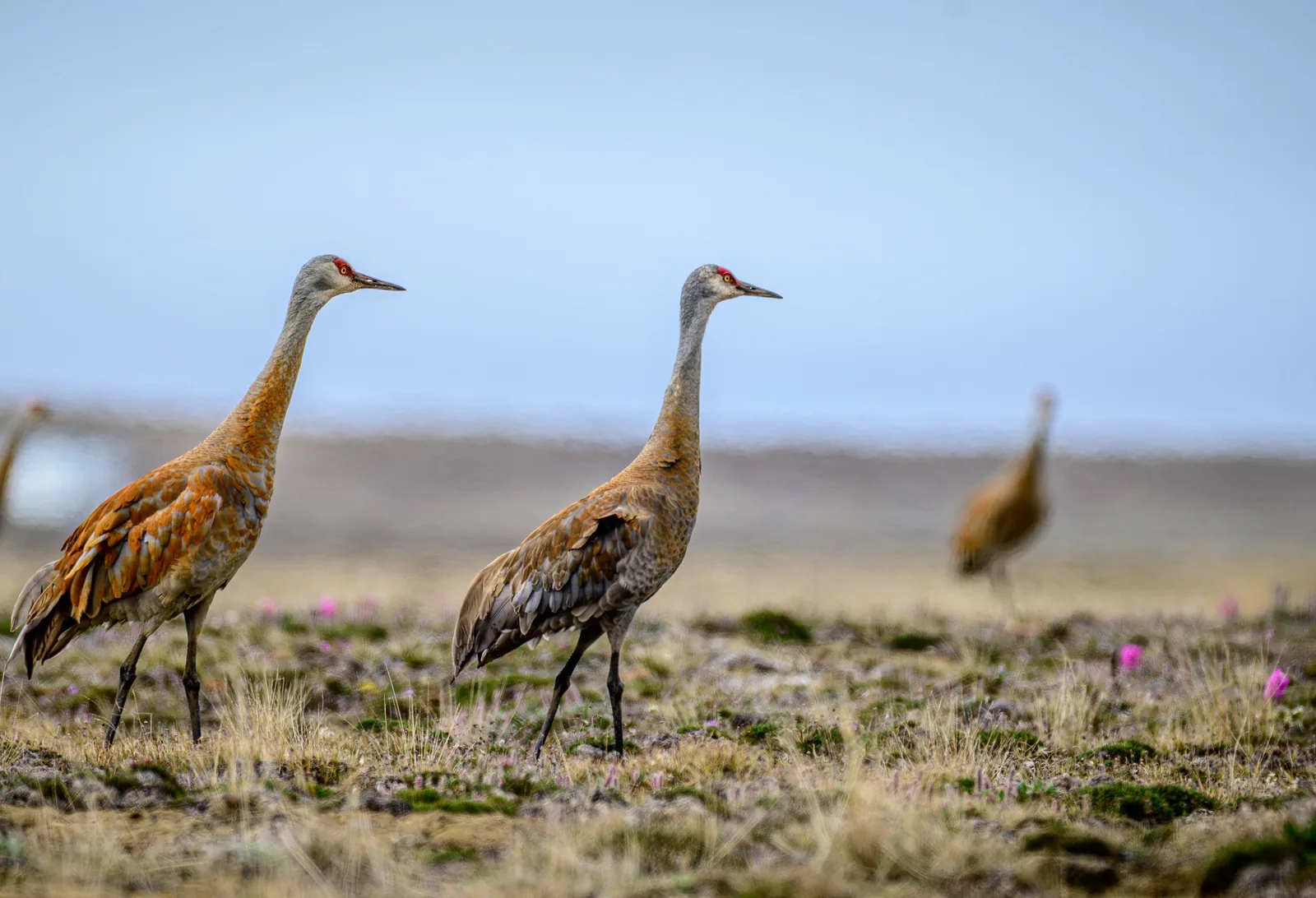
The Sandhill Crane is a tall, gray bird with a red cap, and its voice carries for miles. If you wake up near open wetlands or fields in North America during migration, a loud, rolling, trumpeting call overhead may be a flock of these cranes passing high above.
That sound comes from an unusual windpipe. In Sandhill Cranes it is long and coils into the breastbone, which lowers the pitch and adds rich overtones, a little like the tubing of a brass instrument.
An Old Voice
This is also one of the oldest bird species we know. The oldest fossil that is clearly a Sandhill Crane, found in a shell pit in Florida, is about 2.5 million years old. Most living bird species have no fossils nearly that old.
A River Full of Cranes
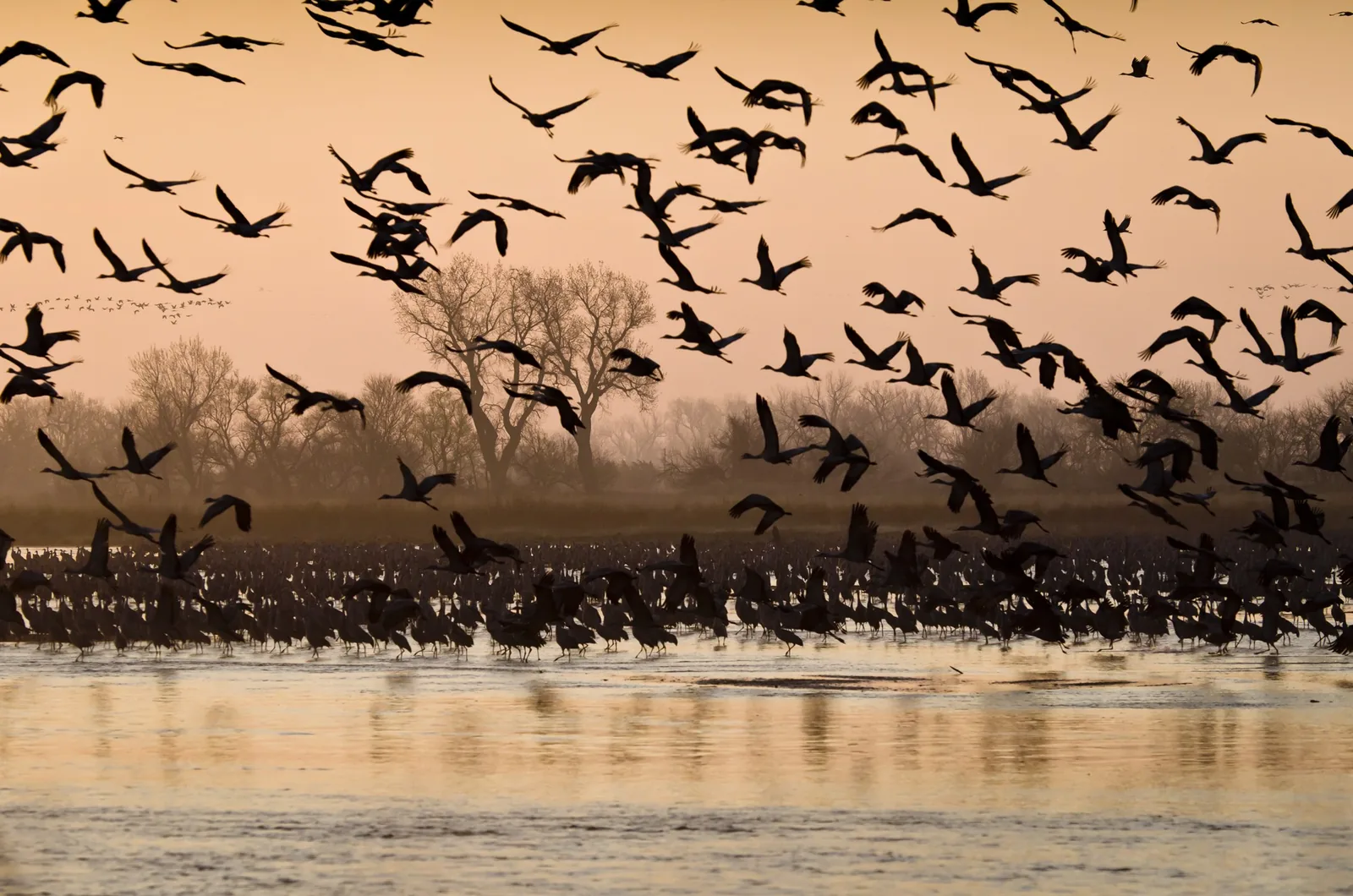
Every spring, the central Platte River in Nebraska becomes one of the great wildlife gatherings in North America. Cranes stop there on their way north, resting at night in the shallow river and feeding in the surrounding fields by day. The Crane Trust counted more than 700,000 of them during two weekly surveys in 2025. Each bird stays about a month and gains roughly a pound of fat before flying on.
Much of the old wetland around the river has become farmland, so the cranes now eat leftover corn from the fall harvest, about 3.2 million pounds of it.
Dancing for Life
Sandhill Cranes mate for life, which can mean two decades or more, and pairs stay together all year. They choose partners through dancing. A displaying crane stretches its wings, pumps its head, bows and leaps into the air, and pairs often dance together.
Their chicks are remarkably ready for the world. They can leave the nest within about 8 hours of hatching and can even swim. Young cranes then stay close to their parents for 9 to 10 months, traveling with them all the way through their first winter.
So the next time you hear that rolling call from a high flock, you may be hearing one of the oldest voices in the bird world.
Sources:
- Cornell Lab of Ornithology: Sandhill Crane overview, All About Birds
- Cornell Lab of Ornithology: Sandhill Crane life history, All About Birds
- Flatwater Free Press: Flatwater Explains: Sandhill cranes
- Wikipedia: Sandhill crane