_-_Spiekeroog,_Nationalpark_nieders%C3%A4chsisches_Wattenmeer.jpg)
The Daylight Owl's Wing-Clap
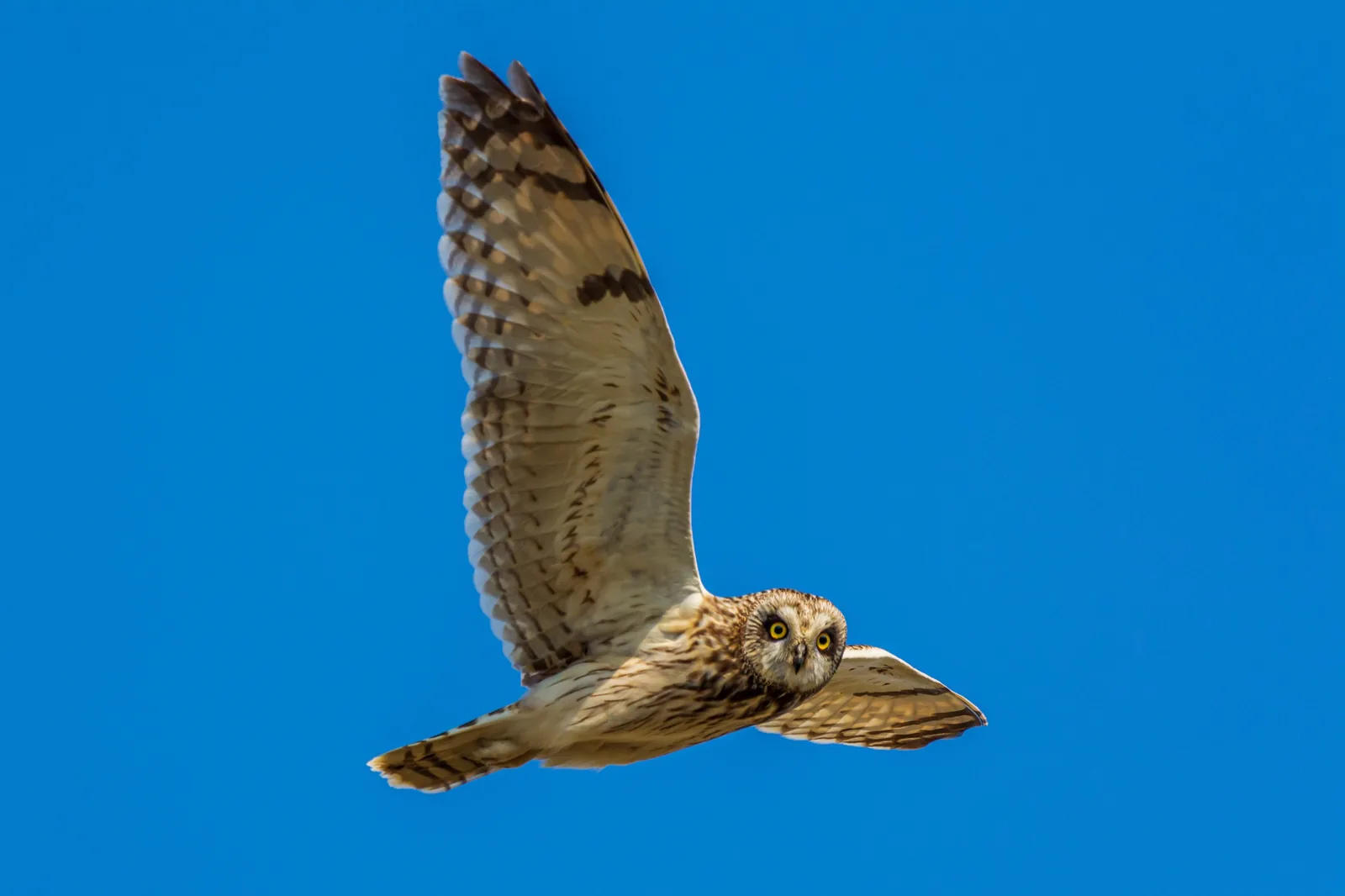
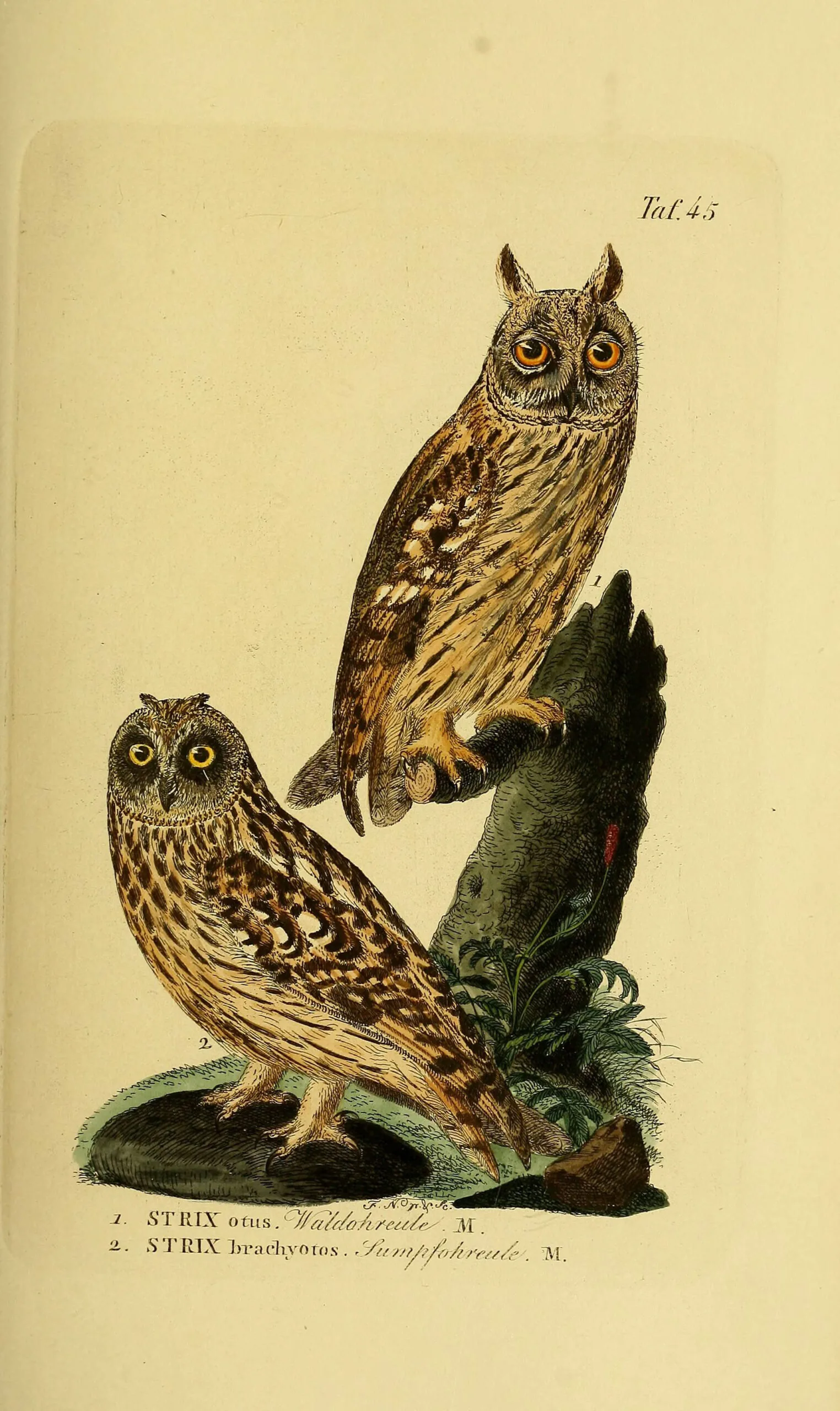
Most owls have clocked off by the time you wake up. The Short-eared Owl is the exception. Across open moors and marshes from Orkney to the Galápagos, it floats over the ground at dawn or dusk, hunting voles in plain sight. The “ears” on top of its head are not ears at all, just two small feather tufts the bird raises when it is alarmed.
A Daytime Owl with a Wing-Clap
The Short-eared Owl hunts in daylight, especially when voles are most active around dawn and dusk. Stand on Capel Fleet on the Isle of Sheppey at four o’clock in January and the owls drift up from the saltmarsh.
The courtship display matches. Audubon describes the male spiralling up high above the breeding ground, hovering, firing a string of short rapid hoots, then folding into a dive. On the way down he claps his wings together loudly under his body. The Owl Research Institute counts the hoot series at thirteen to sixteen notes.
The Owl with No Postcode
Most birds defend a territory and come back to the same patch every spring. The Short-eared Owl does not. The British Trust for Ornithology tracked one bird that bred in Scotland one year and Norway the next, because that is where the voles were. When vole numbers crash the owls leave. When voles boom they turn up in places they have not been seen for years and lay up to a dozen eggs instead of the usual four to seven.
The species breeds on every continent except Antarctica and Australia, plus Hawaii and the Galápagos, and nests on bare ground.
The Pueo, Hawaii’s Sacred Guardian
Hawaii’s only native owl is a Short-eared Owl. Locally it is the pueo, Asio flammeus sandwichensis, and there it is sacred. The pueo is one of the most famous physical forms taken by ʻaumakua, the ancestor spirits of Hawaiian families. A pueo circling at the right moment reads as protection or warning, and old chants name Pueo-Nui-Akea, the great Pueo who calls wandering souls back to the living.
Pueo are thought to have arrived after Polynesian voyagers, about a thousand years ago. The canoes carried Polynesian rats as stowaways, and once the islands had a steady supply of palm-sized rodents an open-country owl finally had something to eat. The state of Hawaii now lists pueo as endangered on Oʻahu.
The male’s flight song is a fast series of low hoots from his hover, before the dive. On the ground both sexes give a raspy bark that field guides write as waowk waowk waowk.
The Short-eared Owl is an unusual choice for a wake-up bird. Most owls are not awake when you are. This one is, often, hunting voles by sight at first light, somewhere over a moor or an island in the middle of the Pacific.
Sources:
- Audubon: Short-eared Owl Field Guide
- Owl Research Institute: Short-eared Owl species page
- British Trust for Ornithology: BirdFacts: Short-eared Owl species profile
- RSPB: Short-eared Owl
- Wikipedia: Short-eared owl
- Wikipedia: Pueo (Hawaiian short-eared owl)
- Hawaii Division of Forestry and Wildlife: Pueo / Hawaiian Short-eared Owl species page