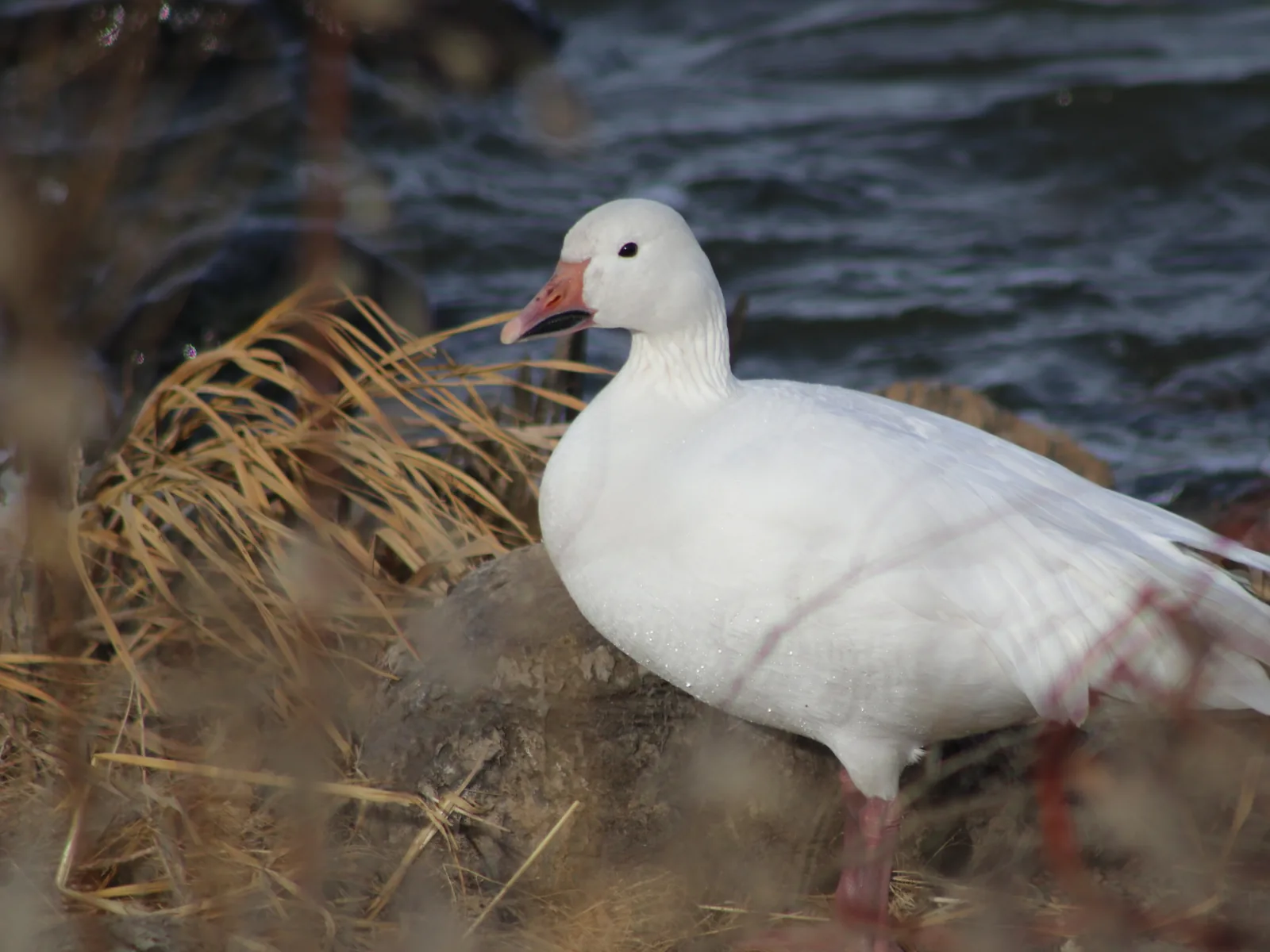

The White Goose With a Bluish Name
Its scientific name is Anser caerulescens, Latin for a bluish goose, which is an odd thing to call a bird most people picture as pure white. If you live along a North American migration route, you may well hear a flock before you see it, since their calls can carry for more than a mile. The Cornell Lab of Ornithology says watching a flock swirl down is “a little like standing inside a snow globe.”
The Blue Ones
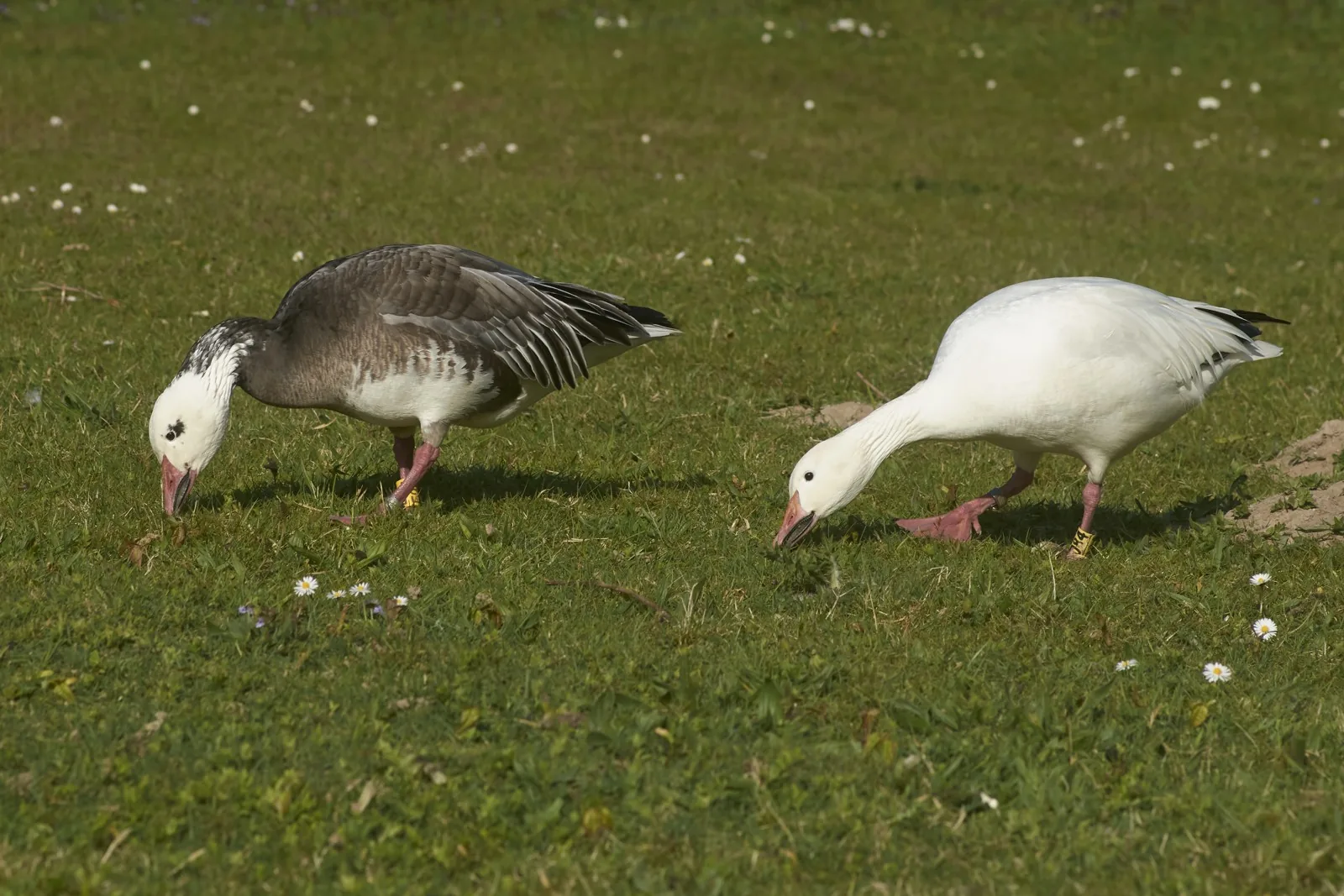
The name makes more sense once you meet the other version. In 1750, the English naturalist George Edwards published the bird as “the blue-winged goose,” and Carl Linnaeus, the Swedish scientist behind modern species names, cited his account in 1758.
Snow Geese come in a white form and a dark one, known as the Blue Goose. The two were once thought to be separate species. They are now known to be one, with the color controlled by a single gene. Two white parents have only white goslings. Young birds most often pick a mate that looks like their parents, although they will choose either color if they were raised by a mixed pair.
Fifty Miles on Foot
The long flights get the attention, but the goslings’ first journey is on foot. They hatch with open eyes and a coat of down, and they leave the nest within hours. In their first three weeks, they may walk up to 50 miles with their parents to find a better place to grow up.
They do not stay small for long, since Cornell says they grow very quickly. Even so, they stay with their family until they are two or three years old.
A Comeback That Kept Going
Snow Goose hunting in the eastern United States stopped in 1916 because numbers were so low. It reopened in 1975, and the geese kept increasing anyway. A 2017 paper in the journal Ambio tracks the greater Snow Goose, a larger subspecies, growing from 3,000 birds in the early 1900s to more than 700,000 by the 1990s.
Part of the reason is likely a change of menu. Many Snow Geese moved from coastal marshes to farmland, feeding on leftover grain, which may help more of them survive. The worry is what happens further north, where so many birds can overgraze the Arctic tundra. The greater Snow Goose was declared overabundant in 1998, and its numbers have been generally stable since 1999.
So the white goose has a bluish name and a recovery story that became a management problem. It is a more complicated bird than the snow globe suggests.
Sources:
- Cornell Lab of Ornithology: Snow Goose overview, All About Birds
- Ambio (via PubMed Central): Lefebvre et al. (2017), The greater snow goose Anser caerulescens atlanticus: Managing an overabundant population
- Wikipedia: Snow goose